


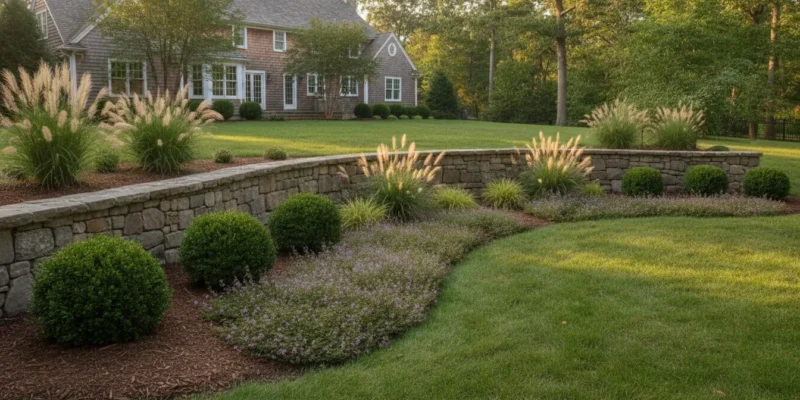
Landscape retaining wall plants Long Island homeowners can use well are the ones that stay off the wall face, tolerate the sun and soil in that bed, and leave the drainage strip open. Most of Nassau and Suffolk sits in USDA zones 7a and 7b, so winter cold is rarely the first problem. The first problem is a plant that grows into the wall, clogs a weep, or dies in the dry soil at the top of a slope. A Long Island landscape plan should place that bed with the wall, not after the blocks are already in.
Contact Gappsi through our contact page to plan the wall and the planting bed as one layout.
Posted by Gappsi Group
A finished wall already has a job, which is to hold soil, shed water, and stay straight through freeze and thaw. Plants are the layer in front of that job, not a substitute for drainage stone or a sound footing. This guide covers where to plant, which shrubs and grasses fit common Long Island wall beds, and which species to keep farther away. It does not cover block laying, wall pricing, or pipe design, because those choices belong with the wall and drainage plans.
Which landscape retaining wall plants Long Island beds actually need?
Start with the bed you have, not a catalog of plants that look good in a photo. A wall on the south side of a house bakes through July, while a wall under oaks stays damp and shady, so the same shrub will not succeed in both spots.
Walk the wall at midday and again in late afternoon before you choose a single plant. Note three bands, because each one dries and shades differently:
- Top of wall. Soil here is often thin, windy, and quick to dry. Use low plants with modest roots.
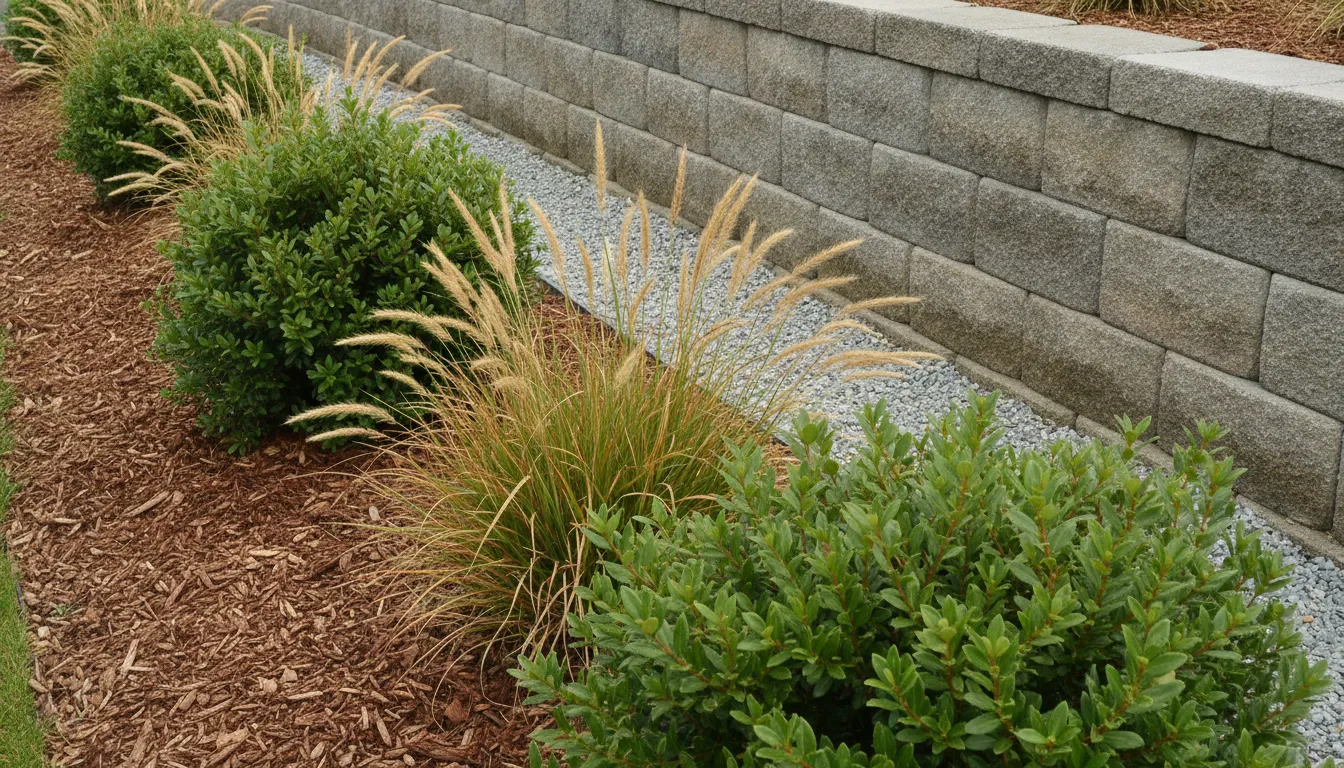
- Face and base. Leave the first 12 to 18 inches as open gravel or a clean maintenance strip. Do not root plants into the drainage aggregate.
- Bed in front. This is the real planting zone. Most shrubs belong here, set so the mature spread stops short of the wall.
Cornell Cooperative Extension of Nassau County groups Long Island shrubs by site, including dry open ground and shady woodland. That split matches wall beds better than a single wall-plant list. Match the plant to the band, then check the mature width on the nursery tag before you buy.
If the wall is still a sketch, settle the structure first. The Long Island retaining wall design and materials guide covers height, materials, frost, and drainage. Planting comes after those choices, because a taller wall throws a longer shadow and a different soil pocket.
How far should plants sit from the wall face?
Set woody plants so the mature canopy does not rest on the cap, and so roots do not chase the gravel behind the blocks. A simple rule works for most home walls under 4 feet:
- Keep a clear strip of 12 to 18 inches at the base. Gravel, not mulch piled against the blocks.
- Place shrubs so the trunk or crown is at least half the mature width away from the face, and never closer than 2 feet.
- Keep trees and large shrubs at least 6 to 10 feet off the wall, farther if the tag lists an aggressive root system.
- On the top of the wall, use only low groundcovers and grasses, and stop them short of the cap so water can leave the wall.
That clear strip is not wasted space, because it lets you see a bulge, a clogged weep, or a washout before roots hide the problem. If the bed is too narrow for a shrub at that setback, use a groundcover or leave the strip open rather than squeezing the plant. Forcing a 5-foot shrub into a 2-foot pocket is how walls get stained and joints get pried open.
What should you check in the soil before you plant?
Wall beds are built soil, not native woodland. Backfill behind the wall should stay open and stony so water can reach the drain. The planting soil in front should hold some moisture without sitting wet.
Check four things in the bed before you buy plants. Write them down so the nursery list matches the wall you actually have.
- Drainage. After a rain, does water sit at the toe of the wall for more than a day? Wet toes need plants that accept moisture, not bayberry or juniper.
- Fill versus topsoil. New walls are often backfilled with sandy structural soil. A thin cap of topsoil will not hold a shrub through August. The topsoil and grading guide is the right place to plan that cap.
- Salt and wind. South shore and open north shore lots get salt spray and winter wind. Pick plants listed for seashore or dry open sites.
- Grade away from the house. A planted bed should not send water back toward a foundation or pool. If the yard already puddles, fix that path before you add plants. The yard drainage guide covers those paths.
Do not plant into the drainage stone, because roots and soil fines clog the voids that the wall relies on to shed water. If you are unsure where the drain stone ends, ask whoever built the wall before you dig a single hole.
Which shrubs work in dry, sunny wall beds?
Sunny wall tops and south-facing bases suit plants that Cornell lists for dry, open Long Island ground. These stay smaller than a shade tree and handle thin soil if you water them the first two summers.
| Plant | Best spot by the wall | Why it fits | Watch-out |
|---|---|---|---|
| Bayberry (Myrica pensylvanica). | Use the front bed in sun or part sun. | It is native, salt tolerant, and holds a slope. | It spreads by suckers, so give it room. |
| Inkberry (Ilex glabra), in compact forms. | Use the front bed in sun or part shade. | It makes an evergreen mass and takes coastal sites. | It needs even moisture the first year. |
| Summersweet (Clethra alnifolia). | Use part shade at the moister toe of the wall. | It is native and carries a fragrant summer bloom. | It wilts on hot, dry caps. |
| Shrubby cinquefoil (Potentilla). | Use the top or the front bed in full sun. | It stays low, blooms long, and takes dry sites. | It looks thin in deep shade. |
| Switchgrass or little bluestem. | Use the top of the wall and the front edge. | Fibrous roots hold soil and give winter structure. | Cut it back in late winter, not in fall. |
| Bearberry (Arctostaphylos uva-ursi). | Use the top of the wall in sandy soil. | It forms a low native mat and takes salt. | It fails in wet, heavy clay. |
Bayberry and inkberry are the workhorses for a Long Island wall that faces wind. Bearberry is the better choice on a sandy cap where a shrub would be too tall. Summersweet belongs where the toe stays moist, not on the baked top.
For a wider native list away from the wall, use the native plants design guide. That article sorts trees, shrubs, grasses, and perennials for the whole yard. This one only keeps the plants that behave next to masonry.
Which plants belong in shade at the base of a wall?
North sides and walls under mature oaks stay cool and often damper. Cornell’s shady woodland list is the better starting point than sun shrubs that will stretch and thin out.
These plants suit that cooler, damper band. Set each one far enough out that the mature plant still clears the blocks.
- Oakleaf hydrangea for a larger front bed, set well off the face so the mature mound does not cover weeps.
- Summersweet and spicebush where the soil stays moist but not flooded.
- Christmas fern and foamflower as a low layer that does not pry joints.
- Inkberry again, if you want an evergreen and the soil is not bone dry.
Skip rhododendron and mountain laurel tight against a new block wall. They want acidic, organic soil and resent the reflected heat off a south or west face. If the only shade is a narrow strip, use ferns and leave the shrubs for a wider bed.
A shaded wall also dries more slowly after a nor’easter. That helps ferns, but mulch packed on the blocks stays wet. Pull mulch back after storms so the face can dry. Check that a downspout does not dump onto the same corner. One leader can rot crowns there while the rest of the wall stays fine.
If the shade comes from a tree you plan to remove, wait on the shrub list. Opening the canopy can turn a north bed into a sun bed in one season. Plants chosen for damp shade will scorch once that cover is gone. Note the future light on the plan before you buy a flat of ferns.
Large shade trees are a separate project. A flowering dogwood or oak does not belong in the wall bed. If you want a tree near the grade change, read the tree planting guide and keep the trunk well outside the wall’s drainage zone.
What should you keep off the wall?
Some plants look right in a photo and cause trouble by year three. Leave the plants below out of the wall bed, even if a neighbor used them.
- English ivy and other clinging vines. They hold moisture on the face and hide cracks.
- Running bamboo and vigorous suckering shrubs other than a bayberry you planned to manage.
- Large willows, poplars, and other water-seeking trees within 10 feet.
- Mulch piled against the cap or blocks. A 2-inch layer in the bed is enough. Mulch on the face keeps the wall wet.
- Anything planted in the weep path or in the gravel chimney behind the wall.
A vine on a separate trellis in the front bed is a different choice, because the trellis carries the plant and the wall face stays clear. If privacy is the real goal, a planted screen farther into the yard often works better than a shrub jammed against the masonry. The privacy landscaping guide lays out those screens without asking the wall to do the screening.
How do you plant and care for the bed the first two years?
Plant in spring or early fall so roots establish before a hard freeze or a dry August. On a new wall, wait until the grade has settled and the drainage strip is finished. Planting into fresh, unconsolidated fill leads to sunk crowns and buried weeps.
Follow this sequence only after the clear strip is marked. The soil in front of it should be real planting soil, not drainage stone.
- Mark the clear strip and the mature spread of each shrub with flags before you dig.
- Dig in the soil in front of the gravel, not through it. Set the crown level with the surrounding grade.
- Water deeply once a week in dry spells the first summer. Wall tops dry faster than the lawn.
- Mulch the soil, and pull mulch back from stems and from the blocks.
- In late winter, cut grasses to a few inches and remove any stem that has leaned onto the cap.
Do not fertilize to force size, because a smaller plant that stays in its pocket is the point of this bed. If a shrub outgrows the setback, move it rather than shearing it into the wall every year. Repeated shearing stresses the plant and still leaves woody stems against the masonry.
When the wall, the grade, and the beds are one project, it helps to see them together. Gappsi’s landscape design and construction work and masonry design cover retaining walls as part of the yard, not as a bare structure you plant later by guess. A 3D view of the wall, shown in the 3D retaining wall design guide, is useful before you commit to shrub spacing.
Contact Gappsi through our contact page if you want the wall and the planting bed drawn together.
Frequently Asked Questions
Can I plant right against a retaining wall?
No, leave 12 to 18 inches of open gravel or a clean strip at the base, and set shrubs so their mature spread stops short of the face. Plants in the drainage stone clog the path water needs to leave the wall.
What is a safe shrub for a sunny Long Island wall?
Bayberry, compact inkberry, shrubby cinquefoil, and bearberry handle dry, open sites that are common on wall tops and south-facing beds. Water them through the first two summers.
Are ornamental grasses safe near the blocks?
Yes, if you use clump grasses such as switchgrass or little bluestem and keep the crown out of the gravel strip. Their roots are fibrous, not woody, so they do not pry joints the way a tree will.
Should I plant on top of the wall or only in front?
Both can work if the top stays low, with groundcovers and grasses that do not block water leaving the cap. Taller shrubs belong in the front bed, at a setback that matches their mature width.
Do I need a different plant list for Nassau and Suffolk?
The climate band is similar across most of Long Island. Soil, salt, and sun change more from one yard to the next than the county line does. Match the plant to the bed, and use Cornell’s Long Island site lists as the check.
Contact Gappsi through our contact page to review a retaining wall and the plants that should sit beside it.