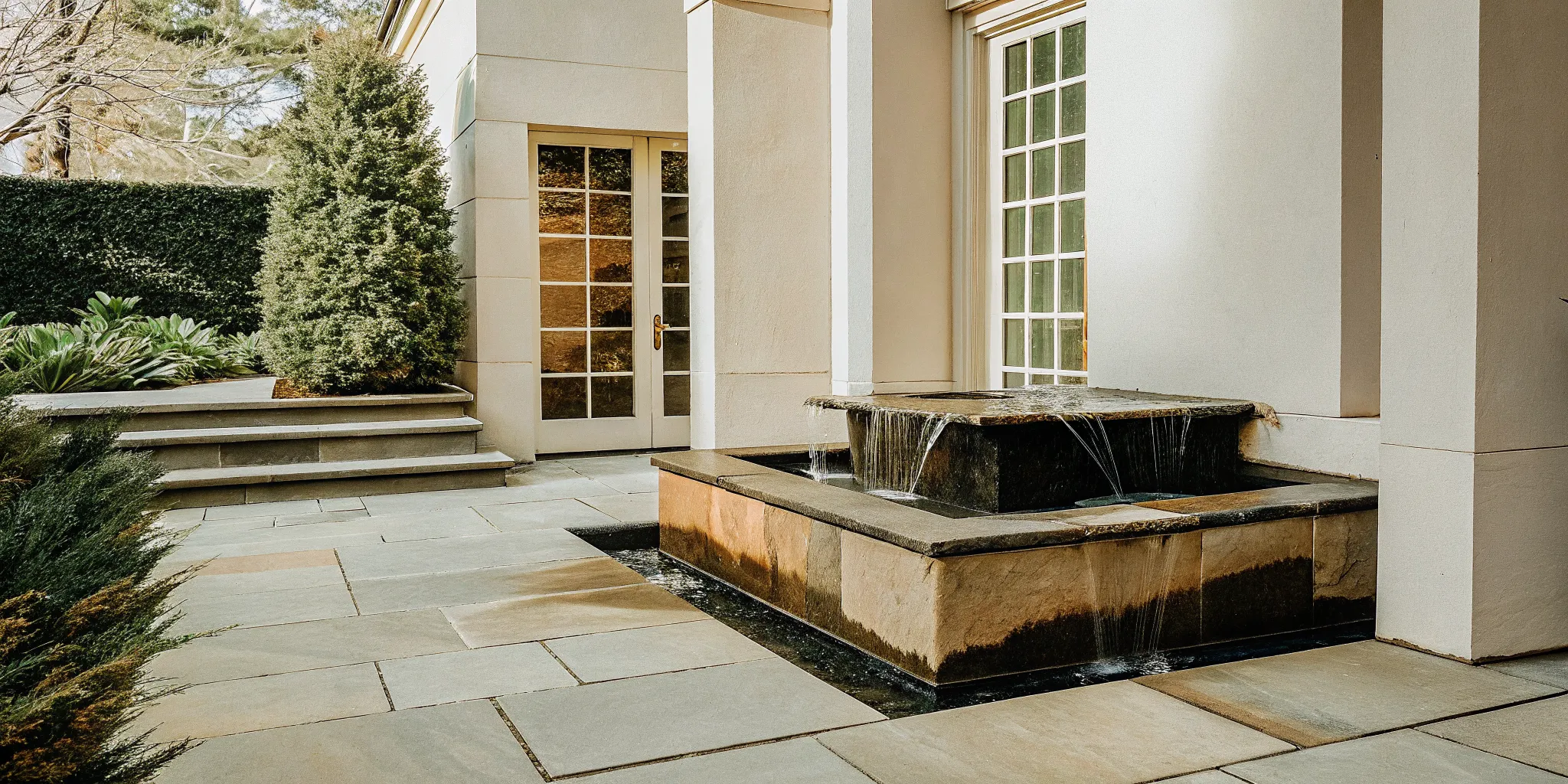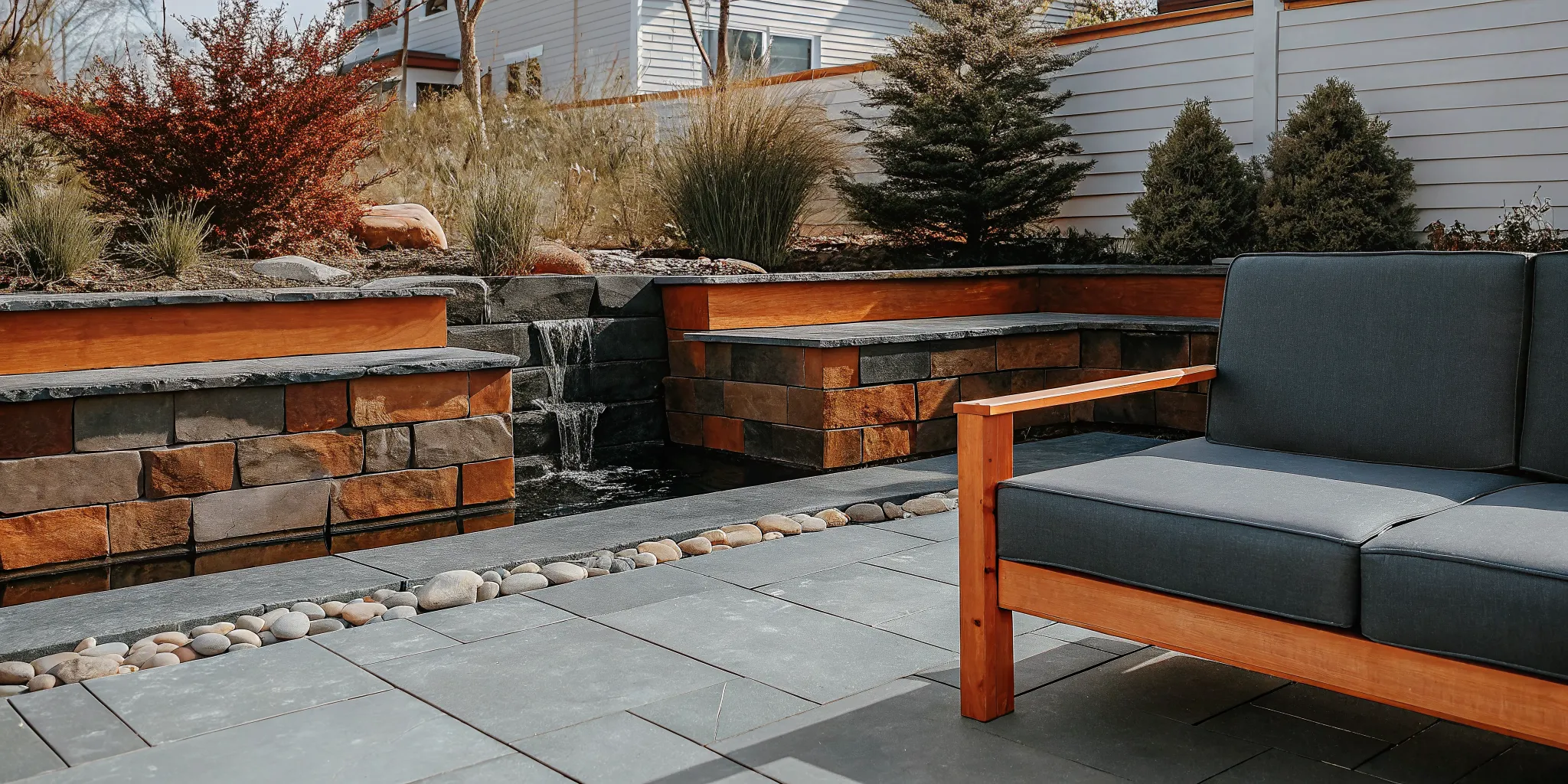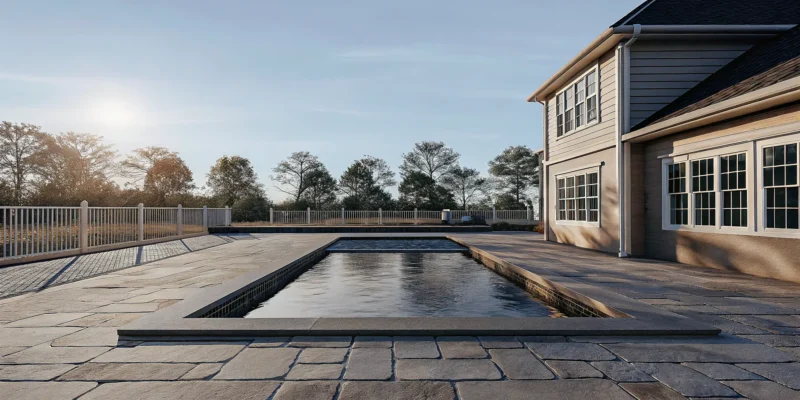
Natural travertine paver pool deck with bluestone coping edge beside a residential Long Island swimming pool

Pool Deck Materials Long Island: Top 4 Choices

A pool deck does more than frame the water. On Long Island, it must stay comfortable under summer sun, provide dependable footing when wet, and handle repeated freeze-thaw cycles without becoming a maintenance burden. The right choice also needs to complement the pool shape, coping profile, and the way your family uses the yard.

The best pool deck materials long island homeowners can consider include porcelain pavers, travertine, bluestone, and concrete pavers. The right option depends on heat, slip resistance, drainage, winter exposure, upkeep, and the look you want. Comparing those factors before installation helps prevent an attractive surface from becoming uncomfortable or difficult to maintain.

Each material behaves differently in direct sunlight, around standing water, and through a Long Island winter. Start by looking at why those local conditions should shape the decision, then compare the strengths and tradeoffs of each deck and coping material.

Does the Pool Deck Material Really Matter on Long Island?

The material does more than set the color and texture of the space around your pool. The material you choose affects traction, surface temperature, upkeep, and long-term appearance, so the decision should reflect how your family uses the backyard and how Long Island weather will affect it. A pool deck that feels comfortable in July also needs to perform after repeated winters, clean easily, and remain visually compatible with the pool coping, planting, and home exterior. Material selection influences safety, comfort, maintenance, and the way the backyard looks for decades. Ready to compare pool deck materials for your Long Island backyard? Call Gappsi Group at Contact Gappsi through our contact page for a free consultation.

Summer heat changes how the surface feels

Pool decks receive direct sun for much of the day. Dark, dense surfaces can become uncomfortable for bare feet, especially around lounging areas and the path between the pool and the house. Light-colored porcelain pavers and travertine are commonly selected for their ability to stay cooler in direct sunlight. Although the final result also depends on color, shade, orientation, and installation. Travertine and light-colored porcelain pavers are recognized for cooler surface temperatures in sunny pool areas. This is one reason homeowners should evaluate samples outdoors instead of choosing from a small indoor color chip.

Freeze-thaw cycles test the installation

Long Island winters bring freezing temperatures, while spring thaw introduces repeated moisture and temperature changes. Water that enters vulnerable concrete can expand as it freezes, placing stress on the material. Research on concrete freeze-thaw durability found that mixes with proper air entrainment, measured at 6% or greater under ASTM C231, showed good resistance in the tested conditions. That finding highlights why concrete specification and installation details matter, not only the surface pattern selected during design.

Maintenance belongs in the decision

Every material has a care profile. Some surfaces benefit from periodic sealing, while pavers may allow individual units to be reset if localized movement occurs. Drainage, base preparation, joint treatment, coping details, and the transition to the lawn or planting beds all influence how the deck performs. Gappsi Group has served Long Island homeowners since 1987 through an integrated design-build-supply approach. Giving clients a way to review material samples and coordinate the deck with the larger pool project. Compare the surface underfoot, the expected maintenance, and the repair options before committing to a material based only on appearance.

Porcelain Pavers: The Coolest, Most Durable Modern Choice

For homeowners comparing pool deck materials on Long Island, porcelain pavers offer a clean, contemporary surface with practical advantages in summer heat and winter weather. Light-colored porcelain stays cooler in direct sunlight, which can make the walk from the pool to the lounge area more comfortable on hot afternoons. Color selection still matters, so compare pale gray, sand, and warm stone tones with the surrounding masonry before choosing a finish. Porcelain is also a low-absorption material. That characteristic limits the amount of water that can enter the paver, an important consideration when a pool deck faces repeated freezing and thawing. Technical documentation for porcelain pavers describes low water absorption and freeze-thaw performance requirements. But the installer should confirm that the selected product is rated for exterior use and the local climate. Review the porcelain paver specifications before finalizing the product.

Slip resistance belongs in the specification

A pool deck should not be selected by color alone. Ask for the product’s slip-resistance rating, surface texture, edge details, and recommended use around wet areas. A lightly textured finish can provide traction without creating a rough surface that is uncomfortable under bare feet. Samples should be viewed wet as well as dry, because glare, color, and texture can change after water is applied.

Two installation systems, two different design directions

Porcelain pavers can be installed over a prepared mortar setting bed or used in a pedestal system where the surrounding construction and drainage design allow it. Mortar installation creates a fixed surface suited to many conventional pool decks. A pedestal installation can create a level, accessible surface over an engineered base while helping manage drainage and service access. Neither system should be treated as a shortcut. The base, perimeter restraint, slope, joints, and transitions at the coping must all be designed for the site.

Large formats and coordinated colors

Large-format porcelain can create long, orderly visual lines with fewer visible joints, while smaller formats can better suit curves, steps, and detailed borders. Use one color for the main field and a contrasting tone at steps or coping when visual guidance is helpful. Before installation, review the full layout with the rest of your paving materials for pool patio so the deck, coping, drainage, and planting areas read as one plan.
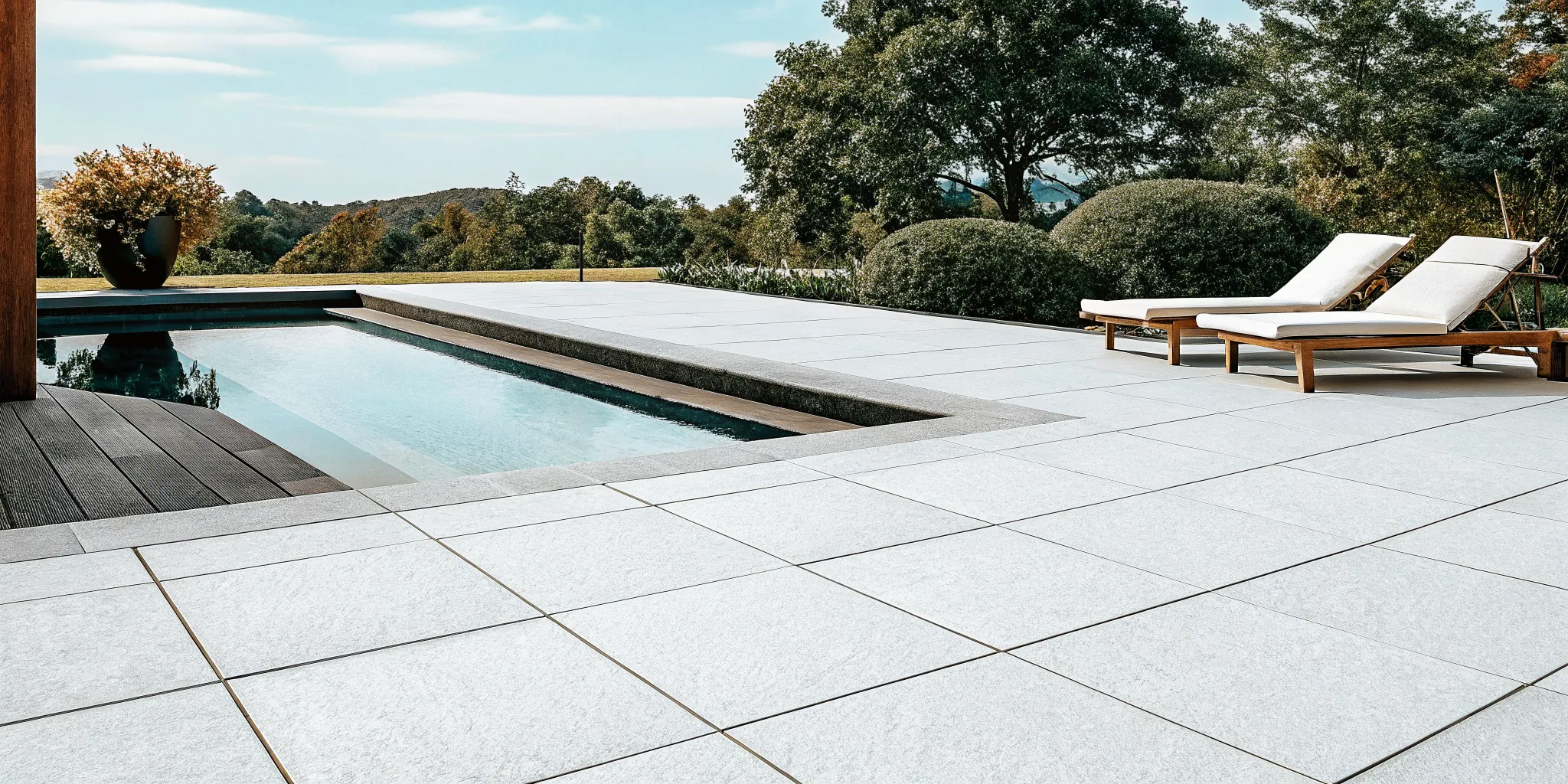
Light gray large-format porcelain pavers installed around a modern residential pool deck

Why Travertine Stays a Classic for Long Island Pool Decks

Travertine feels comfortable underfoot when summer sun heats the pool area. Its light, porous surface is known for staying cooler in direct sunlight than many darker paving materials. Which can make the walk from the water to a lounge area more pleasant. The naturally varied texture can also provide useful traction around a wet pool, especially when the finish and installation are selected with slip resistance in mind. Its appearance is another reason homeowners continue to choose a travertine pool deck. Earthy beige, cream, and warm brown tones work with planting beds, masonry walls, and the blue-green color of a swimming pool without competing with them. Tumbled edges and natural surface variation create a relaxed look, while more carefully cut pieces can support cleaner lines around steps, coping, and rectangular pool shapes. Because each stone has its own pattern, the finished deck feels less repetitive than a single-color manufactured surface.
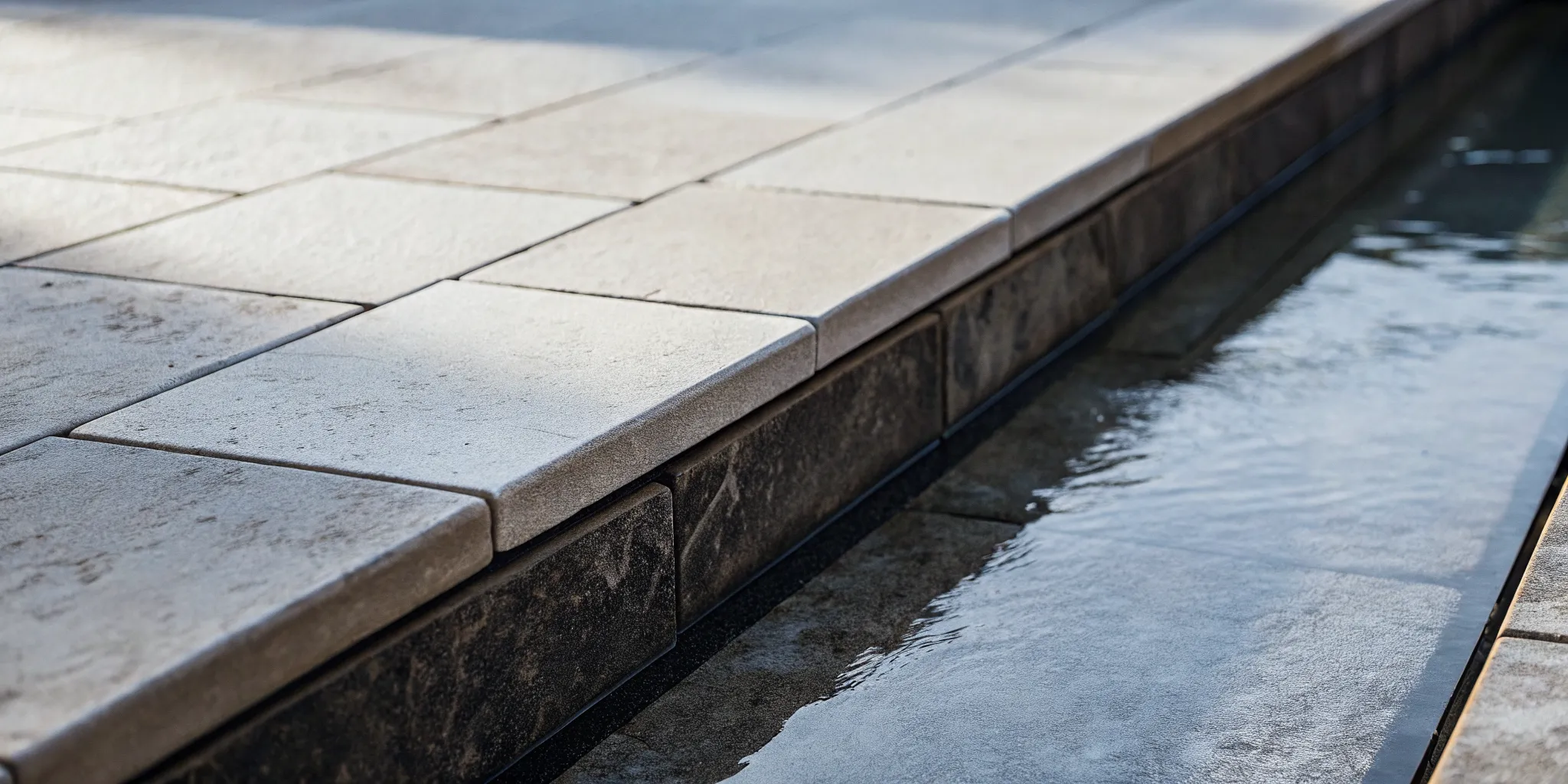
Tumbled beige travertine pavers forming a pool deck edge beside a residential Long Island swimming pool

How does travertine handle Long Island weather?

Travertine is natural stone, not a maintenance-free surface. Water, salt, and seasonal exposure can gradually affect stone, particularly where the material contains areas with different mineral or sediment composition. A study of travertine weathering found that detritic-rich portions can produce heterogeneous erosive patterns during salt weathering, meaning the stone may not weather uniformly across every piece. You can review the research in the PubMed study on travertine weathering behavior. That is why proper sealing matters on a Long Island pool deck. A suitable sealer helps limit water and contaminant penetration, but it does not replace sound drainage, correct base preparation, or regular cleaning. Freeze-thaw cycles place additional stress on any porous outdoor material. If water enters the stone or the joints, freezes, and expands, weak areas can deteriorate over time. Professional installation should account for slope, joint detailing, edge restraint, and the condition of the substrate before the stone is placed.

What should homeowners look for?

Choose pieces with a consistent thickness and an appropriate poolside finish, then plan a maintenance schedule that includes inspection, cleaning, and resealing when needed. Travertine works best when its cool feel, organic color, and textured surface are matched with installation details suited to wet conditions and winter exposure. That combination keeps the classic appearance practical for a Long Island backyard.

Bluestone: A Long Island Pool Deck Material That Handles Freeze-Thaw

Bluestone is a common choice for Long Island pool decks because it combines a substantial natural-stone appearance with practical performance around water. Its dense composition and regional availability make it a useful option for homeowners who want a surface that feels connected to the landscape while standing up to seasonal weather. A natural cleft finish gives bluestone a gently textured face rather than a polished, glass-like surface. That texture can provide useful traction when the deck is damp, especially when paired with proper slope and drainage. The surface is also comfortable for outdoor living, and blue-gray tones work with masonry, planting beds, coping, and the architectural style of many Long Island homes.

Why does freeze-thaw performance matter?

Long Island decks move through wet summers, freezing winters, and repeated temperature changes. Water that enters a porous or damaged surface can expand as it freezes, placing stress on the stone and its installation. Bluestone’s dense structure and durable exterior help it perform well in this environment when the base, joints, drainage, and edge details are designed correctly. Material selection matters, but installation quality determines how effectively the deck manages water and movement over time.

How should bluestone be protected?

A penetrating stone sealer can help reduce staining from leaves, food, soil, and poolside spills. Sealing does not replace regular cleaning or correct drainage, and it should be renewed according to the product and the deck’s exposure. Before installation, confirm that the selected bluestone has a suitable outdoor specification and that the installer understands local freeze-thaw conditions. For a coordinated natural-stone design, compare bluestone with other natural stone coping and pavers. The right choice depends on texture, color, maintenance expectations, pool-edge details, and how the entire outdoor area will be used.

Concrete Pavers vs Porcelain: Which Holds Up Better?

Both materials can create a durable pool surround, but they perform differently under Long Island’s sun, salt, rain, and freeze-thaw cycles. Concrete pavers offer an interlocking installation with replaceable units, while porcelain pavers provide a dense, low-absorption surface with a clean, consistent appearance. The better choice depends on how you prioritize heat, traction, maintenance, and installation budget.

Concrete pavers at a glance

  • Heat reflection: Light colors can reduce heat absorption, although darker units may become hot in direct summer sun.
  • Slip resistance: Textured finishes and joint patterns can provide dependable traction when the surface is wet.
  • Freeze-thaw durability: Properly manufactured and installed units can perform well. Air-entrained concrete with at least 6% air content showed good freeze-thaw resistance in testing using ASTM C231 measurements..
  • Maintenance: Routine sweeping, washing, joint care, and periodic sealing may be needed. Individual damaged pavers can usually be replaced.
  • Cost: Often offers a lower initial material cost and flexible repair options, depending on the pattern and base preparation.

Porcelain pavers at a glance

  • Heat reflection: Light-colored porcelain is known for staying cooler in direct sunlight..
  • Slip resistance: Choose a pool-rated, textured finish. Smooth decorative tile is not automatically suitable beside water.
  • Freeze-thaw durability: Low water absorption can help limit moisture-related damage, but the product must be rated for exterior freeze-thaw exposure and installed correctly.
  • Maintenance: Routine cleaning is straightforward, but cracked or poorly supported units can be more involved to replace without matching the original batch.
  • Cost: Often carries a higher material and installation cost because cutting, handling, and base precision require more care.

For many Long Island properties, concrete pavers remain a practical option because they are durable and stand up to local weather conditions. Their modular format also makes future repairs less disruptive. Porcelain is a strong fit when a homeowner wants a crisp contemporary finish, lower water absorption, and a carefully selected cool surface. In either case, the base, drainage, slope, edge restraint, and joint treatment matter as much as the visible paver. Compare additional paving materials for pool patio options before choosing a system.

Concrete Coping vs Stone Coping Around a Gunite Pool

Coping is the finished edge that separates the pool shell from the surrounding deck. It directs water away from the pool, protects the top of the wall, and gives the entire installation a defined visual line. The right choice should coordinate with the deck surface, the pool shape, and how the edge will be used for sitting, entering, and exiting the water.

Poured and precast concrete coping

Poured concrete coping is formed and finished on site, so it can follow curved gunite pool walls and unusual layouts with fewer visible joints. It can be brushed for additional texture or colored to relate to concrete pavers and other pool deck materials. The installer must control the forms and finish carefully, because uneven edges are noticeable around a pool. Precast concrete coping arrives in manufactured pieces with consistent dimensions and repeatable profiles. That makes it practical for straight runs and standard-radius corners. Joints remain part of the design, however, and the pieces must be laid out accurately so the pattern does not drift as it moves around the pool.

Natural stone coping

Natural stone coping brings a distinct edge profile and surface character. Bluestone offers a structured, blue-gray appearance that works well with Long Island masonry. Granite provides a dense, crisp edge, while travertine has natural variation and a more textured feel underfoot. Homeowners comparing granite pool coping should review the stone’s finish and edge treatment, not just its color. A honed, bullnose, or thermal finish changes both appearance and traction.

How accurate layout protects the investment

Before coping is set, the pool geometry and deck framing need to be checked together. The 3-4-5 rule is a practical layout method for confirming a square corner: measure three units along one side, four along the other, and verify that the diagonal measures five. This helps keep rectangular framing true and prevents small errors from carrying into coping joints, deck lines, and nearby features. That precision matters on a custom project. Long Island gunite pools commonly start in the $90,000-$140,000 range, so the coping should be selected as part of the complete design rather than treated as a last-minute border. Gappsi designs and installs custom gunite swimming pools with the coping, deck, drainage, and surrounding hardscape considered together.

What Pool Deck Materials Last Longest on Long Island?

Longevity depends on more than the material name. The installation base, drainage, joint details, winter protection, and maintenance routine all influence how a deck performs through Long Island summers and freeze-thaw winters. A practical care plan for the most common options looks like this:

  • Porcelain pavers: Their low water absorption makes them a strong choice for freeze-thaw exposure. And their dense surface generally needs routine sweeping, rinsing, and prompt removal of leaves or organic stains rather than recurring sealing. Inspect grout or joint systems and reset any movement before water can enter beneath the installation.
  • Travertine: Travertine stays relatively cool in direct sun and offers a naturally textured walking surface, but porous stone benefits from professional sealing and periodic review of that seal. Clean with a stone-safe product, avoid harsh acids, and address chips or weathered areas early. Research on travertine weathering also shows that stone composition can affect how erosion develops over time. So maintenance should be based on the installed material, not a generic schedule: review the research on travertine weathering.
  • Bluestone: Regular sweeping and gentle washing help prevent dirt and organic buildup. A penetrating sealer can help manage stains, but it should be reapplied according to the product and the stone’s exposure rather than on an arbitrary calendar. Check joints and edges after winter for shifting, spalling, or settlement.
  • Concrete pavers: Their individual units and flexible joints make localized repairs practical. Keep joint sand filled, remove weeds, and inspect low areas where water collects. A compatible sealer may be useful for color and stain control, while properly air-entrained concrete supports freeze-thaw durability. ASTM C231 research identifies approximately 6% or greater air content as important for good freeze-thaw resistance in concrete mixes: see the concrete durability findings.
  • Concrete coping: Keep the edge clean, watch for cracking, and ensure water drains away from the pool structure. Repairs should address the cause of movement or moisture, not only cover the visible crack.

In practice, porcelain often minimizes routine maintenance, while pavers offer straightforward spot repairs. Travertine and bluestone reward careful cleaning and sealing. Gappsi Group has served Long Island since 1987 through an integrated design-build model, and its Smithtown showroom lets homeowners view these materials firsthand before choosing a maintenance commitment. Explore Gappsi’s hardscaping services, then continue to the FAQs for answers to common material questions.

Frequently Asked Questions

What is the best material to use for a pool deck in Long Island?

There is no single best choice for every property. Concrete pavers, bluestone, travertine, and porcelain pavers can all work well when the base, drainage, coping, and finish are designed for the site. Concrete pavers are a practical option for many Long Island homes because they handle local weather and allow individual units to be replaced if needed. Compare color, heat retention, slip resistance, maintenance, and the look of the material beside your pool and home.

Why are concrete pavers popular for Long Island pool decks?

Concrete pavers offer a broad range of colors, patterns, and edge details, while their jointed installation can make future repairs more manageable than replacing one continuous slab. Their performance still depends on proper excavation, compaction, drainage, and installation. For freeze-thaw exposure, ask whether the concrete mix includes adequate air entrainment. Research from Iowa State University found that mixes with at least 6% air content showed good freeze-thaw resistance: Iowa State University research.

What materials stay cool in the summer around a pool?

Travertine and light-colored porcelain pavers are commonly selected for a cooler feel in direct sunlight. Color, shade, surface texture, and the amount of exposed sun all affect how hot a deck feels, so review samples outdoors before choosing. A lighter surface may improve comfort, but it still needs a slip-resistant finish and a properly prepared base.

Is travertine a good choice for a Long Island pool deck?

Travertine can be a strong choice when you want natural variation, a cooler underfoot feel, and a textured surface around the water. It requires appropriate sealing and routine care. Natural stone can weather unevenly depending on its composition and exposure to salt, as documented in this study of travertine weathering. Review the specific stone, edge treatment, drainage plan, and maintenance schedule before installation.

Ready to Compare Pool Deck Materials?

The right deck and coping combination can help you weigh comfort, maintenance, and the look you want for your Long Island pool. Schedule a free consultation with Gappsi Group to compare suitable materials for your home and discuss the details of your project. Schedule your consultation by Contact Gappsi through our contact page.
Share this page:
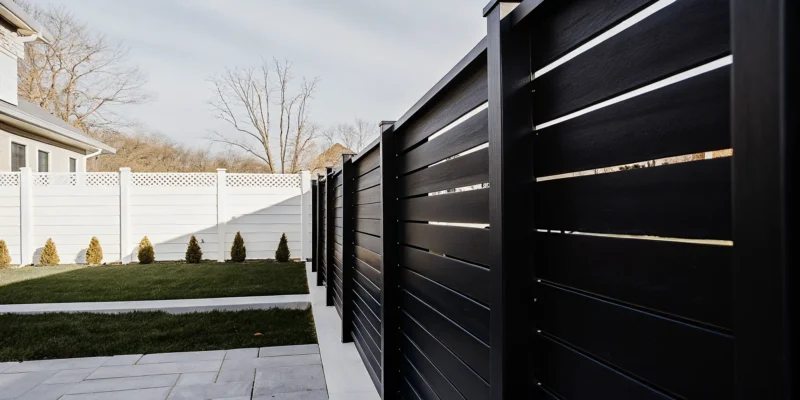
Modern composite privacy fence and aluminum gate beside a landscaped bluestone patio on Long Island

Composite and Aluminum Fencing Long Island Guide

On Long Island, a fence has to do more than mark a property line. It should handle coastal conditions, support privacy where you need it, and fit naturally with patios, planting beds, pools, and outdoor entertaining areas. The right material can also reduce the recurring work associated with painted or deteriorating wood. Schedule a free design consultation to plan your fence, landscaping, and outdoor living layout together.

For homeowners comparing composite and aluminum fencing Long Island options, composite is often the better fit for solid privacy and a wood-like appearance. While aluminum works well when you want an open boundary, durable security, and a lighter visual profile. The best choice depends on exposure, privacy goals, maintenance expectations, property layout, and how the fence will connect to the rest of the landscape.

Those differences become clearer when you look at how each material responds to Long Island weather and how the fence can be coordinated with the spaces around it.

Why Composite and Aluminum Fencing Works on Long Island

Long Island fencing has to handle more than everyday wear. A fence may face coastal salt air in Nassau or Suffolk, heavy rain, summer humidity, winter freezing, and repeated freeze-thaw cycles. Those conditions can shorten the useful life of untreated wood, especially when moisture enters cracks, end cuts, and fastener holes. Composite and aluminum fencing options give homeowners a way to create privacy, define property lines, or improve security without accepting the same maintenance cycle as traditional lumber.

Coastal air and changing weather put materials to the test

Aluminum is particularly well suited to properties near the coast because it does not rust. That corrosion resistance matters where salt air and precipitation can accelerate deterioration in ferrous metals. With a properly applied finish, aluminum can remain a practical choice for everything from a front-yard boundary to a pool enclosure. Its structural integrity also remains strong through the temperature and humidity fluctuations common across Long Island. Composite fencing addresses a different set of problems associated with moisture and organic material. Wood plastic composite is designed to retain its shape instead of responding to wet and dry conditions in the same way as lumber. It does not warp, twist, or rot like traditional wood, and it resists the decay and insect damage that can affect a wood fence. Solid composite panels can also provide a consistent privacy barrier without the gaps or uneven boards that develop as wood changes over time.

Why wood can become a recurring maintenance project

Wood can look natural and inviting when new, but its performance depends on regular upkeep and exposure conditions. Moisture, sunlight, and seasonal movement may lead to staining, swelling, splitting, or soft areas. Freeze-thaw cycles can make existing weaknesses more noticeable, while coastal exposure adds another source of stress. Repairs may involve replacing boards, resetting posts, sealing surfaces, or addressing sections that no longer align. Composite and aluminum reduce those recurring concerns in different ways. Aluminum resists rust and climate-related corrosion, while composite avoids the warping and rot associated with traditional lumber. Neither material eliminates the need for sound design and installation. Posts still need appropriate foundations, drainage should be considered, and the fence layout should follow property lines and local requirements. A site assessment helps account for slopes, gates, utilities, and areas where water collects. For homeowners comparing materials, the right choice depends on the job. Aluminum offers open sightlines, a lighter structure, and a clean way to define a landscape. Composite is often the better fit when privacy and a solid visual barrier matter most. Both are selected for their ability to withstand the challenging Long Island climate while supporting a fence design that fits the home and surrounding landscape. Decades of laboratory and field testing by the USDA Forest Service back the core advantage of wood plastic composites: properly formulated WPC products hold up well under long-term outdoor moisture exposure. Which is exactly the condition that drives rot and decay in lumber.

How Do Composite and Aluminum Fences Compare on Privacy?

Privacy is often the clearest dividing line between these two materials. Solid composite panels block direct views into a backyard, patio, or pool area, while aluminum typically uses spaced pickets that define a boundary without closing off the view. The right choice depends on whether your priority is seclusion, visibility, security, or a balance of all three. Gappsi’s composite and aluminum fencing options can be configured around the way your property is used. Composite is usually the stronger privacy material because its panels create a continuous visual barrier. It can also provide a wood-like appearance without the rot and insect problems associated with traditional lumber. The material is engineered for durability and requires little maintenance, which helps keep a privacy fence practical over time. Composite is especially useful where you want to screen a seating area, outdoor kitchen, or pool equipment from neighboring properties. Aluminum takes a different approach. Its open design preserves sightlines, sunlight, and airflow while still marking the property line. It is commonly selected for security and aesthetic definition, particularly around front yards, driveways, gardens, and pools where homeowners want visibility. Close picket spacing and anti-climb features can improve safety for children and pets. But an open aluminum fence should not be treated as a substitute for a visual privacy barrier.

Composite and aluminum privacy comparison
Consideration Composite privacy Aluminum
Privacy level High when installed with solid panels Low to moderate, depending on picket spacing and layout
Visibility Limits views through the fence Maintains open sightlines and airflow
Security Creates a visual barrier and defined enclosure Supports boundary security, with close-picket and anti-climb options
Maintenance Minimal care; does not warp, twist, or rot like traditional wood Minimal care; occasional washing is typically sufficient
Best use case Backyard privacy and pet containment; can also screen pool areas Pool enclosure, front-yard definition, gardens, and visible property boundaries

These categories are not rigid. Fence systems range from full privacy panels to decorative open designs, so a property can combine approaches. For example, solid composite may screen the rear yard while aluminum defines the front boundary or encloses a pool. Consider the views you want to preserve, the areas you want to conceal, and the maintenance level you prefer before selecting a layout.

What Maintenance Do Composite and Aluminum Fences Need?

For most Long Island homeowners, maintenance is largely a matter of keeping the fence clean and checking that its hardware remains secure. Aluminum and composite fencing do not require the recurring staining, sealing, and board replacement associated with many wood fences. That difference matters in a climate with changing temperatures, humidity, coastal air, rain, and winter weather.

Aluminum needs occasional washing

Aluminum fencing has a powder-coated finish designed to resist fading and chipping. In normal use, a quick wash with water and a mild cleaning solution is often enough to remove dust, pollen, salt residue, and other surface buildup. Gappsi describes aluminum fencing as requiring virtually no maintenance beyond occasional cleaning. Because aluminum does not rust, it is also a practical choice for properties exposed to moisture or salt air. During a seasonal inspection, look over the posts, rails, gate hinges, latches, and fasteners. Remove leaves or soil that collect around the base, and rinse away residue rather than scrubbing the finish with abrasive tools. If a gate begins to sag or latch unevenly, addressing the hardware early can prevent a small adjustment from becoming a larger repair. The aluminum itself is built to remain stable through Long Island’s temperature and humidity fluctuations.

Composite panels resist common wood problems

Composite fencing is similarly straightforward to care for. Modern composite materials use UV-resistant technology to help retain their color and structural integrity under sun exposure. They are also designed not to warp, twist, or rot like traditional lumber, and they resist rotting and insect damage. Routine care generally consists of washing the panels and checking posts, caps, and gate hardware for debris or unusual movement. Greenwood WPC adds another layer of protection with a co-extruded polymer shield around the composite material. This outer layer helps protect the panel from everyday exposure while preserving the appearance of a wood-inspired fence. You can review Gappsi’s composite and aluminum fencing options to compare panel styles and finishes.

How does this compare with wood fencing?

Wood fences typically need periodic staining or sealing to limit moisture absorption and slow weathering. Boards may also need replacement when they rot, warp, split, or suffer insect damage. Composite and aluminum do not eliminate every inspection or cleaning task. But they reduce the finish work and material repairs that can make wood fencing time-consuming over the years. For homeowners weighing composite and aluminum fencing Long Island properties, the right choice often depends on the desired privacy and appearance, balanced against how much ongoing maintenance they want to perform.

Choosing Between SleekFence, Greenwood, and Frame It All

Each system creates a different relationship between your property, the street, and the spaces behind the fence. The right choice depends on whether your priority is an open architectural edge, full privacy, or a panel design that combines structure with a more traditional fence profile.

SleekFence for a clean contemporary boundary

SleekFence contemporary aluminum fencing uses powder-coated aluminum and modern horizontal lines to create a restrained, architectural appearance. It works well around contemporary homes, patios, pools, and planting beds where you want the fence to define the property without visually closing it in. Aluminum provides a strong yet lightweight alternative to iron, which can simplify handling and installation while avoiding the maintenance burden associated with heavier metal fencing. Because the rails create an open, linear pattern, SleekFence is often a fit when you want security, boundary definition, and visibility rather than a solid privacy wall. The system can also be tailored with gates, decorative toppers, and custom post caps, allowing the details to coordinate with the home’s architecture and adjacent hardscape.

Greenwood for composite privacy and recycled content

Greenwood composite privacy fencing uses WPC boards with aluminum posts. Its solid panels can provide a stronger visual screen for yards, pool areas, outdoor dining spaces, or equipment that homeowners prefer to keep out of sight. Greenwood is available in classic and modern privacy profiles, as well as semi-privacy panels, so you can control how much light and visibility pass through the fence. The system is made with 90% recycled materials, giving homeowners a way to consider recycled content alongside privacy and appearance. Composite fencing is designed to resist common wood problems such as warping, twisting. And rot, while its wood-inspired surface can maintain a warmer look than an open metal fence.

Frame It All for flexible panel styles

Frame It All composite privacy fences offer several system directions within one product family. Riviera and Valla privacy options suit homeowners seeking a more enclosed boundary, while pre-assembled shadowbox panels create a defined fence line with a layered, finished appearance. This flexibility can help when the front, side, and rear portions of a property need related designs rather than an identical treatment everywhere. During design, compare the desired privacy level, sightlines, gate locations, and the visual weight of each panel against the home and landscape. A site-specific plan can combine an open aluminum run at the front with composite privacy where seclusion matters most.

How Fencing Enhances Landscaping and Outdoor Living Spaces

Fencing should support the way your property is used, not sit apart from the rest of the landscape. When its lines, materials, and gates are coordinated with patios, pools, planting beds, and outdoor lighting, the result feels intentional from the street to the backyard. Aluminum works especially well across landscaping styles, from minimalist modern designs to more traditional Long Island properties. While composite panels can define private areas with a solid, wood-inspired appearance. Explore Gappsi’s outdoor living projects for examples of how these elements can work together. Schedule a design consultation before selecting fence materials, colors, and gate locations.

Coordinate the fence with patios and pools

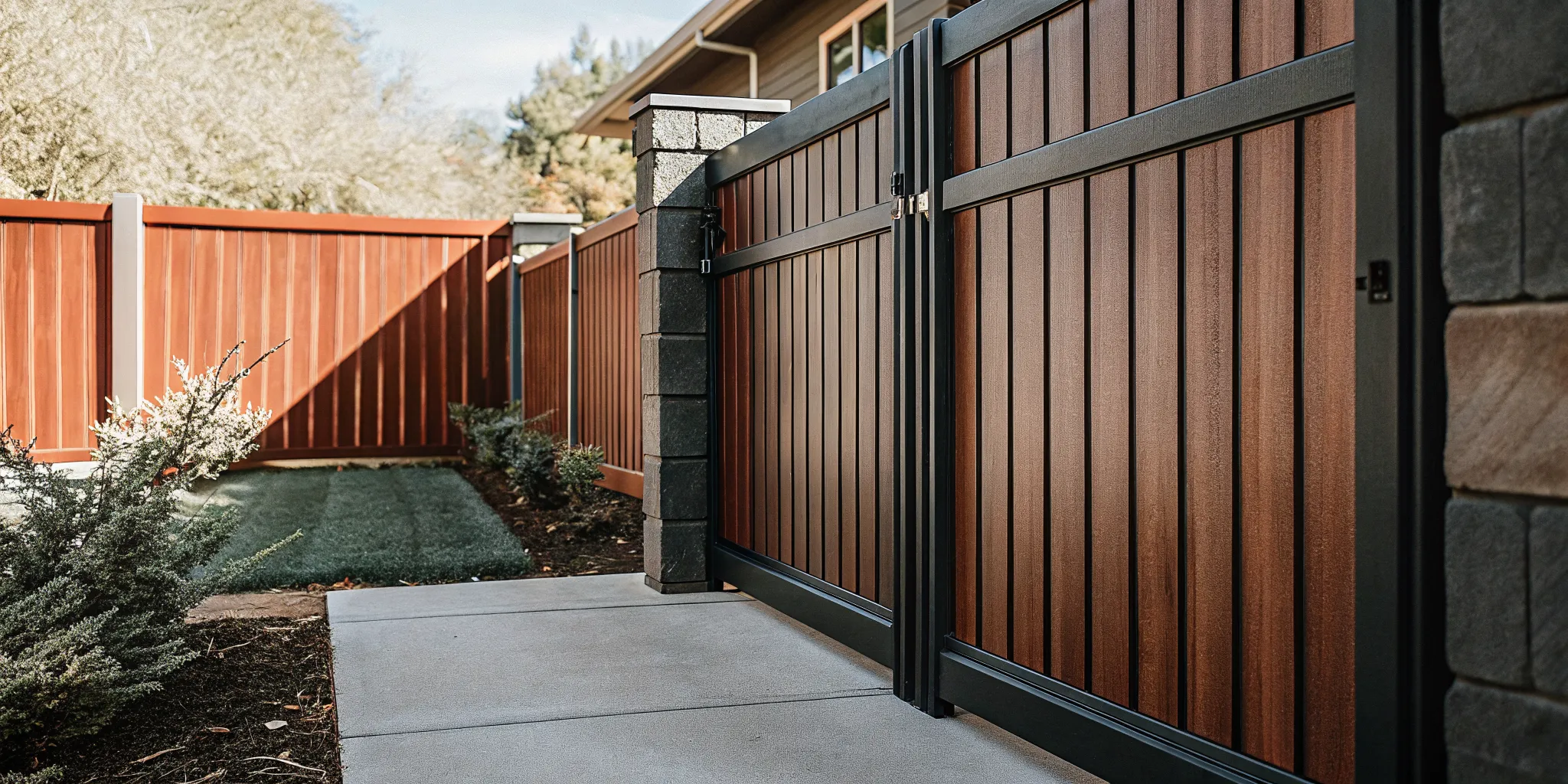
A fence can frame a bluestone patio, separate a pool area, or create a quieter section for dining and entertaining. The right height and openness depend on the purpose of each zone. Open aluminum pickets can provide definition without making a patio feel enclosed, while solid composite panels can screen seating areas from neighboring properties. Gates, post caps, and decorative toppers add another opportunity to connect the fence to nearby stonework, plantings, or the home’s exterior details. Composite privacy fence and aluminum gate beside a bluestone paver patio on Long Island

Plan around lighting, irrigation, and drainage

Fence installation should be planned alongside the systems that make an outdoor space functional. Path lights may need clear post and gate locations, irrigation lines should remain accessible, and drainage patterns should not be interrupted by new footings or panels. A professional site assessment can identify utility locations and drainage challenges before construction begins. On sloped property, careful installation helps the fence follow the land while maintaining consistent lines and usable gates. This attention to topography prevents the fence from looking disconnected from terraces, walkways, and planting beds.

Why a single design-build contractor can simplify the project

Using one contractor for fencing and related outdoor improvements keeps decisions connected. The same team can coordinate fence placement with patio elevations, pool boundaries, lighting runs. Irrigation access, and landscape transitions instead of asking separate contractors to solve conflicts after the fact. Gappsi’s design-build-supply model supports this coordination, including visual planning that helps homeowners review how the fence will relate to the broader property.

Account for curb appeal and local requirements

A well-proportioned fence can strengthen curb appeal by defining the property without competing with the architecture or plantings. Before work begins, confirm the property line, applicable setbacks, and local fencing ordinances. Permit requirements vary by municipality on Long Island. In the Town of Smithtown, for example, a permit is required before most residential fence installations. So it pays to check with the local building department early in the process. Gappsi can guide homeowners through property-line considerations and local regulations so the design is practical as well as visually consistent. See the Town of Smithtown fence permit FAQ for a local example.

Frequently Asked Questions

Which fence material offers more privacy?

Solid composite panels generally provide more privacy because they create a continuous visual barrier. Open-style aluminum fencing is better suited to defining property lines, improving visibility, and adding security without fully closing off a yard. The best choice depends on whether your priority is screening, openness, or a combination of both. Gappsi’s fencing guide describes composite as the privacy-focused option and aluminum as a choice for security and aesthetic definition.

How much maintenance do composite and aluminum fences require?

Both options require less routine care than traditional wood. Aluminum typically needs only an occasional wash, while its powder-coated finish helps resist fading and chipping. Composite fencing is designed to resist fading from UV exposure and does not warp, twist, or rot like lumber. Rinsing away dirt, salt, and plant debris during seasonal cleanup helps preserve either material.

Can these fences handle Long Island weather and coastal conditions?

Aluminum does not rust, making it a practical choice for properties exposed to coastal air or heavy precipitation. Composite fencing is engineered to resist common wood problems, including decay and insect damage. Site drainage, footing depth, slope, and exposure still matter, so the installation plan should account for the property’s specific conditions rather than relying on material selection alone. See the local material guidance.

Can fencing be coordinated with existing landscaping?

Yes. Fence height, panel style, color, gate placement, and the transition around planting beds can be planned with patios, pools, walkways, and other outdoor features. Aluminum can suit both modern and traditional landscapes, while composite panels can provide a consistent backdrop for planting. A site assessment helps the fence follow natural slopes and align with the property’s circulation.

Ready to Plan Your New Fence?

The right fence can bring privacy, structure, and a more cohesive finish to your Long Island property. Gappsi can help you compare composite and aluminum options, review your goals, and plan a design that fits the surrounding landscape. Schedule a free fencing design consultation with the Gappsi team by Contact Gappsi through our contact page.
Share this page:
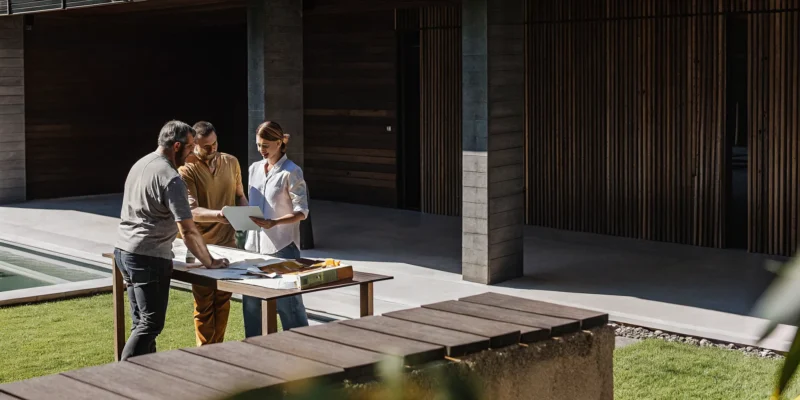
Homeowners reviewing inground pool plans with builders in their backyard.

How to Choose Inground Pool Builders: A 5-Step Guide

Your new pool is not an island; it’s the centerpiece of your entire backyard ecosystem. To create a truly stunning and functional space, the pool must integrate seamlessly with the surrounding patio, landscaping, and outdoor living features. One of the biggest mistakes homeowners make is hiring a builder who only focuses on the pool itself, leaving you to coordinate other contractors for the rest. This often results in a disjointed design and added stress. The best inground pool builders are comprehensive design-build firms that see the big picture. They help you plan the entire outdoor environment, from the masonry to the landscaping, ensuring a cohesive and beautiful retreat.

Key Takeaways

  • Match Your Pool Type to Your Priorities: Your choice between vinyl, fiberglass, and concrete directly affects your budget, design options, and future maintenance. Decide whether a lower upfront cost, easy upkeep, or complete design freedom is most important to you.
  • Plan Your Budget Beyond the Water’s Edge: A realistic budget includes more than just the pool itself. Remember to account for essential costs like site preparation, decking, safety features, landscaping, and long-term upkeep.
  • Vet Your Builder Thoroughly: A great partner is licensed, insured, and has a strong portfolio of past work. Prioritize a full-service builder who can manage the entire project, from the pool to the patio and landscape, to ensure a cohesive and stress-free process.

Choosing Your Inground Pool Type

Deciding to build a pool is exciting, but the first big choice you’ll make is selecting the type of pool. The three main options for inground pools are fiberglass, concrete, and vinyl liner. Each one comes with its own set of benefits and considerations related to cost, appearance, and long-term care. Think of it like choosing the foundation for your backyard oasis. Your decision will shape not only the look of your pool but also your budget and maintenance routine for years to come.

Understanding the differences is the first step toward creating a space that perfectly fits your family’s lifestyle. Do you want complete design freedom to create a one-of-a-kind shape? Or is a quick installation and minimal upkeep your top priority? We have years of experience helping Long Island homeowners find the perfect fit, and we can guide you through the pros and cons of each option. Exploring the details will help you feel confident as you begin to design your dream swimming pool. Let’s look at what makes each pool type unique.

Fiberglass Pools

Fiberglass pools are a fantastic choice if you value speed and simplicity. These pools are created from a factory-molded shell that arrives at your home in one piece, ready for installation. This process is much faster than building a concrete pool from scratch. The biggest advantage is their incredibly low maintenance. The smooth, non-porous surface is gentle on your feet, naturally resists algae growth, and never needs to be resurfaced. You’ll spend less time and money on chemicals and cleaning, giving you more time to simply enjoy the water.

Concrete Pools

If you can dream it, you can build it with concrete. Concrete pools, also known as gunite pools, offer complete design freedom. They are built on-site, allowing for any shape, size, or depth you can imagine. This makes them ideal for custom projects or fitting a pool into a unique backyard space. You can add creative features like built-in barstools, tanning ledges, or vanishing edges. This level of customization comes with a higher initial price tag and more involved maintenance, as the surface will need to be resurfaced every 10 to 15 years. The design possibilities extend beyond the pool itself, as you can create a seamless look with surrounding masonry and stonework.

Vinyl Liner Pools

Vinyl liner pools are the most budget-friendly option upfront, making them a popular starting point for many families. These pools are constructed with a vinyl liner that fits into a prepared hole, and they can be customized into a wide variety of shapes and sizes. The liner itself is smooth to the touch and comes in countless patterns and colors, so you can easily personalize the look of your water. While the initial cost is lower, keep in mind that the liner will need to be replaced every 7 to 10 years on average. This makes them a great choice if you want a beautiful, custom-feeling pool without the high initial investment of concrete.

Comparing Cost, Maintenance, and Durability

Let’s put it all together. Vinyl liner pools generally have the lowest initial cost, making them very accessible. Fiberglass pools sit in the middle, offering a balance of price and incredible long-term value due to their low maintenance needs. Concrete pools have the highest upfront cost but provide limitless design flexibility. When you think about long-term expenses, fiberglass often comes out ahead because it doesn’t require liner replacements or resurfacing. Your choice ultimately depends on what you value most: initial budget, design freedom, or ease of ownership. Discussing these factors with an expert can help you select the perfect swimming pool for your home.

How Much Does an Inground Pool Installation Cost?

Let’s talk about the big question: what will your new pool actually cost? Thinking about the budget is a huge part of the planning process, and it’s smart to have a clear picture from the start. The final price tag for an inground pool can vary quite a bit, with most homeowners in Long Island spending anywhere from $50,000 to over $120,000. This range seems wide because the cost isn’t just for the pool itself. It includes the type of pool you choose, the materials you select, the complexity of the installation, and all the beautiful features that will make it uniquely yours.

Think of it like building a custom home. The basic structure has one price, but the finishes, fixtures, and custom additions are what shape the final cost. From the excavation of your yard to the type of patio stone you choose and whether you add a waterfall or an automatic cover, every decision plays a role. Understanding these different cost factors will help you create a realistic budget and work with your builder to design a beautiful swimming pool that fits your financial comfort zone. In the next few sections, we’ll break down these costs so you can feel confident in your investment.

Average Cost by Pool Type

The type of pool you choose is the biggest factor in your initial cost. A vinyl liner pool is often the most budget-friendly option upfront, typically ranging from $25,000 to $65,000. Just remember to factor in the long-term cost of replacing the liner every five to ten years. Concrete pools offer the most design freedom but come with a higher price tag, usually starting at $50,000 and going well over $100,000 for custom designs. They also require more maintenance, like resurfacing. Fiberglass pools land in the middle, providing a durable, low-maintenance option that generally costs between $45,000 and $75,000. Each has its own set of benefits, so it’s about balancing your dream design with your budget.

Factoring in Add-On Features and Costs

The base price of your pool is just the beginning. The features you add are what transform a simple pool into a true backyard oasis, and they also influence the final cost. Things like excavation can vary depending on your property’s terrain and soil. Then there are the fun choices, like adding a tanning ledge, built-in steps, or a soothing water feature. The materials for the area around your pool, known as coping and decking, are another key consideration. Choosing high-quality porcelain and natural stone will create a stunning, durable patio. Don’t forget practical additions like an automatic pool cover, which can cost between $8,000 and $20,000, or required safety fencing.

Exploring Your Financing Options

A new pool is a significant home improvement project, and many homeowners choose to finance it. With average costs often falling between $50,000 and $100,000, financing can make your dream pool an immediate reality. Common options include a home equity loan, a home equity line of credit (HELOC), or a personal loan from a bank or credit union. Some pool builders also have relationships with lenders who specialize in financing home improvement projects. When you have your initial consultation, it’s a great time to discuss your budget openly. An experienced builder can help you understand all the costs involved and guide you toward a project that aligns with what you’re comfortable spending.

What to Expect During Your Pool Installation

Once you’ve chosen your builder and pool type, the real excitement begins. Understanding the construction process from start to finish helps you know what’s happening in your backyard at every stage. While every project is unique, a professional pool installation follows a clear, step-by-step timeline to transform your vision into a beautiful reality. From the first design sketch to the final splash, here’s a breakdown of what you can expect.

Your Initial Consultation and Design

The journey to your new pool starts with a conversation. During an initial consultation, your builder will visit your home to walk through the space, discuss your ideas, and understand exactly what you’re looking for in a backyard oasis. This is your chance to share your vision, from the pool’s shape and size to features like waterfalls or attached spas. A reputable builder provides an honest price estimate based on this discussion. At Gappsi, we use this time to create a custom design that fits your property and lifestyle, ensuring the final plan is something you’ll love for years.

Handling Permits and Preparing the Site

Before any digging can begin, there’s important prep work to do. The foundation of a smooth swimming pool installation is thorough planning, which includes handling all necessary permits with your local municipality. A seasoned builder will manage this entire process for you, so you don’t have to worry about the paperwork. Once the permits are approved, our team will stake out the pool’s location in your yard and prepare the site for excavation. This involves marking utility lines and ensuring clear access for construction equipment, setting the stage for a seamless build.

Excavation and Building the Pool Structure

This is when your backyard truly starts to transform. The excavation phase is where heavy equipment digs out the area for your new pool. The cost and timeline for this step can vary based on factors like your soil type and the complexity of the terrain. After the hole is dug, the team begins constructing the pool’s shell. For a concrete pool, this involves installing a steel rebar framework before applying the gunite or shotcrete. For a fiberglass pool, the pre-molded shell is carefully lowered into place. Our masonry experts ensure this foundational step is executed with precision.

Plumbing, Electrical, and Finishing Touches

With the pool shell in place, it’s time to make it functional. Our crews will install all the necessary plumbing for the filtration and circulation systems, as well as run the electrical wiring for lighting, pumps, and any automated features. This is a critical step that ensures your pool operates efficiently and safely. After the technical components are installed, we move on to the finishing touches. This includes backfilling around the pool shell, pouring the concrete for the pool deck, and installing your chosen coping and waterline tile from our wide selection of porcelain and natural stone.

Adding Landscaping and Final Details

A pool is the centerpiece of your backyard, but the surrounding environment is what makes it a true retreat. The final stage of installation focuses on integrating the pool with your landscape. Every pool installation comes with ideas for how to build a deck or patio around it, and we can help you design the perfect setting. This is also the time to add features like outdoor lighting, fencing, and plantings to complete the look. Whether you envision a simple patio or a complete outdoor living area with a pavilion and pergola, our landscape design team will bring it all together.

How Long Will the Installation Take?

The timeline for a pool installation depends heavily on the type of pool you choose and the scope of your project. A fiberglass pool is often swimmable in just a few weeks, as the shell is manufactured off-site. Vinyl liner pools also have a relatively quick installation time. Concrete pools take the longest, typically several months, because the concrete needs time to cure properly. Weather, inspections, and the complexity of your design can also affect the schedule. Your builder should provide a realistic timeline upfront so you know when you can plan your first pool party.

How to Prepare for Your Pool Installation

Once you’ve chosen your pool type and builder, the real excitement begins. But before the first scoop of dirt is moved, a little preparation on your part can make the entire installation process smoother for everyone involved. Thinking through the details now ensures your new backyard oasis is everything you’ve dreamed of. From picking the perfect location to knowing what to expect during the build, getting ready for your pool is a key step in the journey. This preparation helps prevent surprises and ensures the final result integrates beautifully with your home and lifestyle.

Picking the Perfect Spot in Your Yard

Choosing where to place your pool is one of the most important decisions you’ll make. Think about how the sun moves across your yard throughout the day. Do you want full sun for warm water, or a bit of afternoon shade? Also, consider privacy from neighbors and visibility from your house, especially if you have children. One of the most common mistakes is misjudging the size. Your pool should be large enough for enjoyment but not so big that it overwhelms your yard. A professional can help you visualize the final layout and ensure your swimming pool fits perfectly into your outdoor space.

Planning for Landscaping and Safety

A pool is more than just a hole in the ground filled with water; it’s the centerpiece of your backyard. The foundation of a smooth installation is thorough planning, which includes the surrounding environment. How will you integrate patios, walkways, and gardens? Consider materials like beautiful and durable porcelain pavers for the pool deck. Most importantly, you must plan for safety. Local regulations require specific types of fencing and gates around pools. Planning these elements from the start ensures they complement your design instead of looking like an afterthought, creating a secure and cohesive backyard retreat.

Budgeting for Ongoing Maintenance

The initial installation cost is just one part of your overall pool budget. It’s smart to plan for the long-term expenses of pool ownership. These costs include chemicals, electricity for the pump and filter, and routine cleaning. Different pool types also have different long-term needs. For example, a vinyl liner pool may have a lower upfront cost, but the liner will need replacement every several years. In contrast, fiberglass pools require less long-term maintenance since they don’t need resurfacing. Factoring these ongoing costs into your budget from day one will help you enjoy your pool without financial stress down the road.

Living with Construction: What to Expect

A pool installation is a major construction project, and it’s helpful to know what to expect. The process involves heavy machinery, noise, and a bit of a mess. It requires careful planning and skilled labor to create a safe and functional pool that will last for years. Your yard will be a work zone for several weeks. Try to be patient with the process and communicate openly with your project manager about any concerns. You can watch videos of Gappsi’s past projects to get a better sense of the construction timeline. A professional team will work to minimize disruption and keep you informed every step of the way.

What to Look for in an Inground Pool Builder

Choosing the right builder is just as important as picking the perfect pool design. This is the team you’ll be trusting with your home, your budget, and your backyard dreams for the next several months. A great builder makes the process feel seamless and exciting, while the wrong one can turn it into a headache. To make sure you find a true partner for your project, it’s helpful to have a checklist. Think of these next steps as your guide to finding a qualified, trustworthy, and talented pool builder who can bring your vision to life without any surprises.

Licensing, Insurance, and Certifications

Before you even look at a portfolio, make sure your potential builder has their paperwork in order. This is the non-negotiable first step that protects you. A reputable builder must have the proper state and local licenses, liability insurance, and worker’s compensation coverage. This ensures they are compliant with regulations and that you are protected from any potential liability if an accident happens on your property. Don’t be shy about asking for proof of these credentials. A professional company will have them ready to share. This simple verification provides peace of mind and confirms you’re working with a legitimate business that values safety and accountability in their swimming pool projects.

Reviewing Their Experience, Portfolio, and Reputation

Once you’ve confirmed a builder is properly licensed and insured, it’s time for the fun part: seeing their work. A builder with a long history in your area has likely handled projects similar to yours and understands local zoning and environmental factors. Ask to see a portfolio of their completed pools. Look for quality craftsmanship and a style that aligns with your vision. A strong portfolio on their website or a platform like their YouTube channel can give you a great sense of their capabilities. Beyond pretty pictures, read online reviews and ask for references. Hearing from past clients will tell you a lot about their communication, professionalism, and ability to stay on schedule and within budget.

Ensuring Transparent Pricing and Detailed Contracts

While it’s tempting to go with the lowest bid, price shouldn’t be the only factor in your decision. A surprisingly low quote can sometimes hide future costs or signal subpar materials. A trustworthy builder will provide a detailed, itemized contract that clearly outlines every aspect of the project. This document should include the full scope of work, a list of materials, a payment schedule, and a projected timeline. Make sure you understand everything in the contract before you sign. This transparency is key to a healthy working relationship and prevents misunderstandings about what is included, from excavation to the final masonry around the pool deck.

Understanding Warranties and Aftercare Support

Your relationship with your pool builder shouldn’t end the day the water is added. A quality installation is a long-term investment, and you need to know what kind of support you can expect down the road. Before signing a contract, ask detailed questions about the warranties they offer. What do they cover, and for how long? A good builder provides strong warranties on both their workmanship and the equipment they install. Also, inquire about their aftercare support. Knowing who to call for future maintenance, questions, or potential repairs is vital for your long-term satisfaction. Companies that offer ongoing services like restoration and sealing often have a deeper commitment to their clients.

Common Mistakes to Avoid When Hiring

Being aware of common pitfalls can help you make a smarter choice. One major mistake is failing to plan for the entire backyard ecosystem. Your pool is the centerpiece, but what about the patio, fencing, and plants around it? Hiring a builder who only handles the pool itself can lead to a disjointed project. A full-service company can create a cohesive design that integrates your pool with beautiful and functional landscaping. Another error is not having a realistic budget that includes potential add-ons and ongoing maintenance. A good builder will help you understand all the potential costs upfront so you can plan accordingly and avoid financial stress later on.

Start Your Pool Project with a Long Island Expert

Building a new swimming pool is an exciting project, but it also comes with a lot of big decisions. The foundation of a smooth installation is solid planning, and that begins with choosing the right partner. After all, you want a builder who not only understands your vision but also has the expertise to bring it to life without any headaches. Selecting the wrong team can lead to issues with budget, timing, and the final quality of your pool.

Working with a builder who truly understands Long Island is key. An expert familiar with Suffolk and Nassau counties will know exactly how to handle local permits, design for our specific climate, and recommend materials that will last for years. This local knowledge is invaluable and ensures your project runs smoothly from the first day of excavation to the first time you dive in. Gappsi has been designing and building custom swimming pools for homeowners here since 1987, giving us a deep understanding of what makes a pool project successful in our community.

This is where having a seasoned partner makes all the difference. Instead of juggling multiple contractors for design, construction, and landscaping, our team handles everything. We believe the process should be as relaxing as the final result. We guide you through every step, from creating a functional and beautiful design to installing the final details that make your backyard a true oasis. You can see the quality of our craftsmanship and the variety of our projects on our YouTube channel, where we showcase completed backyard transformations.

Starting your project with an expert consultation helps you avoid common pitfalls like setting an unrealistic budget or choosing a design that doesn’t fit your lifestyle. A professional can help you create a realistic plan that covers all the bases. If you’re ready to turn your dream backyard into a reality, our team is here to help you create a detailed plan. We can walk you through your options and show you what’s possible for your home.

Related Articles

Frequently Asked Questions

Which type of pool is the best one for my family? The “best” pool really depends on your top priorities. If you want the lowest possible maintenance and a quick installation, a fiberglass pool is an excellent choice. If your dream is a completely unique shape with custom features like a tanning ledge or built-in seating, then a concrete pool offers limitless design freedom. For those balancing a modest initial budget with a desire for a beautiful, customizable look, a vinyl liner pool is a fantastic starting point. Think about what matters most to you: long-term ease, total design control, or upfront cost.

How long will my backyard be a construction zone? The total time from start to finish varies with the type of pool you select. A fiberglass pool installation is the fastest, often taking just a few weeks from excavation to filling it with water. Vinyl liner pools are also relatively quick to install. Concrete pools require the most time, typically several months, because the structure needs time to cure properly before the finishing touches can be applied. Your builder will provide a more specific timeline based on your project’s design, local permit processing, and inspection schedules.

My yard is small or has a slope. Can I still get a pool? Absolutely. A challenging yard doesn’t mean a pool is out of the question; it just means you need a creative design. Concrete pools are especially well-suited for unique spaces because they can be built in any shape or size to fit the specific contours of your property. We can also use retaining walls and clever masonry to handle slopes and create a stunning, multi-level patio area. An on-site consultation is the best way to explore what’s possible for your specific space.

What are the biggest “hidden” costs I should plan for? A good builder will be transparent about all costs, but it’s smart to think beyond the pool shell itself. Your budget should account for the surrounding patio or deck, mandatory safety fencing, and any necessary electrical upgrades. Landscaping to integrate the pool into your yard is another key element. Also, remember to plan for the future. This includes the ongoing costs of chemicals and electricity, as well as long-term items like replacing a vinyl liner or resurfacing a concrete pool down the road.

Do I need to hire a separate landscaper or mason for the patio and surrounding area? You don’t have to when you work with a full-service company. One of the biggest advantages of partnering with a team that handles everything is creating a single, cohesive vision for your entire backyard. This ensures your pool, patio, walkways, and plantings all work together beautifully. It also streamlines the process, so you have one point of contact managing the whole project, which saves you the headache of coordinating multiple contractors and timelines.

Share this page:
Natural stone waterfall and koi pond surrounded by bluestone patio and landscape in a Long Island backyard

Long Island Water Features: Fountains, Ponds, and Waterfalls

A Long Island backyard can feel entirely different when moving water becomes part of the landscape. The sound of a bubbling fountain near a patio, a pondless waterfall beside natural stone. Or a pool spillway framed by plantings can add movement and a stronger connection between the home and its outdoor spaces.

Long Island water features can include masonry fountains, ponds, waterfalls, reflecting pools, and pool-integrated elements such as bubblers or deck jets. The right choice depends on the property’s layout, the desired sound and visual effect, available maintenance time, and how the feature connects with patios, masonry, pools, and plantings.

Gappsi Group approaches these projects through an integrated design-build process, considering the structure, circulation, materials, plumbing, and surrounding landscape together. That planning helps each feature feel intentional rather than added as an afterthought. Start by comparing the forms, scale, and atmosphere created by the most popular water feature options. Ready to explore water feature options for your property? Call Gappsi Group at Contact Gappsi through our contact page for a consultation.

What Types of Water Features Enhance Long Island Landscapes?

The right water feature should fit the property’s architecture, available space, and the way the family uses the backyard. Gappsi Group designs and installs several options across Nassau and Suffolk Counties, from compact masonry fountains to natural-looking waterfalls and pool details. Together, fountains, ponds, and waterfalls can become an integral part of a custom outdoor living plan rather than an isolated decoration.

Custom masonry fountains for patios and entertaining areas

A fountain works well when a homeowner wants sound and movement without dedicating a large portion of the yard to a pond. Wall fountains can anchor a patio or frame an outdoor kitchen, while urn fountains suit an entry garden, courtyard, or smaller terrace. Tiered fountains create a stronger vertical focal point for a broad patio or formal landscape. Gappsi’s masonry work can coordinate the fountain with bluestone, travertine, or other natural stone already used around the home. Fountains are also practical masonry elements for outdoor kitchens and patios, and bubbling fountains can provide a calm focal point near a seating area. Custom masonry bluestone fountain on a Long Island patio

Natural stone waterfalls and ponds

For a property with a slope, garden transition, or larger natural area, a waterfall can make changes in elevation feel intentional. A pondless waterfall recirculates water through a concealed basin, making it a useful choice for a suburban yard where homeowners want the sound of moving water without an open pond. See Gappsi’s work with pond-less waterfall designers for a related Long Island project. A pond-based waterfall is better suited to a larger landscape where the pond itself can support aquatic planting and become a destination. Natural Long Island boulders can help the installation transition into surrounding plantings. Natural stone waterfall and koi pond surrounded by a bluestone patio in a Long Island backyard

Koi ponds and reflecting pools

A koi pond gives a dedicated garden space a living focal point and can be paired with bridges, stepping stones, or a quiet seating area. It requires thoughtful placement for access and long-term care. A reflecting pool takes a more formal approach, using a clean water surface to mirror trees, masonry, or the lines of the house. It can suit an estate-style property, a straight architectural garden, or a courtyard where visual simplicity matters more than a natural pond edge.

Pool-integrated water features

Homeowners planning a pool can incorporate water into the structure itself. Deck jets arc into the pool from the surrounding deck, bubblers add movement to a shallow tanning ledge, and sheer descents create a smooth sheet from a raised wall. These features add visual and auditory interest to poolscapes, particularly when coordinated with coping, steps, and nearby planting beds. Browse the Landscape Design & Water Features Gallery to compare approaches for different Long Island properties.

Comparison of Water Feature Types for Long Island Properties
Type Best Location Space Needed Maintenance Materials Used
Masonry Fountain Patios, outdoor kitchens, entry gardens Small to medium Low Bluestone, travertine, concrete pavers
Pondless Waterfall Suburban yards, garden transitions Small to medium Low to medium Natural boulders, bluestone
Koi Pond Dedicated garden spaces Medium to large Medium to high Natural stone, liner, gravel
Reflecting Pool Formal landscapes, courtyards Medium to large Medium Concrete, stone coping
Pool Waterfall Gunite pool raised walls Integrated with pool Low Bluestone, natural stone
Deck Jets Pool deck perimeters Integrated with pool Low Stainless steel

How Does Gappsi Integrate Water Features with Pool and Patio Designs?

A water feature works best when it is planned with the spaces around it, not added after the pool, patio, or planting plan is complete. Gappsi Group approaches each project as a connected outdoor living design, coordinating structure, circulation, plumbing, lighting, and planting from the beginning. This design-build approach helps ensure that a waterfall, fountain, or bubbling element feels intentional and supports how your family uses the yard.

Pool features designed into the structure

Gappsi installs custom Gunite, Vinyl Liner, and Fiberglass pools, with Gunite offering particular flexibility for built-in water features. A Gunite pool can incorporate an integrated waterfall along a raised wall, bubblers on a shallow sun shelf. Deck jets that arc into the basin, or a sheer descent set into masonry. These details can become both a visual focal point and a source of movement and sound within the poolscape. Waterfalls, in particular, add an auditory and visual element to the pool area. Feature placement also affects daily operation. The design should account for splash, circulation, access to pumps and controls, and the relationship between the water feature and surrounding paving. Where appropriate, a gutter or grate system can capture splashed water and return it to the pool or feature, supporting more efficient water use. Explore Gappsi’s custom swimming pool installation services to see how the pool and its surrounding elements can be planned together.

Patios, outdoor kitchens, and fire-water balance

Water features can extend the experience beyond the pool. Within a masonry patio or outdoor kitchen, a wall fountain, basin fountain. Or compact bubbling feature can establish a focal point without taking over the dining and cooking areas. Gappsi’s masonry scope includes outdoor kitchens, fireplaces, fire pits, and fountains, making it possible to coordinate materials, proportions, and sightlines across the entire entertaining space. A fireplace or fire pit next to a fountain creates a deliberate fire-and-water combination. The contrast can define separate zones while keeping the patio visually connected. Stone selection, coping details, drainage, and specialized water plumbing should be resolved as one plan. Learn more about Gappsi’s masonry design and construction services.

Plantings that frame the feature

Landscape planting completes the transition between hardscape and water. Gappsi can position plants to frame a view, soften a raised wall, or create separation from a seating area while preserving access for maintenance. On Long Island, regionally appropriate plant choices, healthy soil, and careful grading help the surrounding landscape thrive with less intervention. Plants that shed excessive leaves or debris directly into the water should be avoided, since thoughtful selection can reduce cleaning demands. With one team guiding the project from concept through completion, Gappsi Group can coordinate the pool, masonry, plumbing, and landscape details. That is how Long Island water features feel like part of the property rather than an isolated installation.

What Materials Work Best for Long Island Water Features?

Material selection affects how a water feature looks, drains, and holds up through Long Island’s changing seasons. Gappsi plans the visible finish together with the masonry base and water plumbing, since professional fountain installation requires both structural masonry and specialized plumbing for reliable operation.

Bluestone for Spillways and Waterfall Coping

Bluestone creates a clean, substantial edge for a spillway or waterfall coping. Its blue-gray color works with pool coping, patios, and planting beds. A properly installed, sloped piece directs water where it belongs instead of allowing it to collect behind the feature. The joints, substrate, and drainage details matter as much as the stone itself. Those details help limit damage when wet surfaces freeze and thaw.

Natural Boulders for Rock Waterfalls

For a more natural composition, Gappsi can use Long Island fieldstone boulders to build a rock waterfall. Large stones establish the structure, while smaller stones and planting soften the transitions into the surrounding landscape. Natural stone is well suited to Long Island weather when it is selected, set, and drained correctly. This approach also gives each waterfall an irregular profile, so the water moves over ledges rather than appearing as a manufactured sheet.

Travertine, Concrete Pavers, and Stainless Steel

Travertine veneers are useful around fountain surrounds because their warm color and textured surface connect the water feature to nearby masonry. For adjoining patios and walkways, concrete pavers provide a coordinated, serviceable surface with replaceable units if access to plumbing is ever needed. Homeowners comparing patio finishes can review Gappsi’s natural stone pavers options as part of the planning process. For contemporary designs, stainless steel works well for sheer descents, narrow spillways, and modern fountain elements. It provides a crisp visual line against stone or concrete and can be detailed to keep water flowing evenly. Across all material choices, freeze-thaw performance depends on proper bases, positive drainage, durable joints, and plumbing that can be winterized. Gappsi’s design-build process coordinates those elements so the finish supports the feature rather than becoming an isolated decorative layer.

How to Maintain Water Features Through Long Island’s Seasons

A seasonal checklist keeps fountains and ponds reliable without turning them into a constant chore. Properly designed water features can remain manageable when planting, circulation, access points, and drainage are considered from the beginning. EPA guidance also supports water-efficient design choices that reduce maintenance demands over time.

  1. Restart the system in spring. Once freezing weather has passed, remove winter covers, clear leaves and sediment, and inspect the basin for cracks or shifting. Check pump housings, intake screens, plumbing connections, and electrical components before restarting circulation. For a fountain, confirm that the pump delivers an even flow and that splash stays within the basin. A professional installation must coordinate the masonry foundation with specialized water plumbing, so any leak or movement deserves prompt attention. See this luxury custom outdoor water fountain for an example of how the feature can be integrated into an outdoor design.
  2. Keep summer operation balanced. Monitor water levels during hot, windy periods and add water when necessary to protect the pump from running dry. Choose plants around the feature carefully. EPA guidance recommends selecting vegetation that does not contribute excess debris, which helps reduce cleaning and filtration work. Strategic planting and physical barriers can also reduce wind exposure and evaporation. If splashing is a concern, a gutter or grate system can catch water and return it to the pool or feature. These details support efficient operation while helping prevent algae-promoting buildup from excessive debris and stagnant water.
  3. Prepare for fall debris. Skim leaves regularly before they sink and decompose. Install netting or a fitted cover over pond-based systems when leaf drop increases, and remove accumulated debris from basins, skimmers, filters, and pump intakes. Pondless waterfalls generally require less seasonal work because they do not have an open pond surface, but their reservoirs and pump vaults still need inspection and cleaning.
  4. Winterize before sustained freezing. Follow the equipment manufacturer’s instructions for draining and protecting fountain pumps. Disconnect, clean, and store removable pumps where appropriate. For pond systems, remove vulnerable equipment, clear plumbing where required, and protect exposed components from ice damage. Do not assume a pondless system is maintenance-free. Its pump, reservoir, and circulation lines still need winter protection suited to the installation.

With the right plant selection, splash control, and seasonal inspections, Long Island water features can stay attractive and functional through changing weather. The goal is not to eliminate maintenance, but to design a system where each task is predictable and proportionate to the feature.

Designing a Water-Efficient Landscape with Fountains and Ponds

Water efficiency should be part of the landscape plan before excavation begins. For Long Island water features, the goal is not simply to use less water. It is to direct water where it can do the most work, limit avoidable loss, and select plantings that can thrive in Nassau and Suffolk County conditions.

Group plants by water needs

Hydrozoning groups plants with similar water requirements, so irrigation is not applied uniformly to a landscape with different needs. Place moisture-tolerant plants closer to a pond or recirculating basin. Drier areas can use plants such as inkberry holly, switchgrass, eastern red cedar, or beach grass where the site allows. Flowering perennials such as black-eyed Susan and bee balm can add seasonal color without turning every planting bed into a high-demand zone. Regionally appropriate plant choices and properly sized turf areas are recognized components of a water-efficient landscape by the U.S. Environmental Protection Agency. EPA landscape guidance also emphasizes healthy soil, appropriate grading, mulch, and hydrozones. Healthy soil supports infiltration and root development. Grading should direct runoff away from structures while keeping useful water in planted areas. Rather than allowing it to collect against masonry or wash out soil around the feature.

Reduce evaporation and recapture splash

A properly selected layer of organic mulch helps retain soil moisture and reduces how often surrounding beds need irrigation. Low, carefully placed planting and masonry barriers can also reduce wind exposure and evaporation. Around fountains and pond edges, a gutter or grate system can capture splash and drag-out, returning that water to the feature instead of sending it into adjacent paving or turf. This is especially important where a fountain has a strong jet or a waterfall crosses a busy patio edge. Gappsi Group’s design-build approach coordinates grading, drainage, masonry, plumbing, irrigation, soil preparation, and planting from the beginning. That integration makes efficiency part of the construction plan, not a retrofit after runoff, splash, or excessive irrigation has already become a problem. The result is a water feature that works with the landscape around it and remains practical to maintain.

Frequently Asked Questions

What types of water features are best for Long Island landscapes?

The best choice depends on the yard, architecture, and maintenance goals. Custom masonry fountains suit patios and outdoor kitchens, while pondless waterfalls provide movement and sound without a large open basin. Ponds, reflecting pools, pool waterfalls, bubblers, and sheer descents can also be planned as part of a cohesive landscape design.

Can I install solar-powered water features on Long Island?

Solar operation can be considered for a small or remote feature when the location receives enough direct sunlight. A designer should evaluate the feature’s pump requirements, daily operating schedule, and placement before selecting the system. Wired recirculating equipment may be more practical for larger fountains, ponds, or pool-integrated elements.

What maintenance is required for ponds in Long Island’s climate?

Ponds generally need seasonal attention, including debris removal, pump inspection, water-level checks, and winter preparation. Thoughtful plant selection can reduce leaves and other debris entering the water. Pondless waterfalls typically have less open water to manage, but their basin, pump, and filtration components still require regular inspection.

Do I need a permit for a pond or fountain on Long Island?

Permit requirements can vary by municipality and by the feature’s size, depth, plumbing, electrical work, and relationship to a pool or property improvements. Before construction, confirm requirements with the local building department and have the design-build team coordinate any necessary applications. This review helps identify site and utility requirements early.

Ready to Plan Your Long Island Water Feature?

A thoughtful water feature can give your landscape a defined focal point and connect patios, planting areas, and outdoor living spaces. Gappsi Group can help you evaluate the right direction for your property, whether you are considering a fountain, pond, or waterfall. Contact Gappsi Group for a water feature consultation: Contact Gappsi through our contact page.
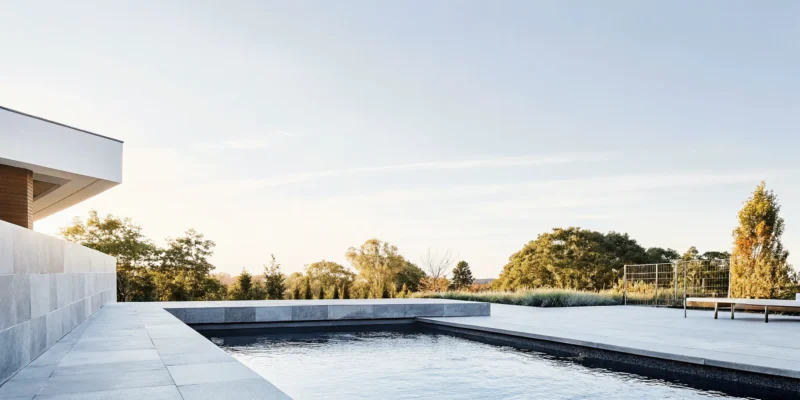
Share this page:
Outdoor kitchen builders reviewing design plans and material samples for a custom build.

How to Find the Right Outdoor Kitchen Builders

Building an outdoor kitchen on Long Island comes with its own unique set of challenges. Our four-season climate, with its humid summers, freezing winters, and salty coastal air, demands specific materials and construction techniques. A project that looks great on day one can quickly deteriorate if it’s not built correctly for our environment. This is why finding local experts is so important. You need outdoor kitchen builders who understand these conditions and can recommend durable materials like high-grade stainless steel and resilient porcelain. This guide will help you ask the right questions to find a builder with the local knowledge to create a beautiful, long-lasting outdoor space.

Key Takeaways

  • Choose a full-service partner, not just a contractor: Your project’s success hinges on finding a builder who manages everything from design and permits to final installation. Look for a team with a strong local portfolio and verified reviews to ensure a smooth process and a high-quality result.
  • Design for your lifestyle, not just for looks: Before picking appliances, think about how you will actually use the space. A functional layout with plenty of counter space, smart storage, and a logical workflow is the true foundation of an outdoor kitchen you will love for years.
  • Select materials built for Long Island weather: Our coastal climate requires durable materials to prevent rust, cracking, and fading. Ask your builder about high-grade stainless steel, porcelain, and natural stone to ensure your outdoor kitchen remains beautiful through every season.

What Services Do Outdoor Kitchen Builders Provide?

Finding the right outdoor kitchen builder means looking for a partner who can guide you through every step of the process. A great builder doesn’t just lay pavers and install a grill. They provide a complete service that transforms your backyard into a functional, beautiful extension of your home. From the initial sketch to the final cleanup, they manage all the moving parts so you can focus on planning your first cookout. A professional team handles the design, construction, and finishing touches, ensuring your new space is built to last and perfectly suits your lifestyle.

Custom Design and Planning

This is where the fun begins. A skilled builder starts by listening to you. They want to know how you plan to use your space. Will it be for intimate family dinners or large neighborhood parties? Do you see yourself flipping burgers or experimenting with a pizza oven? They take your vision and translate it into a detailed plan that considers workflow, seating, and how the kitchen integrates with your existing landscape design. This pre-design phase is critical for a successful project, ensuring the final layout is both practical and beautiful, not just a collection of appliances that looked good in a catalog.

Full Installation and Construction

Once the design is approved, the builder brings it to life. This is much more than just assembly. Professional outdoor kitchen contractors manage every phase of the build, from creating the structural frame to installing utilities like gas, water, and electricity. They handle all the complex tasks that require specialized knowledge, ensuring everything is safe and up to code. Working with an experienced, full-service construction company makes a huge difference in the quality of the final product. They coordinate every detail, from pouring the foundation to signing off on permits, for a smooth and stress-free process.

Material and Appliance Selection

The sheer number of options for countertops, cabinets, and appliances can be overwhelming. A good builder acts as your expert guide, helping you choose materials that fit your style and can withstand Long Island’s weather. They’ll explain the difference between various grades of stainless steel and recommend durable surfaces like porcelain and natural stone pavers. Their expertise helps you avoid common mistakes, like choosing materials that will fade, warp, or rust over time. This guidance ensures your investment is not only beautiful on day one but remains that way for years to come.

How Much Does an Outdoor Kitchen Cost?

Figuring out the budget for your outdoor kitchen is one of the first and most important steps. The final price tag can vary quite a bit, depending on everything from the appliances you choose to the materials you love. Think of it as an investment in your home and your lifestyle. A well-designed outdoor kitchen not only adds significant value to your property but also creates a wonderful new space for making memories with family and friends. To give you a clearer picture, let’s break down the typical cost ranges and what you can expect within each budget.

Entry-Level Kitchens ($3,000–$5,000)

If you’re looking for a simple, functional space to start your outdoor cooking adventures, an entry-level kitchen is a fantastic option. In this price range, you can expect a setup that focuses on the essentials. This typically includes a quality grill, either freestanding or built into a modest structure, along with a small amount of counter space for prep work. The construction might involve a prefabricated frame with a simple stone or stucco finish. This approach is perfect for smaller backyards or for homeowners who want to enjoy the benefits of an outdoor kitchen without a massive initial investment. Even a basic design requires a solid foundation, which is where professional masonry ensures your new kitchen is built to last.

Mid-Range Kitchens ($5,000–$15,000)

This is the most popular range for many homeowners on Long Island, as it offers a great balance of features, style, and value. A mid-range budget allows for more customization and a more integrated look. You can expect a larger built-in grill, more expansive countertops, and additional appliances like an outdoor refrigerator, a sink, or dedicated storage cabinets. This is also where you can start exploring higher-quality materials. You might choose beautiful porcelain or natural stone for your countertops and select a more detailed veneer for the kitchen’s base. An L-shaped or U-shaped layout becomes possible, creating a more social and functional cooking environment for entertaining guests.

High-End Custom Kitchens ($15,000–$50,000+)

For those who envision a true outdoor culinary destination, a high-end custom kitchen is the way to go. In this tier, the possibilities are nearly endless. You can incorporate premium, professional-grade appliances, including specialty items like a pizza oven, a smoker, or a power burner for large pots. Features like a full bar with a sink, ice maker, and beverage center are common. These kitchens often include sophisticated lighting, extensive seating, and integration with pavilions or pergolas for a complete outdoor room. The materials are top-of-the-line, from exotic granite countertops to custom stonework, creating a luxurious and fully personalized entertainment hub.

Factors That Influence the Final Cost

Regardless of the budget tier you fall into, several key factors will always influence the final cost of your project. The size and complexity of your kitchen’s layout play a huge role; a simple island is less expensive than a multi-level, U-shaped design. The appliances you select are another major variable, as brands and features can cause prices to differ by thousands. Your choice of materials for countertops, veneers, and flooring will also impact the budget. Finally, don’t forget about utilities. The cost to run gas, electrical, and plumbing lines to your kitchen site is a critical part of the overall expense. A full-service home remodeling expert can manage these details for you.

Which Features Should You Prioritize in Your Design?

Deciding what to include in your outdoor kitchen is the most exciting part of the process. A successful design starts with a clear vision of how you plan to use your backyard, not just a list of appliances that look good in a catalog. Think about your cooking style, how many people you typically host, and what would make the space truly feel like an extension of your home. Prioritizing features from the start ensures your final outdoor kitchen is both beautiful and perfectly functional for your family’s lifestyle.

Cooking Stations: Grills, Pizza Ovens, and More

The cooking station is the heart of your outdoor kitchen. While a high-quality built-in grill is a classic starting point, think about how you love to cook. Do you dream of hosting pizza nights? A custom-built brick or stone pizza oven can become a stunning focal point and a source of delicious meals. For the barbecue enthusiast, adding a smoker or a ceramic kamado-style grill offers incredible versatility. Don’t forget practical additions like side burners for heating sauces or boiling water. Your choice of custom masonry can integrate these elements seamlessly, creating a cohesive and professional-grade cooking hub that brings everyone together for memorable experiences outside.

Surfaces and Storage: Countertops and Cabinetry

Ample counter space and smart storage are what separate a simple grill setup from a true outdoor kitchen. You need durable surfaces for food prep, serving, and staging. Materials like granite or porcelain are excellent choices for countertops because they can withstand Long Island’s weather and are easy to clean. When it comes to cabinetry, select weatherproof options like stainless steel or marine-grade polymers to protect your tools and supplies from moisture and pests. Having well-designed storage means less running back and forth to your indoor kitchen, letting you stay present with your guests. Our selection of porcelain and natural stone offers beautiful, resilient options for creating the perfect look.

Comfort and Flow: Pergolas and Shade Structures

To make your outdoor kitchen a place you want to be, you need to plan for comfort. A pergola or pavilion provides essential shade on hot summer days and offers protection from a passing shower, extending the time you can spend outside. These structures also help define the kitchen area, creating the feel of an outdoor room and adding architectural interest to your backyard. Thoughtful placement can improve the flow from your house to the patio and create a sense of privacy from neighbors. Integrating a pavilion or pergola is a key step in transforming a simple patio into a true outdoor living destination.

Essential Utilities: Lighting, Plumbing, and Electrical

Proper utility planning is the invisible foundation of a great outdoor kitchen. Integrating a sink with running water makes food prep and cleanup incredibly convenient. You’ll also want plenty of GFCI-protected electrical outlets to power small appliances like blenders, rotisseries, or a mini-fridge. Don’t underestimate the importance of lighting. A good lighting plan includes task lighting directly over the grill and prep areas for safety, as well as ambient lighting to create a warm, inviting atmosphere for evening gatherings. Planning these landscape and utility details early in the design process is critical for a functional and safe space.

Modern Touches: Smart Tech and Integrated Appliances

Take your outdoor entertaining to the next level by incorporating modern technology. An integrated sound system can set the mood with your favorite playlist, while an outdoor-rated television is perfect for watching the big game with friends. Smart appliances, from wine coolers to advanced grills, can be controlled from your phone for ultimate convenience. Even simple additions like a Wi-Fi extender ensure you and your guests stay connected. These features transform your outdoor kitchen from just a place to cook into a complete entertainment hub, making your custom home remodeling project a true investment in your lifestyle.

Popular Outdoor Kitchen Design Trends

Your outdoor kitchen should be a reflection of your style and how you love to spend time outside. While classic designs are always in fashion, it’s fun to see what new ideas are shaping modern backyard living. From flexible layouts to integrated entertainment features, today’s trends are all about creating a space that is as functional as it is beautiful. Thinking about these popular concepts can help you brainstorm features for your own outdoor oasis and create a space you’ll enjoy for years to come.

Flexible Layouts: Modular vs. Custom

One of the first decisions you’ll make is the kitchen’s layout. Modular kitchens offer a sleek, modern look with pre-made sections that can be arranged in various configurations. They come in a wide range of colors and styles, making them a highly customizable option if you want a streamlined installation process. For those who want a truly one-of-a-kind space, a custom-built kitchen provides complete creative freedom. A custom design allows you to build around existing landscape features, match your home’s unique architecture, and create a layout perfectly tailored to your cooking and entertaining style.

Modern Surfaces: Stainless Steel and Porcelain

The right surfaces can define the look and feel of your outdoor kitchen. Stainless steel remains a top choice for appliances and countertops, giving your space a professional, chef-grade appearance that is also incredibly durable. Another fantastic option gaining popularity is porcelain. Porcelain pavers and countertops are non-porous, which means they resist stains from spills like wine or oil. They are also exceptionally resistant to heat, frost, and fading, making them a smart and long-lasting choice for weathering Long Island’s seasons while maintaining a clean, sophisticated look.

Sustainable Choices: Eco-Friendly Materials

Homeowners are increasingly looking for ways to make environmentally conscious choices, and outdoor kitchens are no exception. This trend focuses on using sustainable materials that are both beautiful and have a smaller environmental footprint. Materials like stainless steel are not only durable but also recyclable. You can also incorporate locally sourced natural stone for countertops or flooring, which reduces transportation emissions and supports a more organic aesthetic. Choosing long-lasting, high-quality materials from the Gappsi Store also contributes to sustainability by minimizing the need for replacements down the road.

Entertainment Hubs: Bars and Seating Areas

Modern outdoor kitchens are much more than just a place to grill. They have become true entertainment hubs designed for socializing with family and friends. This trend involves creating multifunctional zones within your kitchen area. Think about adding a bar-height counter with comfortable stools for guests to chat while you cook, or a dedicated lounge area nearby. Integrating features like built-in refrigerators for drinks and ample counter space for serving food makes hosting effortless. Placing your kitchen under a pavilion or pergola provides shade and defines the space, turning it into the social heart of your backyard.

How to Choose the Right Outdoor Kitchen Builder

Choosing your builder is the single most important decision you will make for your outdoor kitchen project. The right partner will bring your vision to life seamlessly, while the wrong one can lead to budget overruns, poor craftsmanship, and endless frustration. Hiring an unqualified contractor is the biggest reason outdoor kitchen projects fail, whether it is due to using the wrong materials for Long Island weather or failing to coordinate permits and utilities. To make sure your investment is in good hands, take the time to vet potential builders thoroughly. A little research upfront saves you from major headaches down the road and ensures the final result is a space you will love for years. By focusing on experience, reputation, and a comprehensive approach, you can find a team that will deliver a beautiful and functional outdoor kitchen that perfectly suits your home and lifestyle.

Review Their Portfolio and Past Projects

Before you even pick up the phone, spend time with a builder’s portfolio. Look for a gallery of completed projects that showcases their range and quality of work. Do their designs resonate with your personal style? Pay close attention to the details, like the precision of the stonework and the seamless integration of appliances. Working with experienced outdoor kitchen contractors makes a huge difference in the final outcome. Their expertise informs everything from the layout to the material selection, ensuring your kitchen is not only beautiful but also practical. A strong portfolio, like the projects on our YouTube channel, demonstrates a history of successful builds and happy clients.

Check Online Reviews and Ask for References

Online reviews and client testimonials are your best friend during the hiring process. See what past customers are saying on Google, Houzz, and other third-party sites. While a perfect record is rare, look for a consistent pattern of positive feedback regarding communication, professionalism, and quality. One of the biggest mistakes homeowners make is rushing to hire the first builder they find without doing proper research. Don’t be afraid to ask a potential builder for a list of references you can contact directly. Speaking with a past client gives you unfiltered insight into what it is like to work with the company from start to finish.

Verify Licenses and Local Experience

Never hire a builder who is not licensed and insured in New York. This is non-negotiable, as it protects you from liability in case of accidents or property damage. Beyond the basics, look for a builder with extensive experience working specifically on Long Island. A local expert will be familiar with Suffolk and Nassau County’s unique building codes, permitting processes, and environmental considerations. This local knowledge is invaluable for keeping your project on schedule and compliant with all regulations. A builder who understands the local landscape can also provide better recommendations for materials that will withstand our coastal climate.

Find a Full-Service Builder to Handle Permits and Utilities

An outdoor kitchen involves more than just a grill and some countertops. It requires careful coordination of plumbing, electrical, and gas lines, not to mention securing the right permits. A full-service builder simplifies this complex process by managing every detail for you. These teams handle everything from the initial custom design to the final installation, acting as a single point of contact. This integrated approach prevents miscommunication between different trades and ensures a cohesive workflow. A successful project starts with a detailed plan that considers how you will actually use the space, and a full-service firm excels at turning that vision into a well-executed reality.

Common Mistakes to Avoid When Hiring a Builder

Building your dream outdoor kitchen is an exciting project, but a few common missteps can turn that dream into a headache. Knowing what to watch out for helps you select the right partner and ensures your investment is built to last. When you take the time to plan thoughtfully and hire a builder who understands your vision, you set your project up for success from day one. By avoiding these frequent mistakes, you can feel confident that your new outdoor space will be as functional as it is beautiful for years to come.

Rushing Your Decision

One of the biggest mistakes homeowners make is rushing to hire the first builder they speak with. It’s tempting to jump in once you’ve decided to move forward, but this is a decision that requires careful thought. Take your time to research and interview several candidates. A reputable builder will have an extensive portfolio of past projects, clear testimonials, and the proper licenses and insurance. You’re not just hiring a contractor; you’re choosing a partner for a significant home improvement project. Make sure their communication style and design sensibility align with your own before you sign any contracts.

Ignoring Workflow and Utility Planning

A beautiful outdoor kitchen that’s impractical to cook in is a design failure. One of the most common mistakes homeowners make is overlooking the importance of layout and workflow. Think about how you move in your indoor kitchen, from the fridge to the sink to the stove. The same logic applies outside. A professional designer will help you plan a functional layout that includes adequate counter space, smart storage, and a natural flow between cooking, cleaning, and serving areas. This also includes planning for essential utilities like plumbing, gas, and electrical lines early in the design process to avoid costly changes later.

Choosing Materials Unsuited for Long Island Weather

Long Island’s climate, with its humid summers, freezing winters, and salty air, is tough on outdoor structures. Choosing the wrong materials can lead to rust, cracks, and rapid deterioration. For example, it is incredibly common for people to purchase outdoor grills and cabinet doors made of a lower grade of stainless steel that isn’t suited for coastal environments. You need materials that can withstand the elements. High-grade 304 stainless steel, durable porcelain pavers, and resilient natural stone are excellent choices that offer both beauty and longevity. An experienced local builder will guide you toward the best options for our specific weather patterns.

Focusing on Appliances Over Layout

It’s easy to get excited about a top-of-the-line grill or a wood-fired pizza oven, but people often design outdoor kitchens around appliances instead of behavior. Before you pick out the hardware, think about how you plan to use the space. Will you be hosting large parties or intimate family dinners? Do you need a bar area for mingling or a long countertop for buffet-style serving? A great design starts with your lifestyle. By planning the layout around how you’ll actually live and entertain in the space, you create a kitchen that truly works for you, complete with comfortable seating and shade structures like pergolas.

Key Questions to Ask Before You Hire

Once you have a shortlist of potential builders, it’s time to start the interview process. Asking smart, specific questions will help you find a true partner who not only understands your vision but has the expertise to bring it to life. Think of this as your final check to ensure you’re hiring the right team for the job. Here are four essential questions to ask before you sign any contracts.

What materials are best for Long Island’s climate?

Long Island’s coastal air and four-season weather demand materials that are built to last. A builder’s recommendations here will tell you a lot about their local experience. For example, choosing the wrong grade of stainless steel for appliances and cabinets is a common mistake, as some grades will rust in our salty air. Your builder should guide you toward 316-grade stainless steel and other durable options like marine-grade polymers.

For surfaces, you want something that can handle hot summers and freezing winters without cracking or fading. High-quality porcelain and natural stone are excellent choices for countertops and patios because they are dense, non-porous, and incredibly resilient. Ask any potential builder why they recommend certain materials and listen for answers rooted in longevity and local climate knowledge.

How long will the project take?

Every homeowner wants to know when they can fire up the grill. While every project is different, a professional builder should be able to give you a realistic timeline. Generally, the construction part of an outdoor kitchen project takes one to four months, but this can vary based on the project’s complexity, permit approvals, and weather delays.

Ask for a detailed schedule that outlines each phase, from excavation and utility installation to final appliance hookups. A builder who provides a clear, phase-by-phase timeline shows they have a solid project management process. Working with a full-service company that handles all aspects of home remodeling can also help keep the project on track, as they manage all the moving parts in-house.

What do your warranties cover?

A warranty is a builder’s promise to stand behind their work, and it’s a critical part of your contract. Before you commit, make sure your agreement clearly outlines all project timelines, costs, materials, and warranties. You need to know exactly what is protected and for how long.

Ask about two types of warranties: one for the materials, which usually comes from the manufacturer, and one for the workmanship, which comes from the builder. A reputable contractor will be transparent about their warranty policies and what they cover. This protects your investment and gives you peace of mind. A company that also offers restoration and sealing services shows a long-term commitment to the durability of their work.

What are the benefits of professional installation?

You might be tempted to save money with a general handyman, but this is a question that allows a true expert to shine. Working with experienced outdoor kitchen contractors can make a significant difference in how well your project turns out. A professional installer understands the unique challenges of outdoor construction, from proper drainage and ventilation to the specific requirements for running gas and electrical lines safely.

An experienced team ensures the job is done right the first time, preventing costly mistakes and future headaches. Their expertise in masonry and outdoor construction means your kitchen will not only look beautiful but will also be safe, functional, and built to withstand the elements for years to come.

Related Articles

Frequently Asked Questions

How do I even begin planning an outdoor kitchen? The best way to start is by thinking about how you want to live in the space, not just what appliances you want. Ask yourself who you’ll be cooking for. Is it mostly for your family, or do you plan on hosting big neighborhood parties? Considering your entertaining style first will help you and your designer create a layout that truly works for you, ensuring you have the right balance of cooking space, prep counters, and seating.

What makes a material “weatherproof” for Long Island? A weatherproof material is one that can handle our specific climate challenges, from humid, salty air in the summer to freezing temperatures in the winter. For surfaces, this means choosing non-porous options like porcelain or dense natural stone that won’t absorb water, stain easily, or crack when the temperature drops. For appliances and cabinets, it means selecting high-grade stainless steel that is specifically formulated to resist rust and corrosion in a coastal environment.

Why is hiring a full-service builder better than managing contractors myself? A full-service builder acts as your single point of contact for the entire project, which saves you from the stress of coordinating different tradespeople. They manage the plumbers, electricians, and masons to ensure everyone is working from the same plan and schedule. This integrated approach prevents miscommunication, avoids costly mistakes, and ensures your project is handled smoothly from the initial design and permitting all the way to the final cleanup.

My backyard is small. Can I still have a functional outdoor kitchen? Absolutely. A great outdoor kitchen is about smart design, not sheer size. A smaller backyard just means you need to be more intentional with your layout. A simple, straight-run kitchen with a high-quality built-in grill, a bit of counter space for prep work, and some well-placed storage can be incredibly functional. The key is to prioritize the features that are most important to your cooking style to create a space you love to use.

Do I really need a sink in my outdoor kitchen? While you can certainly have an outdoor kitchen without one, adding a sink is what truly makes it a self-sufficient space. Having running water outside is a game-changer for everything from washing vegetables and your hands during food prep to making cleanup after a meal much simpler. It saves you countless trips back into the house, allowing you to stay present and enjoy the party with your guests.

Share this page: