How to Choose a Deck and Patio Contractor on Long Island

A new deck or patio is more than just an addition to your house; it’s an investment in your home’s value and your family’s lifestyle. It’s the future setting for summer barbecues, quiet morning coffees, and evenings with friends. To ensure this investment pays off for years to come, it’s important to make smart decisions from the start. This guide covers everything from material selection to design complexity, helping you understand the long-term value of your choices. We’ll help you ask the right questions so you can confidently hire a deck and patio contractor long island who will build a beautiful, lasting space for you to enjoy.

Choosing The Right Stone For A Pool Deck

Natural-Limestone-Patio-And-Pool-Long-Island-NYWhen choosing the right stone such as a natural limestone patio and pool Long Island NY it’s important to embrace some practical and aesthetic considerations.  Whether it’s an elegant light-colored limestone perfect for a hot summer day, a natural fieldstone emulating the feel of a deep woods swimming hole, or reclaimed granite with its timeless weathered beauty, the following points will help in selecting the best stone for a pool deck or patio area.

The Four S’s to Consider

  • Style – The overall appearance of a pool deck and patio may vary depending on style. It could be sophisticated versus a more rustic look and feel.  The sophisticated style generally has clean lines while a rustic style offers an earthy feel and look with more natural, rougher lines.
  • Surface –  The texture of the stone has a big impact on the look as well as the feel of your patio surface.
    • A split face surface, like a reclaimed plank paver, gives a rustic look to the area.
    • A natural cleft surface comes from stones that are split by man along a natural seam in the stone.  This gives the surface an organic feel with a flatter surface compared to a rough split surface.
  • Shapes and Patterns – Stone shapes, whether irregularly shaped or straight edge squares and rectangles, may completely change the design of a pool deck as different design patterns will also,
  • Scale – It is important to think about the size of the stones. Deciding on small, medium, or large stones determine the look and feel of a pool deck area.

PRO TIP: If the deck space is large, consider using larger-sized pieces to give it a grand feeling. Smaller pieces may be used for more intricate patterns and offer a more sophisticated look.

  • Color – Natural stone comes in a variety of colors in addition to color combinations. Deciding on the stone consider if the pool is in direct sunlight for large amounts of time, then a lighter-colored stone would be good to keep the temperature down. Choose a color or color theme that relates to your home, or office building, as well as other stones in the nearby area.

The Right Stone For The Right Condition

A complement to the surrounding landscape, natural stone pool coping is as practical as it is attractive. Natural stone is durable and resists freeze-thaw cycles.

  • Heat Underfoot – Comfortable underfoot is important when choosing a stone for a pool deck and patio. Which type of stone will help to keep the surface cooler? The answer is a stone with less heat absorption. In general, lighter-colored stones have less heat absorption.
  • Freeze-Thaw – If the pool will be located in a freeze-thaw weather zone, be sure to pick a stone with lower water absorption for the pool deck. Granites, basalts, and porphyry top the charts in this category and will hold up to all weather conditions. We have also hand-picked some freeze-thaw-resistant limestones and sandstones that will work well.
  • Slip Resistance – The last thing you want is a slippery stone for a pool deck and patio. Luckily, adjustments to surface texture and joints can make a huge difference when it comes to creating a slip-resistant deck.

In addition to considering the appearance of the texture, consider the effect it has on the perceived slipperiness of a stone. Man-made surfaces provide excellent grip and some split surfaces tend to be less slippery. In general, stone surfaces with indentations and irregularities provide a better grip.

Planning and Budgeting for Your Long Island Deck or Patio

Creating the perfect deck or patio is an exciting project, but it all starts with a solid plan and a realistic budget. Thinking through the details before you begin ensures the process goes smoothly and you end up with a space you love without any financial surprises. From picking the right time to build to understanding how your design choices impact the final price, a little preparation goes a long way. Let’s walk through the key steps to get your project started on the right foot, so you can focus on enjoying your new outdoor oasis.

The Best Time to Build

Timing your project can have a surprising impact on your budget. On Long Island, the peak season for outdoor construction runs from May to August. During these months, contractors are in high demand, which often means higher prices and longer waiting lists. If you can plan ahead, consider scheduling your build during the off-season, typically between November and February. Contractors are often less busy during this period and may offer discounts of 10-15% to keep their crews working. Planning your project in advance allows you to secure a spot on a professional’s schedule and take advantage of potential savings.

How Design Complexity Affects Cost

The design of your deck or patio is one of the biggest factors influencing its cost. A simple, single-level rectangular design with standard railings will always be the most budget-friendly option. As you add complexity, the price tag grows. Features like curves, multiple levels, intricate patterns, or built-in elements like benches and planters require more materials and significantly more labor. Working with an experienced masonry and design team can help you find the perfect balance between your dream design and your budget, creating a beautiful space that is both functional and affordable.

A Phased Approach to Building on a Budget

If your dream outdoor space feels just out of reach financially, consider building it in phases. This approach allows you to get the core structure built now and add the finishing touches later as your budget allows. You can start with the main deck or patio foundation and surface. Then, in the following years, you can add features like custom lighting, built-in seating, an outdoor kitchen, or even a stunning pergola to provide shade. This strategy makes a large project more manageable and lets you enjoy your space sooner while planning for future enhancements.

Understanding the Costs of Building a Deck or Patio

Figuring out the cost of a new deck or patio can feel overwhelming, as prices depend on size, materials, and design complexity. However, breaking down the expenses into categories like labor, permits, and materials can make the numbers much clearer. While every project is unique, understanding these core components will help you create a realistic budget. This knowledge empowers you to have informed conversations with your contractor and make choices that align with your financial goals, ensuring there are no unexpected costs along the way.

Average Project Costs

While costs vary based on your specific location and project details, it’s helpful to have a general idea of what to expect. For example, a basic 12×12 foot deck built with pressure-treated wood framing and composite decking might cost between $7,000 and $10,000. This estimate typically includes the necessary permits and inspections. Of course, a larger, more complex design using premium materials will cost more. The best way to get an accurate figure for your vision is to get a detailed quote from a reputable local builder who can assess your property and discuss your specific needs.

Labor and Permit Fees

When budgeting for your project, remember that materials are only part of the equation. Labor typically accounts for a significant portion of the total cost, often ranging from $15 to $35 per square foot. Additionally, most towns on Long Island require a building permit for deck construction, with fees usually falling between $400 and $1,200. Working with an experienced company like Gappsi ensures that all necessary permits are secured and inspections are handled correctly, preventing potential fines or legal issues down the road.

Material Costs Breakdown

The material you choose for your deck or patio surface is a primary driver of the overall cost. Your selection will affect not only the initial price but also the long-term maintenance requirements and lifespan of your outdoor space. From traditional pressure-treated pine to high-end PVC and elegant natural stone pavers, there is a wide range of options available. Understanding the price-per-square-foot for each can help you decide which material best fits your budget and aesthetic preferences, allowing you to make a confident and informed choice for your home.

Pressure-Treated Pine

Pressure-treated pine is one of the most common and affordable decking materials, typically costing between $3 to $6 per square foot. This wood is chemically treated to resist rot, fungus, and wood-boring insects, making it a durable choice for its price point. While it is a great budget-friendly option, it does require regular maintenance, including annual cleaning and staining or sealing every few years to protect it from the elements and maintain its appearance. It’s a solid choice for homeowners looking for the classic look of wood without a high initial investment.

Cedar

Cedar is a beautiful softwood that is naturally resistant to rot and insects, making it a popular choice for decking. It costs more than pressure-treated pine, generally running from $8 to $12 per square foot. Many homeowners love cedar for its rich color and distinct aroma. To maintain its vibrant hue, you’ll need to clean and seal it regularly; otherwise, it will weather to an attractive silvery-gray patina over time. Cedar offers a great middle-ground between the affordability of pine and the low maintenance of composite materials.

Composite Decking

Composite decking is an increasingly popular choice for homeowners who want a low-maintenance solution. Made from a blend of wood fibers and recycled plastics, it’s designed to resist fading, staining, scratching, and mold. The cost for composite materials ranges from $5 to $14 per square foot, depending on the brand and quality. While the upfront cost is higher than most wood options, you’ll save money and time on maintenance over the life of the deck, as it never needs to be sanded, stained, or sealed. It just requires occasional cleaning with soap and water.

PVC Decking

For the ultimate in durability and low maintenance, PVC decking is a top-tier choice. Unlike composite, PVC decking contains no wood fibers, making it completely resistant to moisture, rot, and insects. It’s also highly resistant to scratches and stains. This premium performance comes with a higher price tag, typically ranging from $10 to $20 per square foot. Homeowners who choose PVC value its longevity and the peace of mind that comes with knowing their deck will look great for decades with minimal upkeep, making it a worthwhile long-term investment.

Long-Term Maintenance Costs

When selecting materials, it’s crucial to think beyond the initial purchase price and consider long-term maintenance costs. Wood decks require regular care, with staining and sealing costs averaging $0.50 to $1.50 per square foot every few years. In contrast, composite and PVC decks only need occasional cleaning, which costs about $0.10 to $0.30 per square foot. Over the lifetime of your deck, these savings can be substantial. If you prefer to have a professional handle the upkeep, Gappsi offers expert restoration and sealing services to keep your outdoor surfaces looking their best.

The Cost of Replacing vs. Building New

If you have an old, deteriorating deck, you might be weighing whether to replace it or start fresh. It’s important to know that replacing an existing deck often costs 25-35% more than building a new one from scratch. This additional cost comes from the labor required for demolition and the fees for hauling away and disposing of the old materials. Factoring these expenses into your budget from the start will help you accurately plan for the project and avoid any financial surprises when it’s time to rebuild your outdoor living space.

Deck and Patio Material Options

Choosing the right materials is one of the most important decisions you’ll make for your new deck or patio. The material determines not only the look and feel of your space but also its durability, maintenance needs, and overall lifespan. With options ranging from classic woods to modern composites and timeless natural stones, there’s a perfect fit for every style and budget. Taking the time to explore these choices will ensure you create an outdoor area that you and your family can enjoy for many years to come.

Common Wood and Composite Materials

For a deck or patio to withstand Long Island’s diverse weather, from hot summers to freezing winters, it’s essential to use strong, low-maintenance materials. Traditional woods like pressure-treated pine and cedar offer natural beauty but require consistent upkeep. For a more hands-off approach, composite and PVC decking provide excellent durability and resistance to the elements without the need for regular staining or sealing. At Gappsi, we prioritize using high-quality materials from our Gappsi Store to ensure every outdoor space we build is designed to last and look beautiful for years.

Material Lifespan

The lifespan of your deck is directly tied to the material you choose. A well-maintained wood deck, such as one made from pressure-treated pine or cedar, can typically last between 10 and 20 years. However, composite and PVC decking offer significantly greater longevity. Because they are engineered to resist rot, moisture, and insects, these materials can easily last over 30 years with minimal care. While they come with a higher upfront cost, their extended lifespan and low maintenance needs often make them a more valuable investment in the long run.

Natural-Limestone-Patio-And-Pool-Long-Island-NY3WIDE JOINTS VS MANY JOINTS

Wide joints between pavers or joints that have grass or other vegetation growing between them make the overall pool deck surface less slippery.

When there are many joints, your feet are always touching multiple joints which helps you naturally grip the surface and it is, therefore, more slip-resistant.

Pool Deck Materials We LOVE at Gappsi

Limestone – The luxurious feel and look of limestone make it a great choice for a pool deck.

Sandstone – A sedimentary rock composed of sand-size grains of mineral, rock, or organic material. Many sandstone materials are great for pool decks as their split surfaces are naturally slip-resistant. Colors range from beige to brown to gray-blue.

Granite – A coarse-grained igneous rock, granite has a high content of quartz and feldspar giving it a speckled appearance. One of the most durable quarried stones from around the world, granite is nearly always massive, hard, and tough.

Bluestone – Bluestone is actually a sandstone with a deep blue color but also appears with other hues such as shades of gray and brown. Bluestone is known for its advantageous price point. Natural cleft bluestone is quite slip-resistant.

Travertine – A form of limestone deposited by mineral springs, especially hot springs. Travertine often has a fibrous or concentric appearance and exists in white, tan, cream-colored, and even rusty varieties.

Marble – Marble can have beautiful pattern movement within the stone and comes in a wide variety of colors from white to salmon to gray, blue, green, and black.

Natural-Limestone-Patio-And-Pool-Long-Island-NY2Limestone Patio And Pool Long Island NY

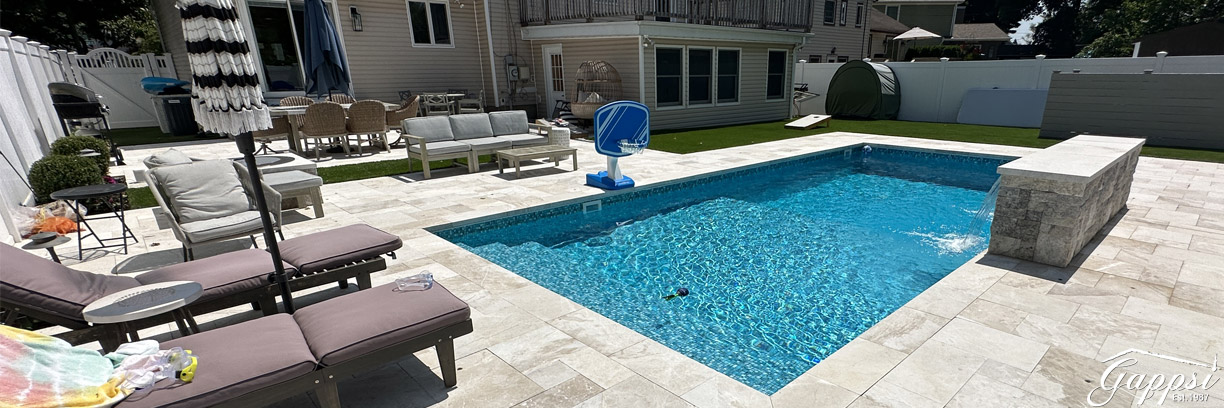
Kidney-shaped gunite swimming pools remodeled in Center Island NY. We installed new stairs across the shallow area and porcelain tiles in the water line. The pool was totally remodeled with new plumbing and a new finish. We used super blue diamond bright and tile markers on the edge of the steps. The patio consists of G44 limestone in a french pattern and two inches of G044 Marble Limestone all selected from the Gappsi natural stone collection. Very beautiful property, a very beautiful setting. The latest gunite remodels by Gappsi.

SCHEDULE A MEETING TODAY WITH GAPPSI VIEW OUR VIDEO OF A NATURAL LIMESTONE PATIO AND POOL LONG ISLAND NY

https://youtu.be/hel_u2kVv18  

Beyond the Deck: Other Outdoor Structures to Consider

A beautiful deck or patio is a fantastic foundation, but it’s often just the beginning of creating a truly functional and inviting outdoor living area. Adding vertical structures and other features can define different zones, provide comfort, and add significant character to your backyard. Think of these additions as the finishing touches that transform a simple space into a personal retreat. They can provide shade on a sunny day, create a focal point for your landscape, or introduce the soothing sounds of nature right outside your door.

Pergolas, Pavilions, and Gazebos

Adding an overhead structure can instantly make your patio or deck more usable and visually appealing. While they all provide a sense of enclosure and style, they serve slightly different functions. A pergola uses a slatted roof to offer partial shade, creating a beautiful play of light and shadow. A pavilion has a solid roof, providing complete protection from sun and rain, making it ideal for an outdoor dining or living room. Gazebos are charming, freestanding structures that can act as a quiet escape in a corner of your garden. These pavilions and pergolas not only offer comfort but also add a strong architectural element to your landscape.

Outdoor Kitchens

Take your backyard entertaining to the next level by creating a dedicated outdoor kitchen. This goes far beyond a standalone grill, incorporating elements like countertops for food prep, a sink for easy cleanup, storage cabinets, and even a refrigerator or pizza oven. An outdoor kitchen becomes a social hub, allowing you to cook and mingle with guests without ever leaving the party. Our masonry experts can design and build a custom kitchen using durable, weather-resistant materials that seamlessly integrate with your new patio and the style of your home, making al fresco dining a regular pleasure.

Ponds and Water Features

There is something inherently calming about the sound of moving water. Incorporating a water feature can transform the ambiance of your backyard, masking neighborhood noise and creating a peaceful, serene atmosphere. This could be anything from a small, elegant fountain to a cascading waterfall or a full-fledged pond with fish and aquatic plants. A well-placed water feature acts as a stunning focal point and attracts birds and butterflies, adding life and movement to your garden. It’s a wonderful way to complete your landscape design and make your outdoor space a true oasis.

Choosing a Deck and Patio Contractor on Long Island

Once you have a vision for your outdoor space, the most important decision you’ll make is choosing the right team to bring it to life. A new deck or patio is a significant investment in your home, and the quality of the installation is just as important as the materials you choose. The right contractor will not only deliver a beautiful, durable final product but will also make the entire process smooth and stress-free. Finding a trustworthy partner is key to ensuring your project is a success from the initial design to the final walkthrough.

DIY vs. Hiring a Professional

The idea of building your own deck or patio can be tempting, especially if you’re handy and looking to save on labor costs. However, these projects are often more complex than they appear. They require a deep understanding of structural integrity, local building codes, and proper site preparation to prevent future issues like shifting or water damage. A professional contractor brings years of experience, specialized tools, and an efficient team to the job. Hiring a pro is an investment in peace of mind, ensuring your new outdoor space is built safely, correctly, and will provide enjoyment for years to come.

What to Look for in a Contractor

When you start your search for a contractor on Long Island, you’ll find many options. To narrow down the field, it’s helpful to have a checklist of what separates a good contractor from a great one. A little research upfront can save you from headaches down the road and help you find a company that aligns with your vision and values. Focus on a few key areas to ensure you’re hiring a reputable, skilled, and reliable professional who will treat your home with respect.

Experience, Awards, and Certifications

Look for a contractor with a long and stable history in your community. A company that has been serving Long Island for decades, as Gappsi has since 1987, has a proven track record and a deep understanding of local soil conditions, weather patterns, and building regulations. Experience matters. Additionally, check for certifications from material manufacturers. For example, a “Trex Pro Platinum” builder has demonstrated the highest level of skill with that specific product. These credentials show a commitment to quality craftsmanship and ongoing education in the industry.

Warranties and Financing Options

A reputable contractor will always stand behind their work with a solid warranty. This is your protection and their promise of quality. Be sure to ask for details on the warranties they provide for both their labor and the materials they use. A strong warranty is a clear sign that the company is confident in the durability of its projects. It’s also wise to inquire about financing options. Many established companies offer flexible payment plans that can make your dream project more attainable without straining your budget.

The Value of a Free Consultation

A consultation should be much more than just a quick estimate. It is your opportunity to interview the contractor, discuss your ideas in detail, and see if you have a good rapport. A great contractor will listen carefully to your needs, ask thoughtful questions, and offer creative suggestions you may not have considered. They should provide a clear, itemized proposal that outlines the entire scope of the project. Use this meeting to gauge their professionalism, communication style, and passion for their work.

Visiting a Physical Showroom

While online galleries are helpful, nothing compares to seeing materials in person. A contractor with a physical showroom demonstrates a level of stability and commitment. Visiting a showroom allows you to touch and compare different types of porcelain and natural stone, see the true colors of composite decking, and visualize how different combinations will look. At the Gappsi Store, for example, you can explore a vast selection of high-quality materials firsthand, which helps you make more confident and informed decisions for your project.

Frequently Asked Questions

How can I make my dream patio more affordable without cutting corners? The best way to manage costs is to think about your project in phases. You can start by building the main patio or deck structure now and then add features like a pergola, outdoor kitchen, or custom lighting in the following years. Another great strategy is to simplify the design. A classic rectangular shape will always be more budget-friendly than a complex design with curves and multiple levels because it requires less labor and material waste.

Is composite or PVC decking really worth the higher upfront cost compared to wood? This is a great question that comes down to long-term value. While wood has a lower initial price, it requires consistent maintenance like staining and sealing every few years, which costs both time and money. Composite and PVC decking, on the other hand, only need occasional cleaning. Over the 30-plus year lifespan of a composite or PVC deck, the savings on maintenance can easily make up for the higher upfront cost, making it a smart investment for many homeowners.

For a pool deck, what is the most important thing to consider when choosing a stone? While the look of the stone is important, safety and comfort should be your top priorities for a pool deck. You’ll want a stone with a naturally slip-resistant texture to prevent accidents on wet surfaces. It’s also wise to choose a lighter-colored stone, as it will absorb less heat from the sun and be more comfortable for bare feet on hot summer days. A great material choice successfully balances beautiful style with these practical needs.

My current deck is old and worn out. Is it better to repair it or completely replace it? Deciding whether to repair or replace an old deck depends almost entirely on the condition of its underlying structure. If the foundation and frame are still solid, you might be able to simply replace the surface boards and railings. However, if there is any structural damage, a full replacement is the safest option. Keep in mind that a full replacement often costs more than building a new deck from scratch due to the added labor of demolition and disposal.

What’s the real benefit of visiting a showroom instead of just looking at pictures online? Seeing materials in person is a completely different experience than viewing them on a screen. In a showroom, you can see how light hits different stone textures, feel the difference between composite and PVC decking, and compare the true colors of various materials side-by-side. This helps you make a much more confident decision for a permanent addition to your home, ensuring the final result is exactly what you envisioned.

Key Takeaways

  • Select materials based on long-term value: Consider how options like natural stone or composite decking will affect future maintenance, durability, and overall lifespan, not just the upfront cost.
  • Plan your project strategically to manage costs: Building during the off-season, opting for a simpler design, or constructing your space in phases are effective ways to make your dream patio or deck more affordable.
  • Hire the right contractor to ensure quality: A successful project depends on a professional with extensive local experience, solid warranties, and a physical showroom where you can see materials firsthand.

Related Articles

  • Outdoor Living News: Pools, Fire Pits & Renovations | Gappsi Inc
  • Patio & Pergola Design Ideas for Long Island Backyards | Gappsi Inc
Share this page:

Gunite Pools Yaphank: What You Need to Know

Many homeowners believe their sloped or irregularly shaped yard makes installing a beautiful pool impossible. However, the right construction method can transform a challenging landscape into a stunning, multi-level retreat. Gunite pools are the ideal solution for complex properties because they are built entirely on-site, allowing them to be perfectly molded to your yard’s specific terrain. This flexibility means you don’t have to compromise on your vision. We have designed and installed breathtaking gunite pools in Yaphank on properties where standard pools simply would not fit. This guide explores how gunite construction delivers unmatched adaptability, strength, and beauty for any backyard.

Travertine Patios And Pools On Long Island

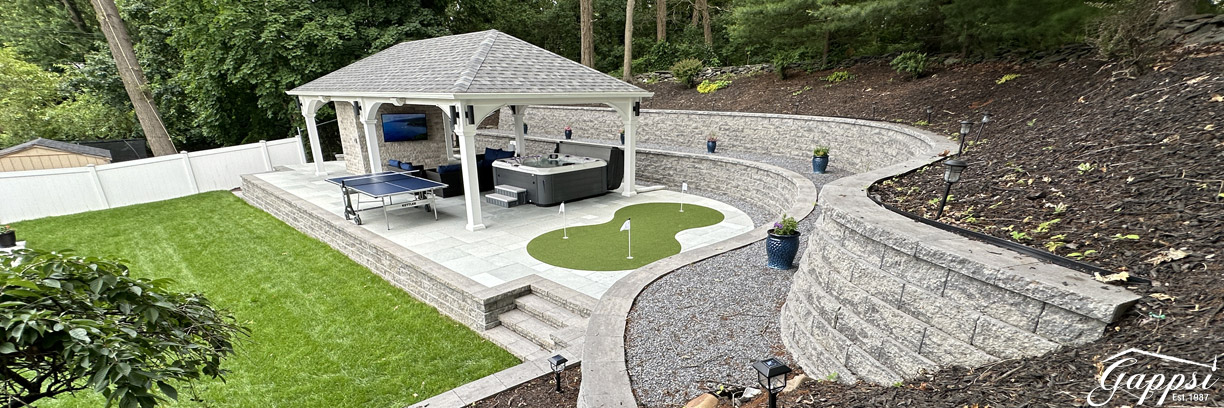
Travertine Patios And Pools On Long IslandGappsi designed and completed the landscaping and Travertine Patios And Pools On Long Island recently in a home located in Yaphank, NY.  Gappsi installed a freeform vinyl pool with a gunite spa spilling into the pool. Three structures were built including a gazebo, a pavilion, and a pergola; since the property is surrounded by woods populated by deer we decided to screen the gazebo for bugs also.

Backyard Gunite Spa with G035 Travertine Pavers

The home’s backyard was built on two levels so Gappsi utilized natural stone borders to retain the hearth and create a more natural look as well. The freeform vinyl pool is 18 x36, with the deepest part of the pool only 5 1/2 feet. There is a gradual slope on the bottom with the walls being straight down. The stairs that were installed are in the shallow area and we added 3 built-in stools in the pool to sit and relax poolside.

The spa that was added is a gunite spa finished with super blue diamond brights. This pavilion was built to add a shaded area while relaxing near the pool with a pergola for a lounge chair. The patio was paved with G035 travertine selected from the Gappsi stone collection and the veneer on the spa is also G035 travertine. The entire backyard has a very beautiful setting and layout.  The homeowners will enjoy the backyard for many many years to come along with all the family members.

Why Consider a Travertine Pool Deck?

One of the best reasons to consider these pavers is purely aesthetic. They provide a unique look that, when compared with other pavers, makes your patio or pool deck stand out amongst others in your neighborhood! An essential part of buying a pool is thinking about the best pool deck for your family. Travertine tile pool patios are increasingly popular because they are slip, heat, and mold resistant.  Travertine is a natural form of sedimentary limestone. It develops around natural spring mineral deposits, leading to distinctive swirls throughout the limestone. Due to the travertine tiles’ layered, mottled texture and beauty, the ancient Romans favored it as a building material.

Travertine-Patios-And-Pools-On-Long-Island3

Travertine pavers are ideal because they stay cool to the touch; Perfect for Barefoot-in!.

Simply by designing the yard with travertine pool pavers the customer increased the safety of their pool area by providing a stable, slip-resistant surface. The porous stones are naturally rough and even more so when they are wet making the surface slip-resistant.

Use Travertine Paving Stones in the following places:

  • pool decks
  • patios
  • decorative walls
  • stairs
  • fireplaces
  • driveway

Benefits of Travertine Patios And Pools On Long Island

Travertine is eco-friendly All travertine stones are eco-friendly as they adopt an environment-friendly manufacturing process as opposed to marble. In addition, this stone is super low maintenance; they stay intact much longer, thus avoiding the need to replace them regularly.

Extremely durable Due to Travertiens’s ability to withstand heat and extreme temperatures, travertine pool pavers are known to be extremely durable, thus making them ideal for all outdoor projects.  For example driveways, walkways, patios, and pools; enjoy your barbeques and parties.

Water Absorbency Concrete pavers do absorb some water where tiles do not, and neither does flagstone. Since water is constantly present around a swimming pool, especially if it is heavily used by children choosing travertine pavers is smart because it absorbs more water than other paving materials. Non-Fading Better paving materials today are fade resistant, but in the face of the sun, over the years even pavers do lose some color. Travertine pool decks are natural stones whose color is permanent versus dyes that are long-lasting or fade-resistant. No Efflorescence What is that? Efflorescence is a powdery white deposit that’s commonly seen on concrete surfaces and requires cleaning to remove it.

Travertine-Patios-And-Pools-On-Long-Island2

While this isn’t part of our list above of reasons for suggesting travertine for patios and pools the fact is that it is hugely popular. This isn’t a fad or trend; it’s been in big demand for patios and pool decks for several years now, and instead of showing signs of losing favor as a trend does, the requests for travertine paving in the backyard continue to grow.

Are You Ready To Level Up Your Yard?

When looking to remodel your pool deck, having a selection of colors and sizes to choose from makes the process all the more enjoyable. At Gappsi you can select from an array of travertine deck pavers’ colors, sizes, designs, and patterns. No matter your taste, finding the right paver for your style is simple!

Work With a Contractor For Maintaining Your Travertine Pool Deck

Although travertine tiles are water-resistant, they may gradually appear stained. Further, if your travertine pool deck is close to loose soil, dirt can become trapped in the natural pores.

Fortunately, you can easily prevent this by sealing your deck every three to five years. Although you’re not required to seal your deck, you’ll be grateful that you did so a few years down the road.  Your pool contractor can replace damaged tiles or may recommend a cleaning and sealing of your pool’s patio.

If you clean your travertine tiles on a regular basis, you shouldn’t need much help from a contractor to repair or replace them.

SCHEDULE A MEETING TODAY WITH GAPPSI

## What is a Gunite Pool?

A durable and highly customizable pool built to last.

If you can dream it, you can probably build it with gunite. A gunite pool is a type of concrete pool renowned for its strength and design versatility. The construction process is what makes it so unique. Instead of using a pre-formed shell, builders create a framework of steel bars, called rebar, in the exact shape and size you want. Then, a specialized crew sprays a dry mix of sand and cement through a high-pressure hose, mixing it with water right at the nozzle. This mixture, known as gunite, is applied onto the rebar cage, forming a dense, solid shell. This on-site construction method means your pool isn’t limited to standard shapes or sizes.

This process results in a single, monolithic structure that is incredibly strong and durable. After the gunite shell cures, a smooth finish like plaster, tile, or pebble aggregate is applied to create the final interior surface. Because they are built from the ground up, gunite pools offer limitless possibilities for customization. You can incorporate features like built-in benches, tanning ledges, waterfalls, and even attached spas seamlessly into the design. For homeowners looking to create a truly one-of-a-kind backyard oasis, a custom swimming pool made from gunite is often the perfect choice, allowing for a perfect fit with your landscape and personal style.

## Advantages and Disadvantages of Gunite Pools

Like any major home improvement project, choosing a gunite pool comes with its own set of pros and cons. Understanding these factors will help you decide if it’s the right investment for your Long Island home. Gunite offers unparalleled creative freedom and longevity, but it also requires a larger upfront budget and a bit more patience during the building process. Weighing these aspects carefully is the key to making a choice you’ll be happy with for decades to come. Let’s look at the key points to consider.

Advantages of Gunite

Unmatched Design Flexibility

The single greatest advantage of a gunite pool is the complete design freedom it offers. Since it’s built on-site using a rebar framework, you are not confined to predetermined shapes or sizes. Whether you envision a geometric lap pool, a lagoon-style oasis with gentle curves, or a complex design with multiple levels and features, gunite can make it happen. This flexibility allows you to create a pool that perfectly complements your home’s architecture and the unique layout of your backyard. You can easily add custom steps, tanning ledges, swim-up bars, and integrated spas for a truly personalized experience.

Exceptional Durability

Gunite pools are built to last. The combination of a steel rebar grid and high-strength concrete creates an incredibly robust and permanent structure. With proper care, a gunite pool shell can last for over 50 years, making it a long-term investment in your property. This strength also means they are well-suited for various soil conditions and are less susceptible to damage from ground movement compared to other pool types. The durable finish, when properly maintained, stands up well to daily use, ensuring your pool remains a beautiful centerpiece of your yard for many years.

Disadvantages of Gunite

High Initial Investment

The custom nature and labor-intensive construction process of gunite pools mean they typically have a higher upfront cost than fiberglass or vinyl liner options. The price reflects the materials, skilled labor, and time required to build a custom structure from scratch. While it’s a significant initial investment, it’s important to view it in the context of the pool’s longevity and the value it adds to your home. For many homeowners, the ability to get the exact design they want makes the higher cost worthwhile.

Porous Surface and Maintenance

The plaster finish traditionally used in gunite pools is porous, which means it has microscopic holes. This texture can make it easier for algae to take hold if water chemistry isn’t consistently maintained. To prevent this, gunite pools require regular brushing and careful chemical balancing. Over time, the plaster surface will also need to be refinished, typically every 10 to 15 years, to keep it smooth and stain-free. While this requires ongoing attention, diligent maintenance ensures the pool remains pristine and inviting.

Lengthy Construction Process

Building a gunite pool is not a quick project. The multi-stage process, which includes excavation, plumbing, rebar installation, gunite application, curing, and finishing, takes significantly longer than installing a pre-made fiberglass pool. The curing process for the gunite shell alone can take several weeks before the final interior finish can be applied. Homeowners should be prepared for a construction timeline that can span several months, depending on the project’s complexity and weather conditions.

## The Cost of Gunite Pools in Long Island

When planning for a gunite pool, it’s helpful to understand both the initial installation price and the long-term ownership costs. On Long Island, the investment reflects the high-quality materials and expert labor required to build a durable, custom pool. The total cost can vary widely based on the pool’s size, shape, depth, and any additional features you choose, such as waterfalls, custom lighting, or an attached spa. Partnering with an experienced builder like Gappsi ensures you get a detailed and transparent quote that covers every aspect of the project, from excavation to the final finish.

Average Installation Costs

The initial installation of a gunite swimming pool is a significant investment, with typical costs ranging from $65,000 to $120,000. This price range generally covers the basic construction of the pool, including excavation, the gunite shell, standard plumbing, and a basic plaster finish. However, the final price tag can easily increase with the addition of custom features. Upgrades like premium porcelain or natural stone decking, intricate tile work, automated systems, and elaborate water features will add to the overall budget. It’s best to get a specific quote based on your unique design.

Long-Term Maintenance and Repair Costs

Beyond the initial build, you should budget for ongoing maintenance. Yearly costs for a gunite pool, including chemicals, cleaning, and electricity, typically fall between $2,700 and $4,000. Because the plaster surface is porous, it requires consistent chemical management to prevent algae growth. The biggest long-term expense is resurfacing, which is generally needed every 10 to 15 years to restore the pool’s smooth, clean finish. This process can cost several thousand dollars but is essential for maintaining the pool’s integrity and appearance over its long lifespan.

## Gunite Pools vs. Other Pool Types

Choosing the right type of pool is one of the most important decisions you’ll make for your backyard project. While gunite is a fantastic option for its customizability and durability, it’s helpful to see how it compares to other popular choices like fiberglass and vinyl liner pools. Each type has distinct characteristics that make it better suited for different priorities, budgets, and backyard spaces. Understanding these differences will help you confidently select the pool that best aligns with your vision and lifestyle for your Long Island home.

Gunite vs. Fiberglass Pools

The primary difference between gunite and fiberglass pools lies in their construction and design flexibility. Fiberglass pools are factory-molded into pre-set shapes and sizes and are delivered to your home as a single shell. This makes installation much faster, often taking only a few weeks. However, you are limited to the manufacturer’s available designs. In contrast, gunite pools are built on-site, allowing for infinite design possibilities. If you want a pool that perfectly fits an irregular space or includes unique, integrated features, gunite is the superior choice for customization.

Gunite vs. Vinyl Liner Pools

Gunite and vinyl liner pools both offer significant design flexibility, but they differ greatly in terms of durability and long-term maintenance. A vinyl liner pool has a lower initial cost, but the liner itself is a temporary component that needs to be replaced every 5 to 10 years. This recurring expense can add up over the life of the pool. A gunite pool, on the other hand, is a permanent structure. While it requires resurfacing every decade or so, the underlying shell is built to last for 50 years or more, offering a more permanent and substantial feel.

## Gunite Pool Repair and Renovation

Even the most durable gunite pools will eventually need some attention to keep them looking and functioning their best. Over time, the surface can develop cracks, stains, or a rough texture. Addressing these issues promptly is key to preventing bigger problems and extending the life of your pool’s finish. Whether you need a simple patch or a complete overhaul, understanding your options for repair and renovation can help you maintain the value and enjoyment of your backyard investment. Professional services can restore your pool to its original beauty.

Patching vs. Resurfacing: What’s the Difference?

When you notice a small issue, you might wonder if you need a patch or a full resurfacing. Minor problems like a small chip or a hairline crack can often be fixed with a simple patch. A professional can apply a matching plaster compound to fill the damaged area, creating a seamless repair. However, if your pool has widespread cracking, extensive staining, or the surface has become unpleasantly rough, patching is just a temporary fix. In these cases, a full resurfacing, which involves chipping away the old finish and applying a new layer, is the correct long-term solution.

Signs You Need a Professional Renovation

Knowing when to call a professional for a renovation can save you from more costly repairs down the road. One of the clearest signs is visible, widespread cracking or “crazing” across the pool’s surface. Another indicator is a texture that feels rough or sandy to the touch, which can be uncomfortable for swimmers. If you find yourself constantly battling algae blooms despite balanced water chemistry, it could mean the porous surface has become a breeding ground for growth. A professional restoration and sealing can address these issues and give your pool a fresh start.

VIEW OUR VIDEO OF TRAVERTINE PATIOS AND POOLS ON LONG ISLAND

https://youtu.be/SvcsU5rDc3U

Frequently Asked Questions

The project has a vinyl pool but a gunite spa. Why not just use one material for both? This is a perfect example of how a smart design can give you the best of both worlds. Combining materials allows you to allocate your budget effectively while still getting those high-end custom features. A vinyl liner pool can be a more cost-effective option for the main swimming area, while a gunite spa offers total freedom in shape, integrated seating, and that beautiful spillover effect that is difficult to replicate with other methods. It’s a creative way to get a custom look that meets your specific needs.

My yard isn’t perfectly flat. Does that mean a gunite pool is my only option? While gunite is the undisputed champion for challenging properties, it’s not your only choice, but it is often the best one for creating a seamless, integrated design. Because gunite pools are built on-site, they can be molded perfectly to the unique contours of your land. This allows us to work with slopes and irregular shapes to create stunning multi-level patios and pool areas, turning a potential problem into your backyard’s most impressive feature.

Travertine sounds nice, but is it really that much better than concrete pavers? It really comes down to the long-term experience and value. Think about walking barefoot on a hot summer day; travertine stays naturally cooler to the touch. Its porous nature provides excellent slip resistance, which is a huge plus for safety around the pool. Unlike concrete pavers that can fade over time, travertine’s color is part of the stone itself, so its beauty is permanent. It’s an investment in comfort, safety, and a timeless look that won’t need replacing.

What does the weekly upkeep for a gunite pool and travertine patio actually look like? The day-to-day maintenance is very manageable. For a gunite pool, you will want to stay on top of your water chemistry and give the surface a regular brushing to keep it feeling smooth and prevent algae. For the travertine patio, a simple sweep or rinse with a hose to clear leaves and dirt is usually all it needs. The more significant tasks, like sealing the stone or eventually resurfacing the pool, are only necessary every several years, so the weekly commitment is minimal.

I love the look of the Yaphank project, but my space is smaller. Can I still achieve a high-end feel? Absolutely. A luxurious feel is all about thoughtful design and quality materials, not necessarily grand scale. You can apply the exact same principles to a more compact space. A smaller, custom-shaped gunite pool, sometimes called a “spool,” paired with a beautiful travertine patio can feel just as elegant and resort-like. The key is working with a designer who can maximize the potential of your yard to create a personal oasis, no matter the size.

Key Takeaways

  • Gunite offers total design flexibility: Since they are constructed on-site, gunite pools and spas can be built to fit any yard, making them an ideal solution for sloped properties or custom shapes with integrated features like benches and waterfalls.
  • Travertine is a premier choice for pool decks: This natural stone combines beauty with practical benefits; it stays cool to the touch, provides a naturally slip-resistant surface, and its color is permanent, ensuring it will not fade over time.
  • Plan for long-term value and maintenance: A high-quality backyard is a significant investment. Gunite pools have a higher initial cost but offer incredible longevity, while travertine requires simple, periodic sealing to protect its beauty and integrity for years to come.

Related Articles

Share this page:

How to Create a Kid-Friendly Backyard Design

Your backyard is more than just the land behind your house; it’s an investment in your family’s happiness and your children’s memories. Giving kids a safe and inspiring place to play outside is one of the best gifts you can offer. But creating that perfect environment requires more than just a swing set and a patch of grass. It demands a thoughtful approach that considers how your children will grow and how your family will use the space together for years to come. We’ll show you how a strategic backyard design kid friendly in its approach can transform your property into a hub of activity, imagination, and connection.

Kid Friendly Backyard Ideas

g038 marble pavers

Playing outside and spending quality time enjoying nature is an essential part of childhood so designing a kid friendly backyard is important. It is an experience that many of us from a previous generation enjoyed far more easily than those born today.

When designing an outdoor space safety is a clear priority, but so are look, feel, and function. A kid scape only works when it is attractive, functional, and enjoyable to be in, otherwise, neither kids nor adults will use it.

Take a look at this makeover in Syosset where Gappsi designed a Kid Friendly Backyard. This makeover included:

G038 Marble Pavers Backyard Patio Design

Gappsi installed G038 marble pavers for the entire backyard patio design.  Gappsi designers chose a walnut travertine veneer for the walls and the sitting walls. This system is great for retaining walls, sitting walls, and columns that will show a more natural stone character.  The sitting wall is also a retaining wall to hold the flower bed between the pool and the basketball court.

Synthetic Turf Floor

Gappsi installed next synthetic turf floor.  Synthetic turf is UV stabilized to protect against color fading; unlike natural turf that will have to deal with diseases, drought, and dormancy, artificial grass has the benefits of looking great 24/7 all year long. It can also be used to spruce up spaces where it isn’t feasible to grow a lawn.

Often synthetic turf is promoted as environmentally friendly because homeowners do not have water, to fertilize or mow their lawns anymore, reducing emissions by no longer being dependent on gas-powered machines.

Maintenance is often said to be nonexistent for synthetic turf, but if homeowners do want their artificial turf to last as long as possible, there is some maintenance needed.

Kid-Friendly-Backyard-Synthetic-Turf

High-Quality Trampolines Everyone Will Love!

We provide high-quality in-ground, above-ground trampolines, and playground equipment. Let us help you find the perfect trampoline for your family. We’ve been creating safe and fun backyard memories for decades.

When getting ready to put a trampoline inground there are many things to consider. First, do you have space? Make sure you leave yourself adequate space around the trampoline with an enclosure should the kids land outside of the jumping area. You should give yourself at least 18ft overhead clearance and 6ft clearance on each side of the trampoline.

What makes our Trampolines Great?

  • Heavy-Duty Frames – provide stability, support, and safety; they also last longer.
  • The Bounce in the Springs – the more springs and the longer the spring length, the better the bounce experience. Stainless steel, tapered springs provide the longest lasting and best bouncing springs for trampolines.
  • The Jump Bed – Also referred to as the jump mat, this part of the trampoline is one area you don’t want to skimp. Made of a high-grade polypropylene material that is smooth to the touch, this is what handles all the tension and safely catches you after each bounce. The stitching surrounding the bed is critical for strength and durability and that is why all our jump beds have a minimum of 8 rows of stitching.
  • Safety Frame Pad – This important safety piece should be at least 1” thick and be in a UV-treated vinyl covering that will have low wear and long life. The pad should secure tightly and cover the frame and springs.

Kid-Friendly-Backyard-InGround-TrampolineSports Game Courts

Make your backyard an all-weather sports zone and a gathering place for family and friends with a multi Sports Game Court from Gappsi. Enjoy a setting where basketball, racquet sports, volleyball, shuffleboard, and more are all in play, and do so in a safe environment that provides you the peace of mind of knowing where your children are.

Gappsi backyard sports game courts feature the best of what our high-performance surfaces have to offer. This sports game court was designed on regulation asphalt.  Experience the game you love on a floor built with stress reduction in mind. Play with the same hoops system the pros use and set your children on a course of enjoying the games they love in the comfort and safety of their own backyard.

Kid Friendly Backyard Sports Game Courts

Swimming Pool Upgrade Refresh Your Pool This Summer

Liner looking sun-bleached? Tired of looking at the same pattern? You don’t need a new shape, style, or size to create a new poolscape. A stunning makeover is as simple as replacing your interior pool finish. It’s simple, affordable, and usually just takes one day to complete. Choose from our many beautiful patterns and enjoy your remodeled, revitalized new pool!

Kid-Friendly-Backyard-Pool-Liner-G038-Pavers

Even though you and your kids might have your separate backyard retreats, that does not mean you cannot ever come together as a family outdoors! It is important to include features in your backyard that everyone can enjoy, whether alone or as a group.

Don’t forget to add adult amenities like fire pits which can easily become family-friendly with supervision. Host a kid-friendly cook-out with summer staples like hot dogs and s’mores cooking inside our Wood Fire Stoves.

Safety First: Core Principles for a Worry-Free Yard

Before you start dreaming of swing sets and sandboxes, it’s essential to lay a foundation of safety. Creating a secure environment is the first step toward a backyard where kids can explore freely and parents can relax. A truly kid-friendly yard is one where potential hazards have been identified and addressed, from the perimeter to the plants. By thinking through safety measures first, you can design a space that offers peace of mind and allows the fun to happen without constant worry. This means securing boundaries, ensuring you can always see the play areas, choosing soft surfaces for inevitable tumbles, and clearing the landscape of any hidden dangers.

Secure the Perimeter with Fencing

A reliable fence is your first line of defense in a kid-friendly backyard. It creates a clear boundary that keeps curious toddlers from wandering off and prevents unwanted animals from entering the yard. When choosing a design, function is just as important as form. Ensure that any gaps in the fence are no wider than four inches to prevent little heads or bodies from getting stuck. For gates, place the latches high up and out of reach of small children to stop them from opening the gate on their own. A secure perimeter is non-negotiable for safety, and a well-chosen fence can also add privacy and aesthetic value to your property.

Maintain Clear Lines of Sight to Play Areas

You can’t have eyes on your kids every single second, but you can design your yard to make supervision much easier. Position key play zones, like a swing set or trampoline, where they are easily visible from common hangout spots. Think about the view from your kitchen window, back deck, or patio seating area. By maintaining clear lines of sight, you can quickly check in on the kids while you’re preparing dinner or chatting with a friend. Avoid placing large shrubs or structures that might obstruct your view of the main play areas. This simple design principle allows for passive supervision, giving kids a sense of independence while ensuring you can step in if needed.

Choose the Right Play Surface

Kids run, jump, and fall—it’s all part of playing. The surface they land on can make the difference between a scraped knee and a more serious injury. While a lush lawn is a classic choice, it can become hard-packed and muddy in high-traffic areas. It’s worth exploring alternative surfaces specifically designed for safety and durability under play structures. Options range from natural materials like playground-grade mulch and pea gravel to modern solutions like rubberized surfaces and synthetic turf. The right surface provides critical cushioning, reduces the risk of injury, and can define a dedicated play zone within your larger backyard design, keeping the fun contained and the rest of your yard looking great.

Synthetic Turf for a Soft Landing

For a surface that is consistently soft, green, and low-maintenance, synthetic turf is an excellent choice. Unlike natural grass, it won’t develop bare, muddy patches under a swing set or at the base of a slide. High-quality synthetic turf provides a cushioned surface that’s perfect for active play and looks great year-round without the need for watering, mowing, or fertilizing. It’s also UV-stabilized to resist fading in the sun, ensuring your investment stays vibrant for years. This makes it a practical and attractive solution for creating a safe, all-weather play area that kids will love and parents will appreciate for its durability and easy upkeep.

Other Safe Surface Options

Beyond turf, several other materials offer excellent safety benefits for play areas. Rubberized surfaces or poured-in-place rubber provide maximum impact absorption, making them one of the safest options for falls, though their appearance may not suit every landscape design. For a more natural look, consider playground-certified wood chips or bark mulch, which offer good cushioning and blend well with garden surroundings. Pea gravel is another popular choice that is affordable and drains well, but it may not be ideal for very young children who might be tempted to put the small stones in their mouths. Each option has its own set of benefits, so consider your budget, aesthetic, and children’s ages when deciding.

Eliminate Common Landscape Hazards

Take a walk through your yard from a child’s perspective to spot potential dangers. Sharp edges on retaining walls, planters, or garden edging can be a hazard for a running child. Opt for materials with rounded corners or soften existing edges with rubber guards. Check for any tripping hazards like exposed tree roots, uneven pavers, or hoses left across a path. Ensure that any water features, like ponds or fountains, are properly secured or fenced off. A thorough safety audit helps you remove these common landscape hazards, making the entire backyard a safer place for exploration and play without constant warnings to “be careful.”

Select Child-Safe Plants for Your Garden

Plants add beauty and life to a backyard, but it’s crucial to choose them wisely when kids are around. Many common ornamental plants, such as lilies, oleander, foxglove, and holly, are toxic if ingested. Avoid these and opt for non-toxic alternatives instead. Also, be mindful of plants with large thorns or sharp spikes that could cause scratches or eye injuries. A thoughtful landscape design can incorporate beautiful, kid-safe plants that are both hardy and harmless. Choosing plants that are safe to touch and be around allows children to interact with nature without risk, turning your garden into a place of discovery rather than danger.

Designing for Play and Development

A great kid-friendly backyard is more than just a safe space—it’s an environment that encourages creativity, physical activity, and imaginative play. The best designs offer a variety of experiences that cater to different moods and interests, from high-energy running to quiet, focused activities. By thinking about how children play and develop, you can create zones that support their growth. This means including areas for active games, cozy nooks for make-believe, and sensory elements that connect them with nature. A well-designed play space becomes a backdrop for countless childhood memories and an extension of your home where kids can truly be themselves.

Involve Your Kids in the Planning

One of the best ways to ensure your new backyard gets used is to ask its primary users what they want. Sit down with your children and brainstorm ideas together. You might be surprised by their creativity! While they might ask for a roller coaster, their core ideas—like a place to climb, a spot for secret meetings, or a surface for drawing—can be translated into realistic features. Involving them in the planning process gives them a sense of ownership and builds excitement for the project. When kids feel like they’ve had a say in creating the space, they are far more likely to engage with it and take care of it.

Create a Variety of Play Zones

Children’s play is rarely one-note; it shifts from loud and active to quiet and imaginative in an instant. Your backyard design should reflect this by offering a variety of zones. Think beyond a single, large play structure and consider creating multiple destinations within the yard. You can use landscaping to define different areas—a small, hidden nook behind some tall grasses for a secret fort, an open lawn for running games, and a paved path for wheeled toys. This approach encourages movement and exploration, keeping kids engaged for longer as they travel between their different play spaces, each offering a unique experience.

Spaces for Active Play

Every kid needs room to burn off energy, so dedicating space for active play is a must. An open stretch of lawn is perfect for soccer, tag, and cartwheels. For more structured fun, consider installing a dedicated sports game court for basketball or pickleball, which can be enjoyed by the whole family. Mixing hard surfaces with soft ones provides versatility; a small patio or pathway is great for bikes and scooters, while a soft, grassy area is ideal for a swing set or trampoline. Providing these outlets for physical activity helps children develop coordination and strength while having a blast right at home.

Nooks for Quiet and Imaginative Time

Just as important as spaces for running are nooks for quiet reflection and imaginative play. A simple teepee, a small playhouse, or even a cozy spot under a large tree can become a magical world for a child. Use plants and natural structures to create a sense of enclosure and privacy for these areas. These quiet zones provide a necessary retreat from more boisterous activities, giving kids a place to read, draw, or get lost in their own stories. These little hideaways foster creativity and independence, offering a personal space within the larger family yard.

Incorporate Nature and Sensory Elements

Engage all five senses by incorporating a variety of natural elements into your backyard design. Plant colorful flowers that attract butterflies, fragrant herbs like lavender and mint that release a lovely scent when touched, and ornamental grasses that make a gentle rustling sound in the wind. A small vegetable patch or a few pots of strawberries can teach kids where food comes from and give them the satisfaction of eating something they grew. These sensory-rich features connect children to the natural world, encourage curiosity, and provide endless opportunities for hands-on learning and discovery right outside your door.

Add a Touch of Creative Fun

Go beyond traditional play equipment by adding features that spark creativity. An outdoor chalkboard mounted on a fence can become a canvas for endless masterpieces. A simple “mud kitchen” made from old pots, pans, and a bit of dirt and water can provide hours of imaginative culinary fun. You could also set up a small table in a shaded spot with supplies for nature-based art projects, like painting rocks or making leaf rubbings. These simple, often DIY, additions encourage unstructured play and allow kids to express their creativity in a fun, messy, and memorable way.

Provide Shelter for All-Weather Fun

Don’t let a little rain or intense sun stop the fun. Including a sheltered area in your backyard ensures that kids can enjoy the outdoors in almost any weather. A sturdy pavilion or pergola can provide ample shade on hot summer days and keep a play area dry during a light drizzle. Even a simple shade sail or a large umbrella can create a comfortable spot for play. These structures not only extend playtime but also provide a designated spot for outdoor dining, art projects, or just a quiet place to relax, making your backyard more functional for the entire family, no matter the forecast.

A Backyard for the Whole Family

While the goal is a kid-friendly backyard, the ultimate success is a space that the entire family loves to use together. The best designs seamlessly blend areas for children’s play with comfortable, stylish spaces for adult relaxation. It’s about creating a cohesive environment where different activities can happen in harmony. This means thinking about traffic flow, storage, and aesthetics from a holistic perspective. A family-friendly backyard isn’t just a playground; it’s an outdoor living room where you can host barbecues, relax with a book, and watch your kids play, all within the same beautiful and functional space.

Zoning for Adult Relaxation and Kids’ Fun

Creating distinct zones is key to a harmonious family backyard. Designate a comfortable patio or deck area for adults with seating, perhaps near an outdoor kitchen or fire pit. This space should be positioned to have a good view of the kids’ primary play zones, allowing for easy supervision without having to be in the middle of the action. This separation allows adults to relax and socialize while kids have the freedom to be loud and energetic in their own area. Thoughtful zoning ensures that everyone has a space tailored to their needs, preventing toys from taking over the entire yard and creating a more peaceful environment for all.

Integrate Smart Toy Storage

A yard full of scattered toys can quickly look cluttered and chaotic. Plan for smart storage solutions from the beginning to keep the space tidy and organized. A large, weatherproof deck box can hold balls, water toys, and sports equipment. Benches with built-in storage can serve double duty as seating and a place to hide smaller items. For larger items, a small, attractive shed can keep bikes, scooters, and ride-on toys out of sight when not in use. Integrating storage into your landscape design helps maintain a clean, polished look and makes cleanup at the end of the day quick and easy.

Make Aesthetically Pleasing Choices

A kid-friendly yard doesn’t have to be an eyesore filled with brightly colored plastic. Whenever possible, choose play structures and furniture made from natural materials like wood, rope, or metal in neutral or earth tones. These elements blend more seamlessly into a natural landscape and often have a more timeless appeal. When selecting play equipment, consider its visual impact from your home and patio. By making aesthetically pleasing choices, you can create a space that feels like a cohesive and sophisticated landscape design rather than just a playground, enhancing your property’s overall value and your enjoyment of the space.

Try Gardening Together

Gardening is a wonderful activity that can be enjoyed by all ages. Set aside a small plot or a few raised garden beds where you can plant vegetables, herbs, or flowers as a family. Give kids their own small tools and assign them simple tasks like watering or weeding. It’s a fantastic way to teach them about nature, patience, and where their food comes from. The shared experience of tending to a garden and harvesting the results creates lasting memories and fosters a sense of responsibility and connection to the outdoors. Plus, you get to enjoy fresh, homegrown produce together.

Protecting Your Landscape from Playtime

Kids are tough on a landscape. Between foot traffic, stray balls, and endless energy, a delicate garden can take a beating. The key is to design a yard that is as resilient as it is beautiful. This means making smart choices about plants and materials that can withstand the rigors of active play. By planning for durability from the start, you can create a backyard that looks great not just on day one, but after years of family fun. A resilient landscape minimizes maintenance and stress, allowing you to spend more time enjoying your outdoor space and less time repairing it.

Use Durable, Resilient Plants

When selecting plants for your backyard, especially near play areas, think tough. Choose hardy, resilient species that can tolerate some foot traffic and an occasional hit from a ball. Sturdy shrubs and ornamental grasses are often better choices for borders around play zones than delicate flowers. For groundcover in high-traffic areas, look for creeping varieties that are known for their durability. Placing more fragile plants in raised beds or containers can also help protect them. Selecting the right plants ensures your garden will continue to thrive despite the daily activities of an active family.

Install Repairable Hardscapes

Accidents happen, and hardscape surfaces are not immune to damage from dropped toys or bike mishaps. When designing patios, walkways, or pool surrounds, consider using materials that are easy to repair. Installing individual pavers or natural stones is often a smarter choice than a single, large slab of concrete. If a paver cracks or becomes stained, you can simply lift it out and replace that one unit—a much simpler and more affordable fix than repairing a large concrete surface. This forward-thinking approach to materials ensures your hardscapes can be easily maintained, keeping them safe and looking their best for years to come.

SCHEDULE A MEETING TODAY WITH GAPPSI

VIEW OUR VIDEO OF A KID FRIENDLY BACKYARD

https://youtu.be/IIBIz7cBp68

Any services that are not covered under our Home Improvement License are performed by a licensed and insured Subcontractor.

Our showroom display also includes the most beautiful and unique imported natural stones for patios, walkways, and driveways.

We provide these services in the following areas of Nassau and Suffolk County. (Glen Cove, Hempstead, North Hempstead, Oyster Bay, Babylon, Huntington, Islip, Smithtown, Brookhaven, Southampton, Riverhead, East Hampton, Southold, Old Brookville, Old Westbury, Mill Neck, Nissequogue, Lloyd Harbor, Muttontown, Coldspring Harbor, and East Norwich) Gappsi’s knowledgeable and experienced personnel can help you create the yard of your dreams!

Frequently Asked Questions

How can I make my backyard safe for my kids without sacrificing style? Safety and style can absolutely go hand in hand. The key is to integrate safety features into a cohesive design. For example, a beautiful fence not only secures the yard but also adds to your home’s curb appeal. You can also choose hardscape materials like pavers with rounded edges for patios and walkways, and use thoughtful landscaping to create soft, natural barriers around play zones instead of harsh plastic borders.

Is synthetic turf really a good choice for a family with active kids? Synthetic turf is a fantastic option for play areas. It provides a consistently soft and even surface, which means fewer scrapes from falls and no more muddy footprints being tracked into the house. It’s incredibly durable and stands up to constant running and playing without developing the bare patches you see with natural grass. Plus, you get a beautiful green lawn year-round without the constant mowing and watering.

How can I create a backyard that both kids and adults will actually want to use? The best approach is to create distinct zones for different activities. You can design a comfortable patio or deck area for adults to relax and socialize, positioned with a clear view of the kids’ main play areas. This allows you to keep an eye on things from a distance. Integrating smart storage, like benches with hidden compartments or a stylish shed, also helps keep toys organized and prevents them from taking over the entire space.

My kids get bored easily. How can I design a space that will keep them engaged long-term? Think about creating a variety of play experiences rather than just installing one large swing set. A great backyard might include an open lawn for running games, a small hard surface like a sports court for basketball or riding scooters, and a quiet, hidden nook for imaginative play. By offering different types of spaces, you encourage kids to move around and use their creativity, which keeps them entertained for much longer.

What’s the best way to protect my plants and patio from the wear and tear of playtime? Designing for durability is essential. Choose hardy, resilient plants for areas that will see a lot of action, and place more delicate flowers in raised beds or containers to keep them out of the main traffic paths. For hardscapes like patios, using individual pavers is a smart move. If a single paver gets cracked or stained, it can be replaced easily, which is a much simpler fix than repairing a large slab of concrete.

Key Takeaways

  • Prioritize safety from the ground up: Start your design by addressing core safety needs, including secure fencing, choosing soft landing surfaces like synthetic turf for play zones, and making sure you have clear lines of sight from your house or patio.
  • Create zones for every kind of fun: A successful kid-friendly yard supports more than just one activity. Designate specific areas for high-energy games, like a sports court, and also create cozy nooks for quiet, imaginative play.
  • Design a space for everyone to enjoy: A truly family-friendly backyard works for adults too. Use smart zoning to create separate areas for relaxation and play, incorporate clever storage to manage toy clutter, and select durable materials that look great.
Share this page:

Travertine Backyard Patios and Pools

Travertine Backyard Patios and Pools

travertine backyard patio and pool at night

Travertine backyard patios and pool designs simply are some of the best choices for your poolscape designs. When considering your patio choice you will want to consider travertine pavers because they are the perfect option for your patio below are some of the many benefits.

Nothing will enhance the beauty of your outdoor entrances, patios, pool decks, and/or walkways like our elegant travertine stone pavers.

The Benefits of Travertine Pavers

One of the best reasons to consider these pavers is purely aesthetic. They offer a unique look to your home when compared with other pavers, making your patio or pool deck stand out amongst others in your neighborhood!

Travertine is also a great choice for use around pools because they don’t become slippery when wet. This offers a higher level of safety when you and your family are enjoying your pool.

Designing your backyard patio and pool area it is important to consider how affordable and durable the material will be.  Travertine proves to be a great investment because of the high-quality product and longevity of the stone. Their durability derives from their resistance to freezing, thawing, and fading in weather, and if you need to replace a single paver, the process is very easy.

Additionally, travertine pavers are easy to clean, ensuring that they will continue to look great for years to come.

If you are looking for the perfect pavers for your next project, travertine pavers could be your best choice. Take some time to look at all of the options available here at the Gappsi Gallery to see which selections match your space.

Travertine Backyard Patios and Pools

Travertine French Pattern Backyard Design In Kings Park NY

This backyard design located in Kings Park, NY includes Travertine French Pattern Pavers with a pool coping.  The project was designed by Giuseppe Abbrancati and built by his team at Gappsi. The backyard was completely remodeled and included in the installation of a gunite swimming pool finished with super blue Diamond Brite plaster with porcelain tiles on the top of the water line as well as markers on steps, spa, and sundeck.

The pool is equipped with a gunite spa, a sundeck where lounge chairs can be placed in 12 inches of water, a bubbler jet on the sundeck, and LED lights. The backyard design included a 16×16 pavilion built over an outdoor kitchen with all twin eagle appliances. A retaining wall was built with poured concrete to retain the backyard but also used for a sheer descent water feature. The patio, pool coping, and wall veneers consist of walnut travertine imported from Turkey, using a beige brown shade stone color very suitable for pool areas. Landscape lighting was also installed to create a peaceful ambiance at night time making this backyard layout a retreat for the happy homeowners. Gappsi designed, supplied, and installed the entire project.

SCHEDULE A MEETING TODAY WITH GAPPSI

Gappsi Group offers the following residential and commercial services to the public:

Home RemodelingSwimming PoolsPaver Cleaning and SealingSports Game CourtsEpoxy FlooringLandscape, and Masonry Design, and Construction.

Our latest division is the manufacturing of clay brick ovens, made from the best materials on earth. We distribute all these ovens throughout North America.  In addition, we display them in the showroom and have weekly demonstrations on how to use the ovens.

VIEW OUR VIDEO OF A TRAVERTINE BACKYARD PATIOS AND POOLS

Our showroom display also includes the most beautiful and unique imported natural stones for patios, walkways, and driveways.

We provide these services in the following areas of Nassau and Suffolk County. (Glen Cove, Hempstead, North Hempstead, Oyster Bay, Babylon, Huntington, Islip. Smithtown, Brookhaven, Southampton, Riverhead, East Hampton, Southold, Old Brookville, Old Westbury, Mill Neck. Nissequogue, Lloyd Harbor, Muttontown, Coldspring Harbor, and East Norwich).  Gappsi’s knowledgeable and experienced personnel can help you create the yard of your dreams!

Share this page:

A Homeowner’s Guide to Flamed Granite Pavers

The finish on a paver is just as important as the stone itself, especially when it comes to safety and appearance. You may have heard of polished or honed stone, but the term “flamed” describes a special process. By applying a high-temperature flame to the surface of granite, the individual grains burst, creating a beautiful, rough texture. This process results in flamed granite pavers, a material celebrated for its excellent grip and organic feel. This guide explains everything you need to know, from installation best practices to long-term care, so you can decide if it’s the right fit.

Flamed Granite Pavers For Driveways

Flamed Granite pavers driveway

Why should you use Granite Pavers when paving your driveway?

Granite is a very common type of rock, flamed granite is another hard-wearing granite paver you can use. The flamed finish provides that extra grip surface. The flames granite is very dense because it has been torched with a flame to cause an exfoliated finish, commonly known as a “Flamed” finish.  The flamed finish provides the stone with a high grip surface, hence its popularity for domestic and commercial jobs.

Gappsi’s Flamed Granite Pavers are widely used in the home, on patios, decks, and around commercial properties. Granite has been used in construction for tens of thousands of years now. It is a popular stone also due to its very tough and durable nature along with an abundant stone.  Most granite deposits are massive making the cost lower compared to some of the other types of stone used in construction. Granite is quite beautiful and is often preferred in areas where style is the primary concern as opposed to the functionality of the area the stone is used in.

What is the texture & color of granite?

Granite has a coarse to medium texture and can come in a wide range of colors including shades of pink and grey. The color depends entirely on the chemistry and different minerals making up the stone. Generally, different areas will have stones of a slightly different shade and a common feature is the different colors within any slab of stone. The overall hue will usually range from gray to pink, but within are shades of both pink and gray are tan, black, and white as well as a clear or shiny crystal.

Granite Pavers Used In Construction

Most projects are completed and installed over a recycled concrete base (RCA) then the flamed granite pavers are installed over one inch of sand with Surebond polymeric sand to fill the joints between the pavers. Additionally, gray granite Belgian blocks are used to retain the earth next to driveway borders.

We created a compass star aligned with the door, to highlight the entrance to the house. It’s a circular driveway with a separate driveway for the garage doors. The color of the pavers matches the roof tiles of the house, a combination of beige maroon rust and the blue limestone for the aprons of all the entrances of the driveway. The installation of the driveway started with the excavation of the soil and the installation of the RCA base.

Flamed Granite Pavers Driveway

The driveway in the pictures above was constructed using a 10-inch RCA base, and granite:

  • The pavers were installed on one inch of fine sand
  • Paving stone sizes were 6”x 9” with a flamed and tumbled texture finish.
  • The flamed granite pavers are 1-1/4” thick
  • Flamed granite pavers are a great choice because they can be used for pedestrian and vehicular trafficked areas.
  • The joints in between the pavers were filled with polymeric sand, then compacted with a mechanical vibratory plate and sealed.

Comparing Flamed Granite to Other Stone Finishes

Choosing the right stone is only half the battle; the finish you select plays a huge role in the final look, feel, and function of your space. A flamed finish is created by heating the granite’s surface to a high temperature, which causes the individual grains to burst and create a rough, textured feel. This process not only changes the stone’s appearance but also significantly improves its slip resistance. Understanding how this finish compares to others can help you decide if it’s the right fit for your project, whether you’re dreaming of a new patio or a safe and stylish pool surround.

Flamed vs. Polished Finish

A polished finish gives granite that classic, mirror-like shine you often see on kitchen countertops and indoor flooring. It’s smooth to the touch and does a fantastic job of bringing out the stone’s deepest colors and patterns. However, that sleek surface becomes very slippery when wet, making it a poor choice for outdoor areas. In contrast, a flamed finish provides a highly textured surface that offers excellent traction. This makes it the superior option for outdoor applications like walkways, driveways, and patios, especially here on Long Island where we see our fair share of rain and snow.

Flamed vs. Honed Finish

A honed finish is like the quieter sibling of a polished finish. It’s smooth but lacks the high-gloss shine, resulting in a modern, matte look. Honed surfaces are better at hiding minor scratches and are less slippery than polished stone, but they still don’t offer the same level of grip as a flamed finish. While a honed finish can work in some covered outdoor spaces, flamed granite is the go-to choice for areas exposed to the elements. Its rugged texture is specifically designed for safety and durability in high-traffic outdoor environments, making it a reliable foundation for your family’s outdoor living space.

Flamed vs. Sandblasted Finish

Sandblasting creates a lightly textured surface by blasting the stone with fine particles, resulting in a finish that is more uniform and less coarse than a flamed finish. A sandblasted finish is versatile and can be used in a variety of settings, but for outdoor areas that demand maximum slip resistance, flamed granite is still the top contender. The intense heat treatment creates a more pronounced, uneven texture that provides superior grip underfoot. This makes it the ideal choice for pool decks and other areas where safety is the number one priority, ensuring peace of mind without sacrificing style.

Key Characteristics of Flamed Pavers

Flamed pavers are more than just a safe choice; they offer a unique combination of beauty, durability, and practicality that makes them a favorite for all kinds of home improvement projects. Their distinct texture is just the beginning. From a surprisingly wide range of colors to their ability to withstand harsh weather, these pavers have several key characteristics that set them apart. Whether you’re planning a complete backyard makeover or a simple walkway upgrade, understanding these features will show you why flamed pavers are such a smart and stylish investment for your home.

Expanded Color Palette

When you think of granite, you might picture classic shades of gray, but flamed pavers are available in a much wider spectrum of colors. You can find them in soft whites, deep charcoals, warm earth tones, and even some more vibrant hues. This expanded color palette opens up a world of design possibilities, allowing you to create a look that perfectly complements your home’s exterior. At Gappsi, we love helping homeowners select the perfect porcelain and natural stone to bring their vision to life, and the variety within flamed granite makes it a versatile and exciting option.

Frost and Moisture Resistance

Living on Long Island means dealing with freezing winters and humid summers, so outdoor materials need to be tough. Flamed granite pavers are an excellent choice for our climate because they are naturally frost-resistant and can handle cold weather without cracking or deteriorating. The flaming process also makes the stone less porous, which helps it resist moisture absorption. This durability ensures that your patio, walkway, or driveway will maintain its integrity and appearance for years to come, standing up to whatever weather comes our way while requiring minimal upkeep.

Application on Other Stone Types

While granite is the most common material to receive a flamed finish, the technique isn’t exclusive to it. The flaming process can be applied to other types of natural stone as well, such as certain types of limestone or basalt. This versatility allows you to achieve that desirable slip-resistant, textured finish on different materials if you have a specific color or stone type in mind for your project. It’s another way to customize your outdoor space, ensuring you get the exact look and feel you want with the added benefit of enhanced safety and durability.

Design and Application Versatility

One of the best things about flamed pavers is how adaptable they are. Their unique combination of rugged texture and natural beauty allows them to fit into a wide range of design schemes, from rustic to contemporary. They aren’t just for patios, either. Their practical benefits and aesthetic appeal make them suitable for a surprising number of applications, both outside and inside the home. This versatility gives you the freedom to create a cohesive and functional design that flows through different areas of your property, tying everything together beautifully.

Popular Uses for Flamed Pavers

The rugged, non-slip surface of flamed pavers makes them a natural fit for almost any outdoor project. They provide a safe and beautiful foundation for everything from sprawling patios to winding garden paths.

Patios, Walkways, and Pool Decks

Flamed pavers are most popular for patios, walkways, and especially pool decks. Their excellent slip resistance is a game-changer around water, providing a secure surface for bare feet and helping to prevent accidents. A professionally installed flamed granite deck is a perfect complement to one of Gappsi’s custom swimming pools, creating a safe, durable, and incredibly stylish backyard oasis for your family to enjoy all summer long.

Indoor Flooring, Backsplashes, and Bathrooms

While they shine outdoors, flamed pavers can also make a bold statement inside. Their textured surface can add a rustic, organic element to indoor flooring, particularly in entryways or mudrooms. They can also be used as a unique backsplash in a kitchen or as a feature wall in a bathroom, providing a rugged yet sophisticated look. If you’re considering a unique touch for your next project, incorporating flamed stone could be the perfect solution for your home remodeling needs.

Creating Design Contrast

Great design often comes from contrast, and the rugged look of flamed pavers provides the perfect opportunity to play with textures. Imagine pairing a flamed granite patio with smooth, modern outdoor furniture or placing it alongside a sleek water feature. The juxtaposition of the rough stone with smoother materials creates a dynamic and visually interesting space. This contrast highlights the unique qualities of each element, making your overall design feel more intentional and sophisticated. It’s a technique our designers at Gappsi often use to add depth and character to an outdoor living area.

Available Shapes and Patterns

Flamed pavers are not limited to standard square or rectangular shapes. They come in various forms, allowing for creative and customized installations that go beyond a simple grid.

Cubes and Irregular Shapes

For a more old-world or rustic feel, you can find flamed pavers in the form of cobblestone-like cubes or irregular, organic shapes. These options are perfect for creating winding garden paths or charming, cottage-style patios. Using non-uniform shapes adds a layer of natural beauty and character to the hardscape, making it feel as if it has been part of the landscape for years.

Fan and Versailles Patterns

If you prefer a more formal and elegant look, flamed pavers can be laid in classic patterns like the fan or Versailles. These intricate designs add a sense of grandeur and timelessness to driveways, courtyards, and patios. A skilled masonry team can use these patterns to create a stunning focal point for your property, turning a simple paved surface into a work of art.

Installation and Long-Term Maintenance

A beautiful flamed paver patio or driveway is a fantastic investment, and with the right installation and care, it will last for decades. The process isn’t overly complicated, but following best practices from the start is key to ensuring a durable, long-lasting result. Once installed, maintenance is surprisingly straightforward, allowing you to spend more time enjoying your space and less time working on it. Here are a few essential tips for getting the installation right and keeping your flamed pavers looking their best year after year.

Pre-Installation Best Practices

A successful paver project begins before the first stone is even laid. Taking a couple of simple steps upfront can prevent major headaches down the road and ensure a beautiful, uniform finish.

Inspecting Pavers for Defects

Before installation begins, it’s crucial to inspect your pavers for any noticeable defects, like cracks or significant chips. Natural stone will always have some variation, but you’ll want to set aside any pieces that are clearly damaged. A professional installer will always perform this check as part of their process.

Blending Pavers from Different Boxes

Since granite is a natural product, slight variations in color and pattern can occur from one batch to another. To achieve a consistent and natural-looking surface, it’s best to blend pavers from several different boxes during installation. This mixes the variations together, preventing noticeable patches of color and ensuring a harmonious final look.

The Importance of Sealing the Stone Surface

Although flamed granite is dense and durable, it is still a natural stone and can be susceptible to stains from things like oil, fallen leaves, or spilled wine. That’s why it is highly recommended to seal your flamed pavers after installation. A quality stone sealer creates a protective barrier on the surface, preventing liquids and dirt from penetrating the stone. This makes cleaning much easier and helps protect your investment from permanent stains. For homeowners on Long Island, Gappsi offers professional restoration and sealing services to ensure your pavers are properly protected from day one.

Routine Cleaning Methods

Keeping your flamed pavers looking fresh is simple. With their textured surface, a little routine cleaning is all it takes to prevent dirt buildup and maintain their natural beauty.

General Cleaning with Mild Soap

For most day-to-day dirt and grime, regular cleaning with a simple solution of mild soap and water is all you need. Just use a stiff-bristle brush to scrub the surface and then rinse it thoroughly with a garden hose. This is usually enough to keep your patio or walkway looking great throughout the year.

Using a Specialized Stone Cleaner

For tougher stains like oil, rust, or algae, you may need to use a specialized stone cleaner designed for granite. Be sure to choose a product that is safe for natural stone and follow the manufacturer’s instructions carefully. It’s always a good idea to test the cleaner on a small, inconspicuous area first.

How to Manage Natural Imperfections

It’s important to remember that granite is a product of nature, and part of its beauty lies in its unique imperfections. You will see variations in color, veining, and texture from one paver to the next. These are not defects but rather characteristics that give the stone its personality and ensure that no two projects are exactly alike. Embracing these natural variations is part of the joy of using authentic stone in your landscape design, creating a truly one-of-a-kind space.

Purchasing and Sourcing Flamed Pavers

Once you’ve decided that flamed pavers are the right choice for your project, the final step is figuring out where to get them and what to expect. From understanding costs to the importance of seeing samples, a little knowledge can make the purchasing process much smoother. Sourcing high-quality stone is key to a successful project, and knowing your options will help you make an informed decision. Here’s what you need to know as you prepare to buy the materials for your new outdoor space.

Typical Cost per Square Foot

The cost of flamed pavers can vary depending on the specific type of granite, its thickness, and where you purchase it from. Generally, you can expect material prices to range from about $5.59 to $12.99 per square foot. Keep in mind that this price is for the pavers themselves and does not include the cost of base materials, delivery, or professional installation. When budgeting for your project, it’s important to account for these additional expenses to get a complete picture of the total investment.

Why You Should Order Samples

Photos online can be helpful, but they can never fully capture the true color and texture of natural stone. That’s why it’s so important to order samples before making a final decision. Holding a sample in your hand allows you to see how it looks in the natural light of your own backyard and feel its texture. You can visit the Gappsi store to see a wide variety of stone options in person, which is a great way to ensure the pavers you choose are the perfect match for your home and design vision.

Understanding Your Sourcing Options

When it comes to sourcing flamed pavers, you have a few options. You can purchase them from local stone yards, big-box home improvement stores, or online suppliers. Each has its pros and cons regarding selection, price, and convenience. However, working with a full-service company like Gappsi simplifies the entire process. We handle everything from sourcing the highest quality stone from reputable suppliers to expert design and installation. This ensures you get top-tier materials and craftsmanship without the hassle of coordinating with multiple vendors, making your project seamless from start to finish.

To learn more about Gappsi products, please contact us at 631-543-1177 or visit our showroom.

That is not to say there are not a number of advantages though: 1. Granite is durable, it is a very hard stone and will last for years with little or no wear. In fact, many who carve monuments have begun switching from marble to granite due to increased acid rain, which over years will degrade the marble more so than granite. 2. Granite is beautiful because it comes in a wide range of shades, plus polished granite can be a truly stylish addition to nearly any home or building. 3. Granite compared to other stones is more affordable due to its abundance.

Feel free to take a look at our Granite Pavers Gallery.

SCHEDULE A MEETING TODAY WITH GAPPSI

Gappsi Group offers the following residential and commercial services to the public: Home RemodelingSwimming PoolsPaver Cleaning and Sealing, Sports Game Courts, Epoxy FlooringLandscape, and Masonry Design, and Construction. Our latest division is the manufacturing of clay brick ovens, made from the best materials on earth. We distribute all these ovens throughout North America, we also display them at the showroom and have weekly demonstrations on how to use the ovens.

VIEW OUR VIDEO OF FLAMED GRANITE PAVERS

https://youtu.be/MkgJVKPDoVo Our showroom display also includes the most beautiful and unique imported natural stones for patios, walkways, and driveways. We provide these services in the following areas of Nassau and Suffolk County. (Glen Cove, Hempstead, North Hempstead, Oyster Bay, Babylon, Huntington, Islip, Smithtown, Commack, Lake Grove, Centereach, Brookhaven, Southampton, Riverhead, East Hampton, Southold, Old Brookville, Old Westbury, Mill Neck, Nissequogue, Lloyd Harbor, Muttontown, Coldspring Harbor, and East Norwich). Gappsi’s knowledgeable and experienced personnel can help you create the yard of your dreams!

Frequently Asked Questions

What makes flamed granite different from other paver finishes? A flamed finish is created by applying intense heat to the granite’s surface, which causes the grains to burst and form a rough, textured feel. This process is different from a polished finish, which is smooth and glossy, or a honed finish, which is smooth but matte. The primary benefit of the flamed texture is its excellent slip resistance, making it a much safer choice for outdoor areas like pool decks, walkways, and driveways.

Are flamed granite pavers a good choice for Long Island weather? Yes, they are an excellent option for our climate. Flamed granite is naturally resistant to frost, so it can handle our freezing winters without cracking. The flaming process also makes the stone less porous, which helps it resist moisture. This durability means your patio or driveway will hold up well against rain, snow, and humidity with minimal maintenance.

Can I use flamed pavers for anything other than patios and driveways? Absolutely. While their non-slip surface makes them perfect for outdoor areas like pool decks and walkways, their versatility extends indoors as well. They can add a unique, rustic texture to an entryway floor, a kitchen backsplash, or even a bathroom feature wall. The design possibilities are quite broad, allowing you to create a cohesive look that flows from your outdoor spaces to your indoor ones.

How do I keep my flamed granite pavers clean? Maintenance is surprisingly simple. For general upkeep, you can just use a stiff-bristle brush with mild soap and water to scrub away dirt, then rinse thoroughly. For more stubborn stains, like oil or rust, you can use a specialized stone cleaner formulated for granite. We also highly recommend sealing the pavers after installation to protect them from stains and make cleaning even easier.

Will all my flamed granite pavers look exactly the same? No, and that’s part of their natural charm. Because granite is a natural stone, you will see variations in color, veining, and pattern from one paver to the next. These are not defects but unique characteristics that give the stone its personality. To ensure a beautiful, blended appearance, it’s standard practice to mix pavers from several different boxes during installation.

Key Takeaways

  • Flamed granite offers superior safety: The flaming process creates a rough, textured surface that provides excellent slip resistance, making it an ideal choice for outdoor areas like pool decks, walkways, and driveways exposed to weather.
  • It combines durability with design versatility: Beyond its toughness and resistance to frost, flamed granite is available in a wide range of colors, shapes, and patterns, allowing for creative designs that can complement any style, from rustic to modern.
  • Proper installation and care are simple but crucial: To ensure a long-lasting result, blend pavers from different boxes during installation, seal the stone to protect against stains, and perform routine cleaning with mild soap and water.

Related Articles

  • Natural Stone Pavers & Veneers for Pools, Patios & Driveways | Gappsi Inc
  • Flamed Granite Pavers: The Ultimate Driveway Choice
Share this page: