


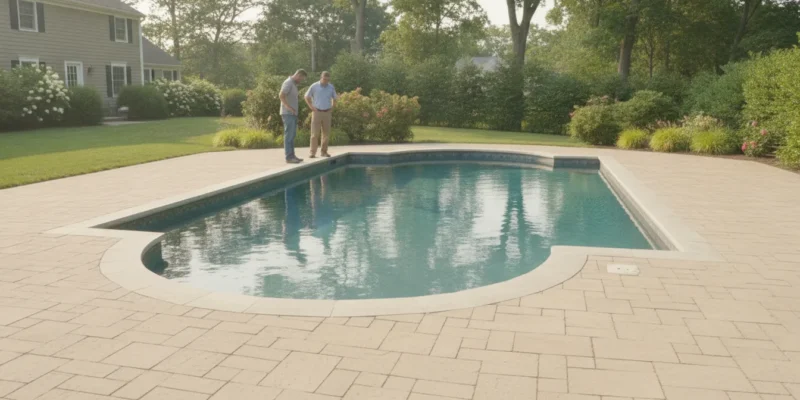
A pool inspection is a structured look at the shell, the interior finish, the circulation equipment, the safety features, and the surfaces around the water. On Long Island, that review matters before a buyer writes an offer. It also matters for an owner deciding whether the existing pool is worth keeping. Gappsi has designed and built gunite, vinyl liner, and fiberglass pools across Nassau and Suffolk County since the swimming pool division opened in 2007. The same five areas show up in purchase reviews and in renovation talks at the Smithtown showroom.
Contact Gappsi through our contact page
This guide stays on the review itself. It does not price an inspection, hire an inspector, or turn the visit into a line-by-line checklist. Those are different questions. Use the findings here to decide what deserves a closer look, then talk with a builder about repair, remodel, or a new pool.
What should a pool inspection review first?
Start with the parts a buyer can see without opening an equipment panel, then move to the systems that keep the water moving. A useful review answers five questions:
- Shell: Is the basin holding its shape, or are there cracks, bulges, soft spots, or stains that suggest water is moving through the structure?
- Finish: Is the interior surface worn, stained, or rough in a way that points to a resurface rather than a wipe-down?
- Equipment: Do the pump, filter, heater, and sanitizer match the pool and still run without obvious leaks or burnt wiring?
- Safety: Are the barrier, gate, cover, and drains in a condition a family can rely on?
- Surrounding surfaces: Do the coping, deck, and drainage send water away from the house and the shell?
Giuseppe Abbrancati founded Gappsi in 1987. The pool team still uses that order on design visits: function first, then cost, then how the yard should look. A pretty waterline tile does not offset a soft deck. It also does not offset a pump that will not hold prime.
Bring a notebook, not a repair kit. Write the shell type, the finish name if you can read it, and anything that moves when you step on it. Photograph the waterline, the equipment pad, and one corner where the deck meets the coping. Those three photos are enough to start a useful conversation. They are not a substitute for a builder walking the yard.
Time of year changes what you can see. A pool open in June shows the finish and the running equipment. A pool closed under a cover in January still shows the barrier, the pad, the coping, and the deck pitch. Note what the cover hides so nobody treats a winter visit as a full reading of the plaster.
How does the shell type change what you see?
Gappsi builds three inground types, and each one fails in a different place. Knowing the type keeps a buyer from treating every mark as the same problem.
| What you are looking at | Gunite | Vinyl liner | Fiberglass |
|---|---|---|---|
| Structure | Shot concrete shell. Look for cracks, hollow sounds, and rust stains that can track back to steel. | Walls and a floor under a liner. Look for wall movement and a liner that has pulled off the bead. | One-piece shell. Look for spider cracks in the gelcoat, soft spots, and a shell that has shifted. |
| Interior surface | Plaster, marble dust, quartz, Hydrazzo, glass, or pebble. Wear shows as roughness, staining, or exposed aggregate. | The liner is the finish. Fading, wrinkles, and tears are the review, not a plaster coat underneath. | Gelcoat. Chalking, blisters, and staining sit in the factory surface. |
| What a finding usually means | A crack or worn plaster may lead to repair, resurfacing, or a wider renovation. | A failed liner is often a liner project, not a new concrete shell. | Gelcoat damage is a shell question. It is not solved by a new plaster mix. |
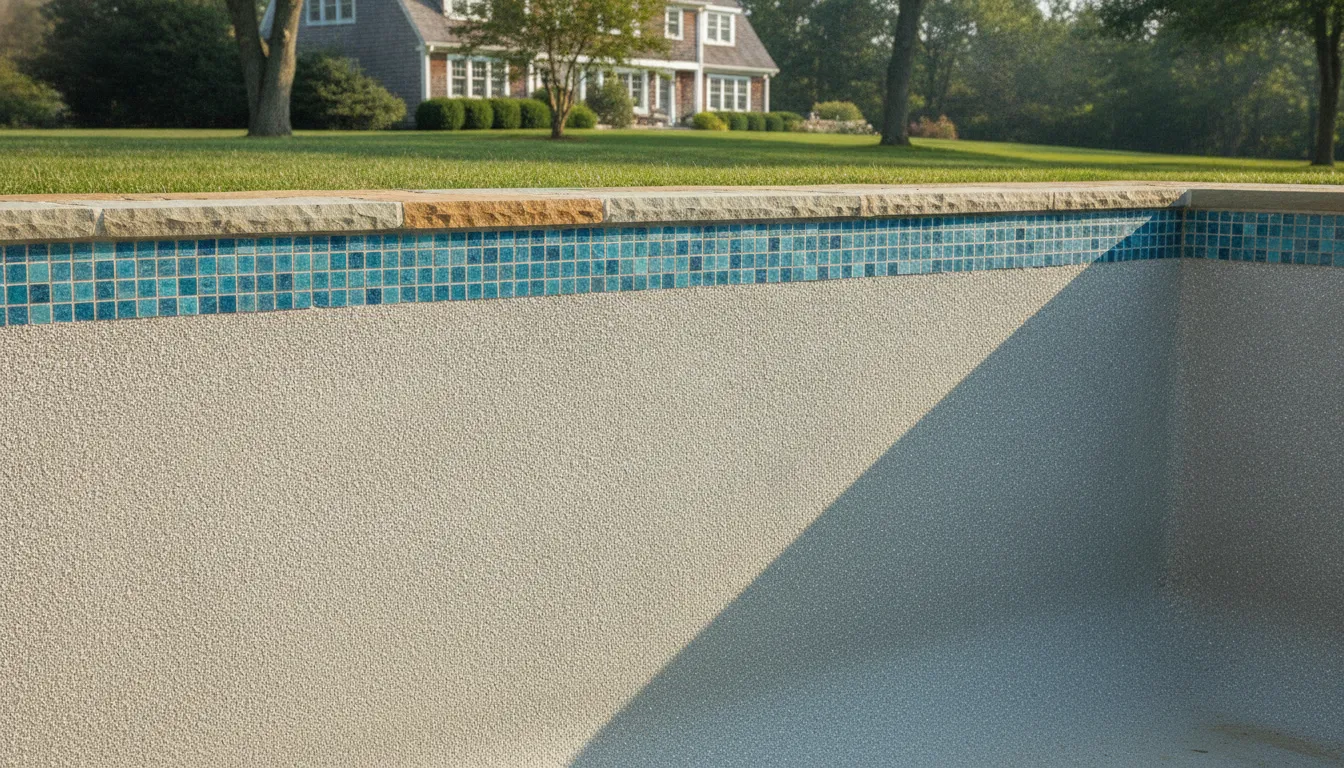
The custom gunite design guide explains why a concrete shell can take almost any shape. The vinyl liner install timeline shows the other path: walls, a liner, and a shorter build. A pool inspection should name which of those you are standing next to before anyone talks about a quote.
Ask how you can tell the type without a brochure. Gunite usually shows a plaster or aggregate interior, tile at the waterline, and a formed bond beam under the coping. Vinyl shows a sheet surface with a bead locked into a track at the top of the wall. Fiberglass shows a smooth gelcoat, often with molded steps and a shell that reads as one piece. If you cannot tell, say so. Guessing the type sends the next conversation down the wrong repair path.
Also note the water. Clear water does not prove the shell is sound. Green water does not, by itself, prove the shell has failed. Color is a care clue. Movement in the wall, a soft floor, or a crack you can trace with a finger is a structure clue. Keep those notes in separate lines.
What does the interior finish tell a buyer?
On a gunite pool, the finish is a separate layer from the shell. Gappsi displays white, gray, and black marble dust, quartz Diamond Brite, glass, Hydrazzo, and pebble at the Smithtown showroom. Owners compare texture there before they commit. During a review, note whether the surface is uniformly rough, stained along the waterline, or pitted in one area.
Uniform roughness often means the finish has reached the end of its service. That is a resurfacing conversation. A rust-colored streak is different. A crack that continues into the wall is a shell conversation. That belongs with the gunite crack evaluation, not with a color sample. Marble dust has its own stain and etch pattern. The marble dust pool finish guide covers that choice when the coat is the problem and the shell is still sound.
Feel the surface with a bare hand if the owner allows it. A chalky film that wipes onto your palm is different from exposed pebbles that stay put. Chalk can be a chemistry or age issue in the finish. Exposed aggregate that has loosened, or plaster that sounds hollow, needs a builder’s look before anyone picks a new color.
Waterline tile tells its own story. Missing tiles, hollow tiles, or a stained band just above the plaster line often mean the water has been sitting high or the bond has failed. Do not fold that into a general “the pool looks old” note. Tile, plaster, and shell can each need a different next step.
Vinyl and fiberglass do not get a plaster reading. Wrinkles, a floating liner, or gelcoat blisters tell you the surface itself needs attention. Do not describe those as a plaster job.
Which equipment should a pool inspection include?
Equipment is where a clean-looking pool hides the next project. At a Gappsi design visit, the common brands on the pad include Pentair, Hayward, Raypak, Jandy, and Sta-Rite. The same visits cover salt chlorine generators, ozone, gas heaters, heat pumps, and DE, cartridge, or sand filters. A review does not have to name every model. It should answer whether the set still matches the pool.
- Pump and filter: Listen for grinding, watch for leaks at the unions, and note a filter housing that is cracked or a pressure gauge that is stuck.
- Heater: Confirm it fires, then look at the age and the fuel type. A dead heater is a planning item. The pool heater cost comparison is the place to sort gas and heat pump options later.
- Sanitizer: A salt cell, ozone unit, or feeder that is scaled or offline changes the weekly care, even when the water looks clear on visit day.
- Leaks at the pad: Water on the equipment slab, a pump that loses prime, or air in the strainer basket points past routine care. That trail belongs with pool leak repair.
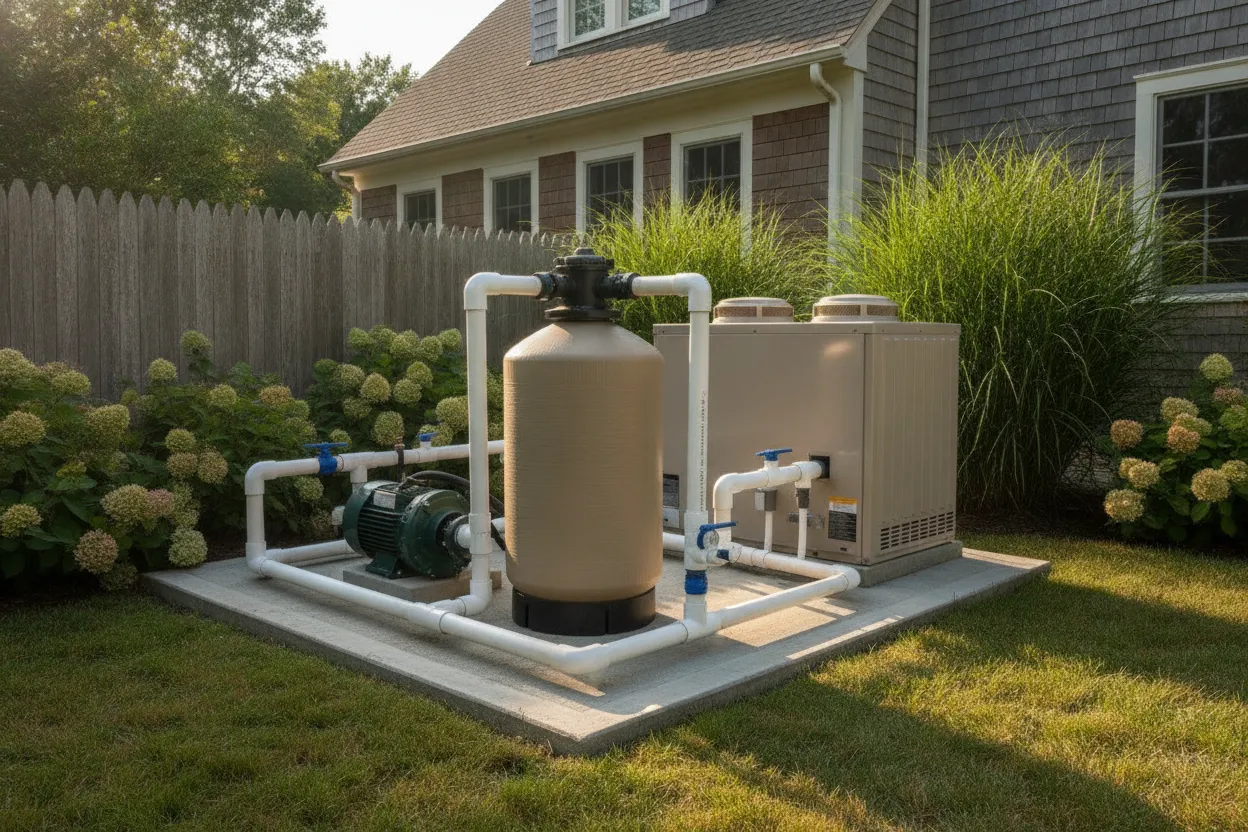
Turn the equipment off if you are not the owner and a breaker looks damaged. A visual review is enough to decide whether a builder should open the pad. It is not a repair.
How should buyers review safety features?
Safety is part of the pool, not an add-on after the water is clear. The Pool & Hot Tub Alliance tells owners to use fencing with self-closing, self-latching gates, a safety cover when the pool is idle, alarms, non-slip decking, anti-entrapment drain covers, and sound electrical gear. Read their pool safety guidance before you treat a missing latch as a cosmetic item.
On site, look for a barrier that fully separates the water from the house and yard. Check that the gate closes and latches on its own. If a cover is installed, see whether it is present and working. Gappsi supplies winter mesh covers and electric safety auto-covers on new pools. A buyer can ask which of those is on the existing pool and whether it still tracks. Also look at the main drains and skimmer covers. A cracked or missing cover is a stop, not a punch-list note for later.
Walk the gate twice. Open it, let it go, and see if it reaches the latch without a push. Then look at the latch height and at any gap under the gate a child could use. Climbable objects on the outside of the barrier, such as a stored ladder or a loose chair, belong in the same note. They change how the barrier actually works.
Fence style, height, and hardware vary by town. This review flags what you can see. It does not replace the local barrier rules. It also does not walk the hiring or negotiation steps that belong in a purchase inspection. For product choices after the review, the Long Island pool fence options page is the next read.
What do coping, deck, and drainage reveal?
The water is only half the visit. Coping is the stone or formed edge at the waterline. A loose, rocking, or cracked piece lets splash water into the bond beam and the deck setting bed. Gappsi sets natural stone and other coping on Long Island pools. The pool coping materials guide is the reference once you know the edge itself is the issue.
Press a few coping pieces with your foot. A solid piece does not tick or rock. A piece that moves has already lost its setting bed, even if the top still looks even. Look under the nose of the stone for a dark, damp line. That line means water is getting behind the edge.
Then walk the deck. Ponding against the house, a low corner at the pool, or a crack along the coping joint means water is not leaving the shell. That is a drainage and surface question. The pool deck drainage guide covers how Long Island yards should move water. Pool deck repair covers when the surface itself should be repaired or replaced. Do not plan a new plaster coat while the deck still dumps water back into the bond beam.
Long Island yards add their own clues. A deck that heaves near a tree, a low spot that stays wet after a dry week, or efflorescence on a retaining wall beside the pool all belong in the surround notes. They are not shell notes. Keeping them separate stops a buyer from funding a new interior while the grade still points at the house.
When do findings point to repair, remodel, or a new pool?
Sort the notes into three piles before you call anyone.
- Repair: One failed part, such as a liner, a heater, a gate latch, or a short run of loose coping, and the shell still holds.
- Remodel: The shell is sound, but the finish, tile, coping, or deck has aged together. The remodel versus repair guide picks up that decision. So does the gunite renovation guide. Resurfacing cost lives in the pool resurfacing cost guide, not in this review.
- New pool: The shell has moved, the layout no longer fits the yard, or the equipment and surround would all be replaced. That is a design conversation, not a patch.
Gappsi’s design order is the same one used on new work. Make it functional. Keep it cost-effective. Then make it elegant. A buyer who has already separated a soft deck from a worn plaster coat can use a consultation for the right scope instead of a generic rebuild.
- Name the shell type before you describe the damage.
- Separate finish wear from cracks, leaks, and movement.
- List equipment that runs, equipment that leaks, and equipment you could not test.
- Record the barrier, gate, cover, and drain covers as their own line.
- Record coping, deck pitch, and standing water as surround items.
- Mark each note as repair, remodel, or new-pool scope.
That sequence is the review. It is not a town checklist, and it is not a fee schedule. Bring it to a design visit if you want the next step to match what you actually saw.
Contact Gappsi through our contact page
Frequently Asked Questions
What is included in a pool inspection?
A useful pool inspection reviews the shell, interior finish, pump and filter, heater, sanitizer, barrier and drains, and the coping and deck around the water. The goal is to see which of those areas is sound and which one should drive the next conversation.
Can a buyer inspect a pool that is closed for winter?
Yes, with limits. A cover hides the finish, and winterized lines are not running. You can still review the barrier, equipment pad, coping, and deck, and you can note what you could not see so it is checked at opening.
Does a home inspection replace a pool review?
A general home inspection may note the pool, but it often stops at the obvious items. Shell type, finish wear, circulation leaks, and deck drainage need their own pass if those areas will affect your decision.
Should an owner review an existing pool the same way?
Yes. Owners use the same five areas to decide between a single repair, a remodel, and a new pool. The difference is that an owner already knows the maintenance history and does not need the visit for a purchase negotiation.
This article was posted by Gappsi Group.